Conioselinum pacificum
(S. Watson) J. M. Coult. & Rose
Pacific hemlock-parsley
iNaturalist· cc-by-nc
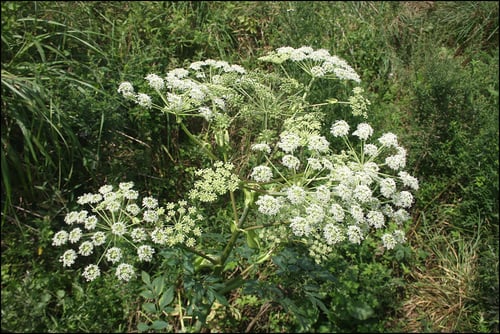
(c) Peter Zika, some rights reserved (CC BY-NC)
iNaturalist· cc-by-nc
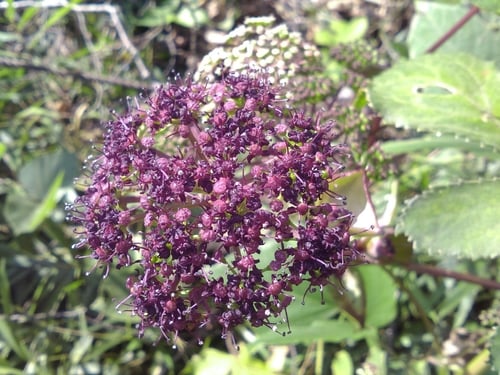
(c) Peri Lee Pipkin, some rights reserved (CC BY-NC)
iNaturalist· cc-by-nc
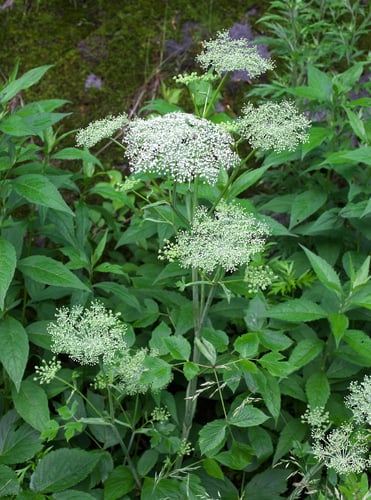
(c) Peri Lee Pipkin, some rights reserved (CC BY-NC)
Summary
Conioselinum pacificum is a perennial herb. The plant is hermaphrodite and insect-pollinated. It grows in light sandy to medium loamy soils, adapting to mildly acid, neutral, very alkaline, and saline pH conditions. It cannot tolerate shade, requires full sun, and prefers moist soil.
Description
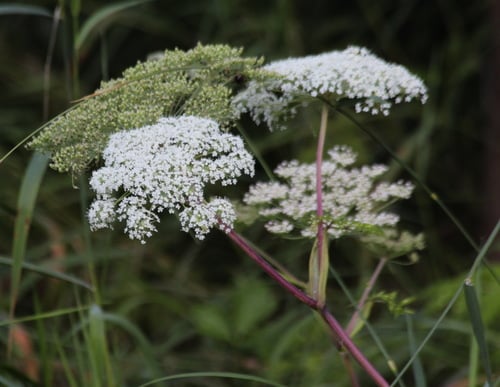
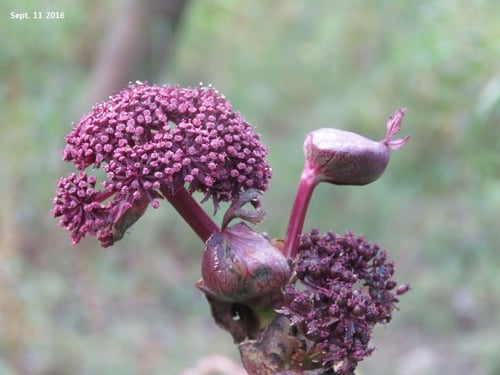
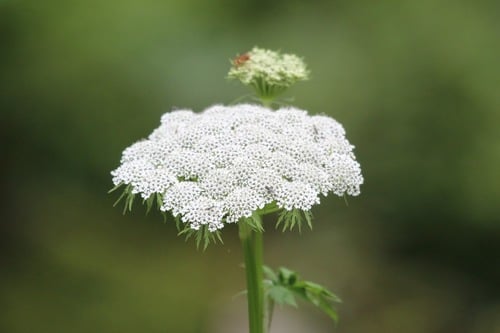
A smooth herb. It keep growing from year to year from a thick, fleshy taproot. The leaves are finely divided and broadly oval or triangle shaped. These have leaf leaflets with teeth around the edge. The leaf stalks forms a sheath around the stem. The flowers are small and white and in dense clusters. The fruit are oval and ribbed. These have broad, thin wings at the edges.
Edible Uses
The roots are edible when cooked. Native North American Indians would mark plants in summer and harvest them the following spring before new shoots emerged. The plant produces a root cluster; only the larger roots were taken, with the smaller ones left in the ground to continue growing. The roots were steamed for several hours before eating. Some accounts describe them as sweet and tasty, while others note a strong flavour and a potential to cause diarrhoea, so caution is advised when trying this plant as a food.
Traditional Uses
The carrot lie taproot is dug up, cooked and eaten. Caution: Care is needed not to choose similar looking but poisonous plants.
This uses section is brief — help expand it
Medicinal Uses
A tonic drink made from the leaves has been used to soothe colds and sore throats. The leaves have also been used in steam baths to treat rheumatism and general weakness.
Distribution
It grows along gravelly or sandy beaches. It is near the coastline and can be on headlands or in tidal swamps.
Where It Grows
Canada, North America, USA,
Propagation
Sow seed as soon as it is ripe where possible; sow stored seed in early spring. Prick seedlings into individual pots as soon as they are large enough to handle and plant out once they reach 20 cm or more in height. The rootstock can also be divided in spring, with divisions planted directly into their permanent positions.
Other Uses
None known
References (3)
- Contr. U.S. Natl. Herb. 7:152. 1900
- Plants for a Future database, The Field, Penpol, Lostwithiel, Cornwall, PL22 0NG, UK. http://www.scs.leeds.ac.uk/pfaf/
- Turner, N., 1995, Food Plants of Coastal First Peoples. Royal BC Museum Handbook p 56