Acer campbellii
Hook.f. & Thomson ex Hiern
Campbell's maple
iNaturalist· cc-by-nc
(c) Suresh Ghimire, some rights reserved (CC BY-NC), uploaded by Suresh Ghimire
iNaturalist· cc-by
(c) Eugene Popov, some rights reserved (CC BY), uploaded by Eugene Popov
iNaturalist· cc-by
(c) Eugene Popov, some rights reserved (CC BY), uploaded by Eugene Popov
Summary
Source: WikipediaAcer campbellii, commonly known as Campbell's maple or Himalayan maple, is a species of maple tree indigenous to mixed forests at elevations of 1,800–3,700 metres (6,000–12,000 ft) in Bhutan, northern India, Laos, Myanmar, Nepal, and Vietnam, as well as southern Sichuan, southern Tibet, and northwest Yunnan in China. It may grow up to 15 m (49 ft) in height. The deciduous leaves are 8–15 cm (3.1–5.9 in) by 9–22 cm (3.5–8.7 in) in size.
Description
A shrub or small tree. It grows 5 m tall. There are prickles along the stem. The leaves are twice divided and there are 8-18 pairs of pinnae. There are up to 50 pairs of pinnules on each pinnae. The flowers are yellow. They are in large clusters at the ends of branches. The pods are flattened.
Edible Uses
The tender leaves are fermented and consumed as a tea drink.
Traditional Uses
The tender leaves are fermented and used as a tea drink.
This uses section is brief — help expand it
Medicinal Uses
The tender leaves are fermented and used as a traditional tea drink.
Distribution
It is a temperate plant. In Sikkim is grows between 1,800-2,700 m above sea level.
Where It Grows
Asia, India, Nepal, Northeastern India, Sikkim, Tibet,
Also Known As
Kapasay, Kapase, Shoblela, Ya-lis-nak-pos
References (3)
- Ding, X., 2021, Collection calendar: the diversity and local knowledge of wild edible plants used by Chenthang Sherpa people to treat seasonal food shortages in Tibet, China. Journal of Ethnobiology and Ethnomedicine 17:40
- Sundriyal, M. & Sundriyal, R. C., 2004, Structure, Phenology, Fruit Yield, and Future Prospects of some Prominent Wild Edible Plant Species of the Sikkim Himalaya, India. Journal of Ethnobiology 24(1): 113-138
- Tsering, J., et al, 2017, Ethnobotanical appraisal on wild edible plants used by the Monpa community of Arunchal Pradesh. Indian Journal of Traditional Knowledge. Vol 16(4), October 2017, pp 626-637
More from Sapindaceae
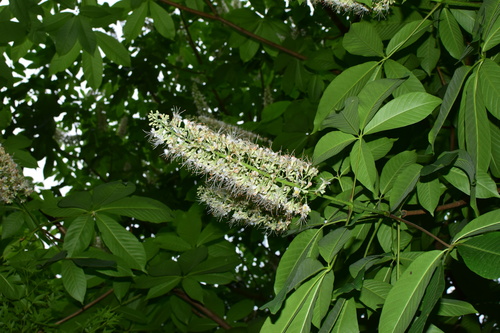
Aesculus chinensis
Chinese horse chestnut
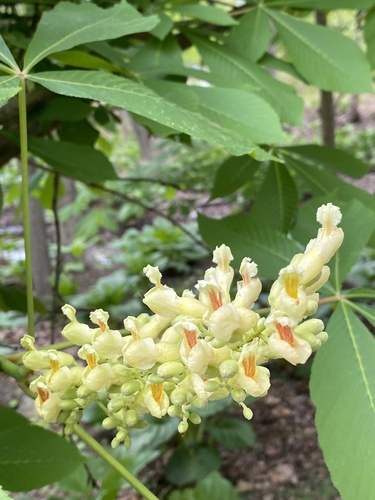
Aesculus flava
Sweet buckeye, Horse Chestnut, Yellow Buckeye
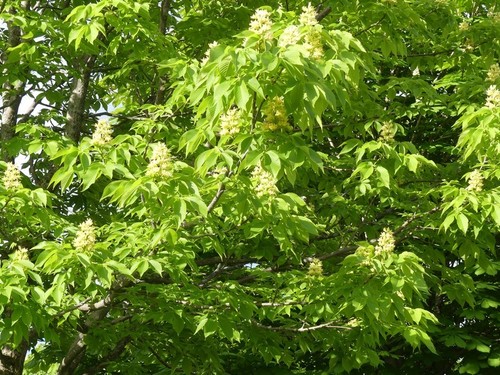
Aesculus glabra
Ohio buckeye, Fetid buckeye
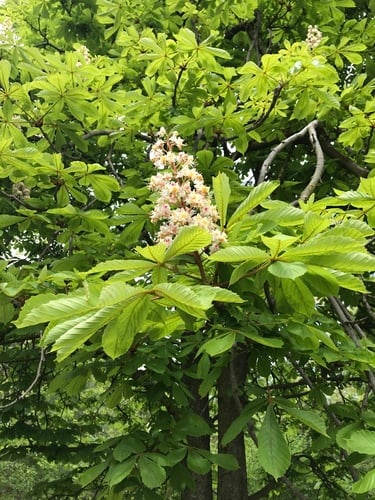
Aesculus hippocastanum
European horse chestnut
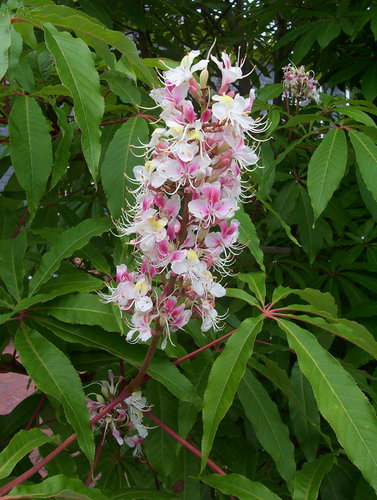
Aesculus indica
Indian chestnut, Indian horse chestnut
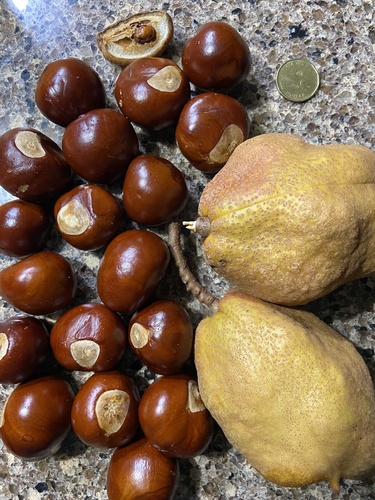
Aesculus octandra
Yellow buckeye, Sweet buckeye, Big buckeye