Coelospermum reticulatum
(F.Muell.) Benth.
Medicine Bush
iNaturalist· cc-by-nc
(c) ryanthughes, some rights reserved (CC BY-NC)
iNaturalist· cc-by
(c) elawrey, some rights reserved (CC BY), uploaded by elawrey
iNaturalist· cc-by
(c) elawrey, some rights reserved (CC BY), uploaded by elawrey
Summary
Source: WikipediaCoelospermum reticulatum, commonly known as medicine bush, is a species of flowering plant in the family Rubiaceae native to New Guinea, the Northern Territory, and Queensland. Its natural habitat is dry rainforest and wetter Eucalyptus woodland. It was originally described as Pogonolobus reticulatus in 1858, before being transferred to its current name in 1867. The plant is an important source of dye for Aboriginal people.
Description
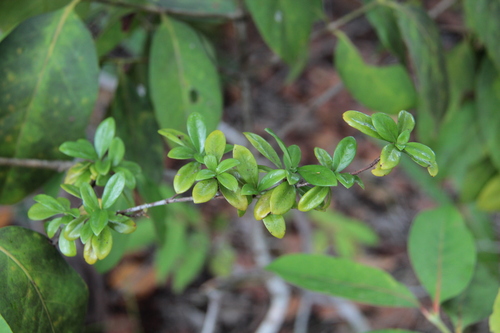
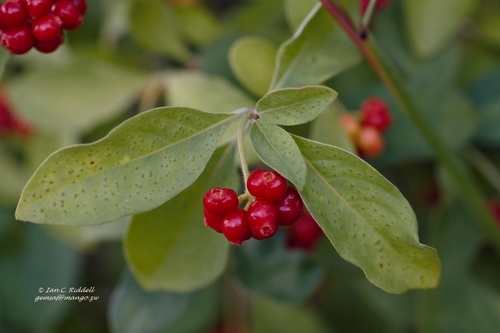
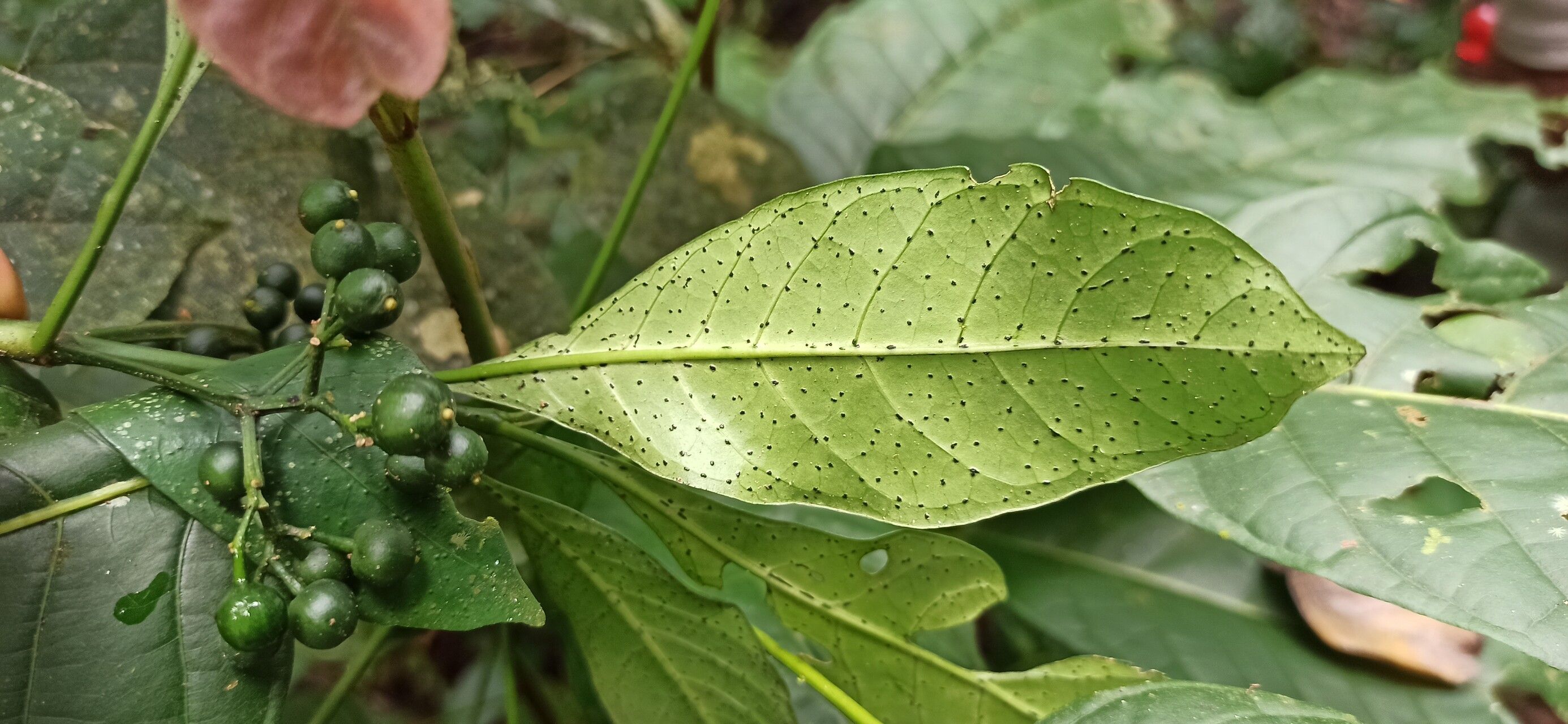
A straggling shrub. It grows 1-3 m tall. The leaves are opposite and stiff. They are oval and taper to the base. The leaves are light green with easy to see veins in a netlike pattern. The leaves are 5-9 cm long by 3-6 cm wide. The flowers are white and like tubes. They are hairy inside and have a sweet smell. They are 1-1.5 cm long. They occur in clusters at the ends of branches. The fruit are berries. They are round, smooth and purple to black. They are 0.7-1 cm across with 3-4 seeds inside.
Edible Uses
The ripe fruit are eaten raw. The seeds are also edible.
Traditional Uses
The ripe fruit are eaten raw.
This uses section is brief — help expand it
Distribution
A tropical plant. It suits the tropics and subtropics. It needs a sunny position. It grows in coastal scrub and extends along rivers.
Where It Grows
Australia*,
Cultivation
Plants can be grown from seed which must be planted fresh.
Notes
There are about 15 Coelospermum species.
Synonyms
Also Known As
Mandjundum
References (9)
- Cherikoff V. & Isaacs, J., The Bush Food Handbook. How to gather, grow, process and cook Australian Wild Foods. Ti Tree Press, Australia p 198
- Cribb, A.B. & J.W., 1976, Wild Food in Australia, Fontana. p 103
- Elliot, W.R., & Jones, D.L., 1984, Encyclopedia of Australian Plants suitable for cultivation. Vol 3. Lothian. p 56
- Lazarides, M. & Hince, B., 1993, Handbook of Economic Plants of Australia, CSIRO. p 63
- Melzer, R. & Plumb, J., 2011, Plants of Capricornia. Belgamba, Rockhampton. p 297 (As Pogonolobus reticulatus)
Show all 9 references Hide references
- Smith, N. M., 1991, Ethnobotanical Field Notes from the Northern Territory, Australia, J. Adelaide Bot. Gard. 14(1): 1-65 (As Pogonolobus reticulatus)
- Some Magnetic Island Plants. www.somemagneticislandplants.com (As Pogonolobus reticulatus)
- Stanley, T. D. & Ross, E. M., 1986, Flora of south-eastern Queensland Volume 2. Queensland Government p 337
- Townsend, K., 1994, Across the Top. Gardening with Australian Plants in the tropics. Society for Growing Australian Plants, Townsville Branch Inc. p 138