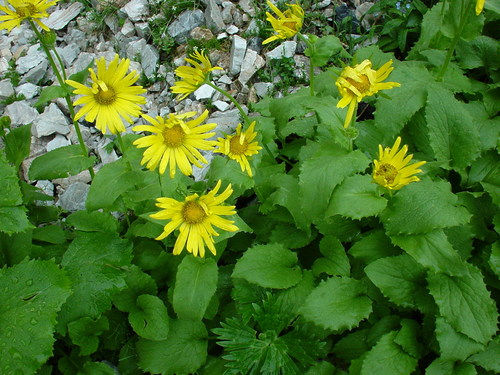
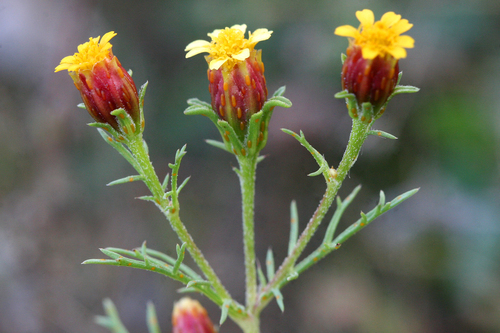
Cirsium verutum
(D. Don) Spreng.
Common thistle
iNaturalist· cc-by-nc
(c) T. Abe Lloyd, some rights reserved (CC BY-NC), uploaded by T. Abe Lloyd
iNaturalist· cc-by-nc
(c) T. Abe Lloyd, some rights reserved (CC BY-NC)
Summary
Spear thistle is a perennial reaching 1.5 m tall, flowering from July to September with simultaneous seed ripening. It grows in light sandy, medium loamy, and heavy clay soils across mildly acidic to mildly alkaline pH ranges, requiring full sun and moist conditions.
Description
A herb. It is a thistle. It grows about 1 m high. The leaves near the base have stalks but the higher leaves do not and clasp the stem. The base leaves are deeply lobed with teeth and are strongly spiny. They have a cottony texture below. The flower heads are pinkish.
Edible Uses
Young shoots are edible cooked. The tender roots are chewed fresh. Seeds are also edible, though no further preparation details are given.
Traditional Uses
The tender roots are chewed fresh. The young leaves are cooked. The flowers are also chewed. Oil is extracted from seeds.
This uses section is brief — help expand it
Medicinal Uses
A juice of the root is used to relieve fevers. A paste of the root is used in the treatment of stomach disorders. The fresh root is chewed to treat nosebleeds and throat aches, particularly during the dry summer.
Distribution
It is a temperate plant. Plants grow throughout Nepal between 700-3100 m altitude.
Where It Grows
Asia, Afghanistan, Bhutan, China, Himalayas, India, Indochina, Myanmar, Nepal, Northeastern India, Pakistan, SE Asia, Tibet, Vietnam,
Cultivation
Plants are grown from seed.
Propagation
Sow seed in early spring or autumn in situ. Germination typically occurs within 2–8 weeks at 20°C. Can also be propagated by division in spring or autumn.
Other Uses
The seeds yield a good oil by expression. No details on potential yields are given.
Notes
There are about 150-250 Cirsium species. They grow in temperate regions.
Synonyms
Also Known As
Brongzom, Dhode kanda, Popuche, Thakailo
References (6)
- Khakurel, D., et al, 2021, Foods from the wild: Local knowledge, use pattern and distribution in Western Nepal. PLOS ONE.
- Manandhar, N.P., 2002, Plants and People of Nepal. Timber Press. Portland, Oregon. p 154
- Plants for a Future database, The Field, Penpol, Lostwithiel, Cornwall, PL22 0NG, UK. http://www.scs.leeds.ac.uk/pfaf/
- Sharma, L. et al, 2018, Diversity, distribution pattern, endemism and indigenous uses of wild edible plants in Cold Desert Biosphere Reserve of Indian Trans Himalaya. Indian Journal of Traditional Knowledge. Vol 17(1) January 2018 pp 122-131
- Syst. veg. 3:370. 1826
Show all 6 references Hide references
- Tsering, J., et al, 2017, Ethnobotanical appraisal on wild edible plants used by the Monpa community of Arunchal Pradesh. Indian Journal of Traditional Knowledge. Vol 16(4), October 2017, pp 626-637