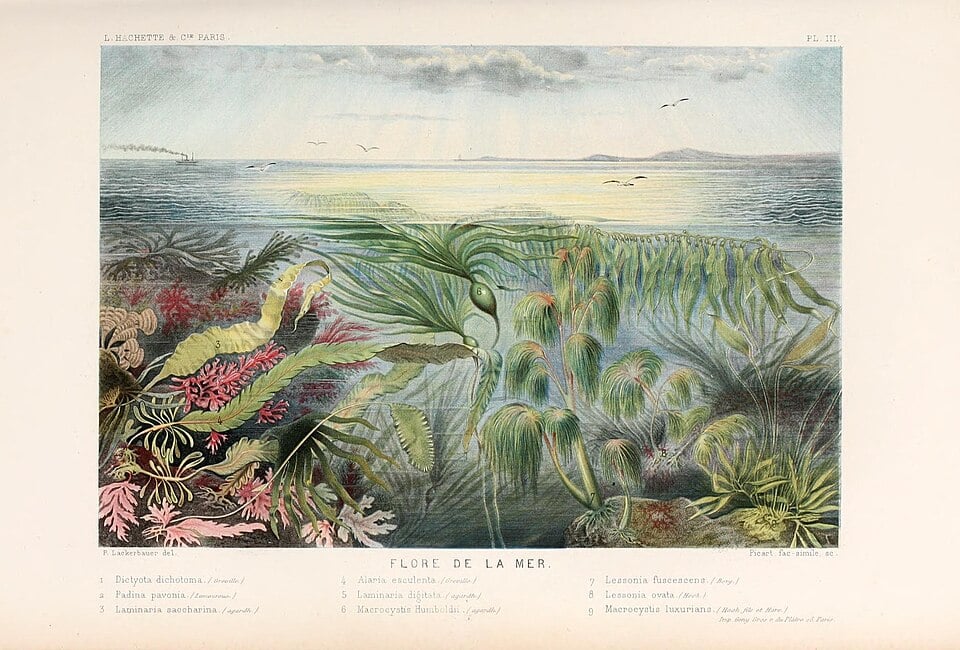
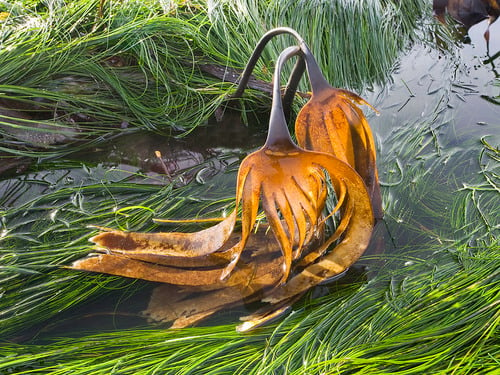
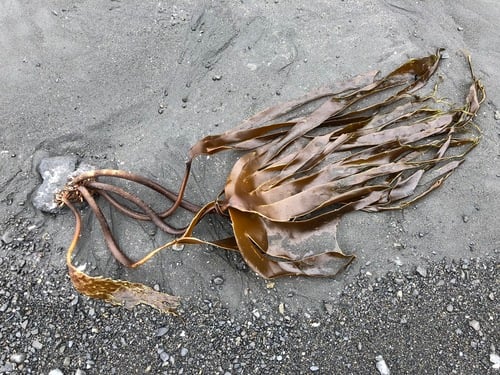
Laminaria saccharina
Lam.
Sugar kelp
iNaturalist· cc-by-nc
(c) Aurélien Grange, some rights reserved (CC BY-NC)
iNaturalist· cc-by-sa
(c) Bridgette Clarkston, some rights reserved (CC BY-SA)
iNaturalist· cc-by-sa
(c) Bridgette Clarkston, some rights reserved (CC BY-SA)
Description
A seaweed found on rocky shores below the low tide mark in temperate waters, with edible blades.
This description is brief — help expand it
Edible Uses
The blades are used in soups and stews, and can be eaten as a vegetable either raw or cooked.
Traditional Uses
It is used in soups and stews. It can be eaten as a vegetable, raw or cooked.
This uses section is brief — help expand it
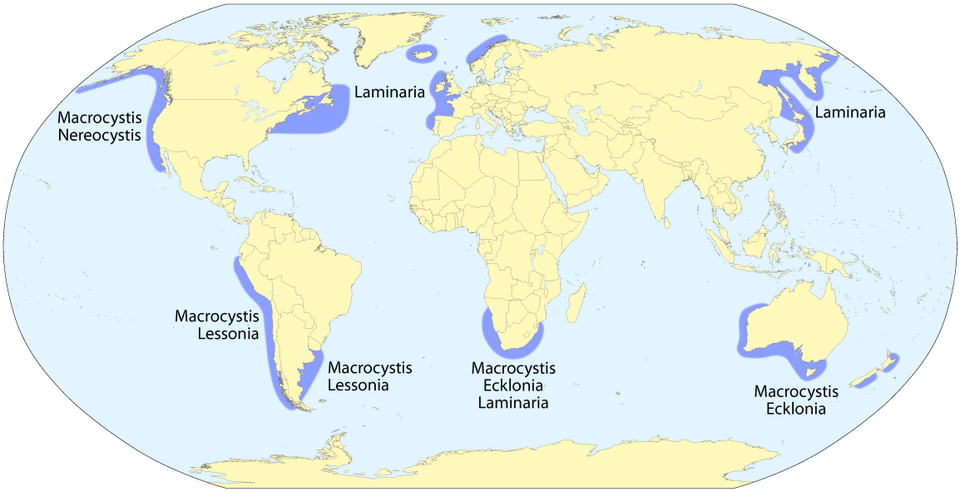
Distribution
It grows in temperate waters. It grows on rocky shores below low tide mark.
Where It Grows
Alaska, Atlantic, Britain, Canada, Europe, France, Iceland, Mediterranean, Netherlands, Norway, North America, Portugal, Russia, Spain, Sweden, USA,
Also Known As
Nuvakataq
References (3)
- Irving, M., 2009, The Forager Handbook, A Guide to the Edible Plants of Britain. Ebury Press p 366
- Jernigan, K. A., et al, 2017, Naukan ethnobotany in post-Soviet times: lost edibles and new medicinals. Journal of Ethnobiology and Ethnomedicine (2017) 13:61
- Small, E., 2009, Top 100 Food Plants. The world's most important culinary crops. NRC Research Press. p 482