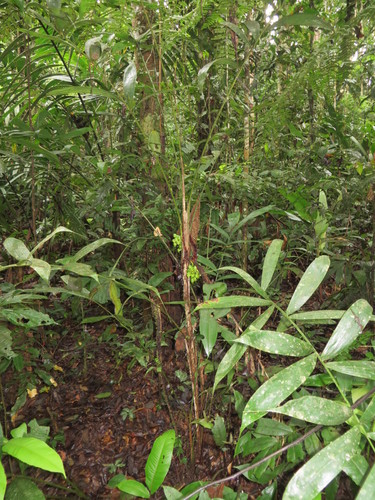
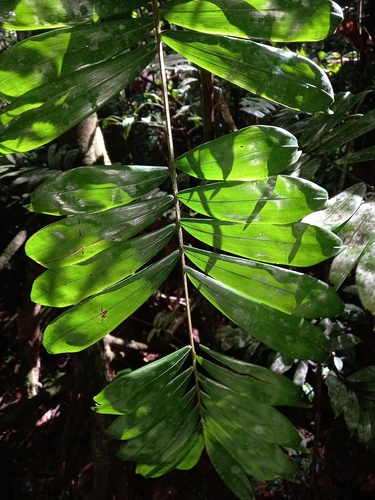
Syagrus sancona
(Kunth) H. Karst.
Sumuque palm
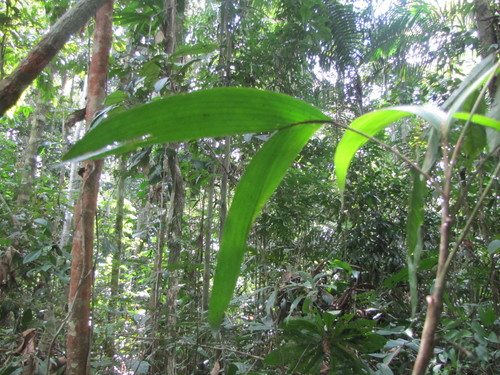
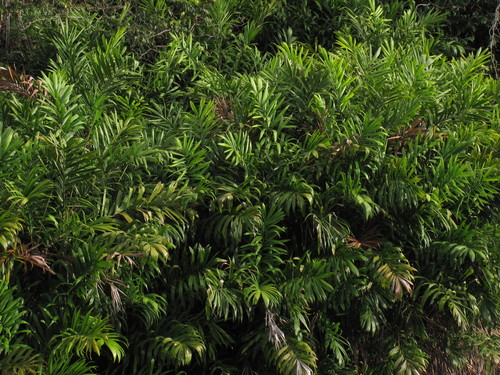
iNaturalist· cc-by-nc
(c) Sebas Arango, some rights reserved (CC BY-NC), uploaded by Sebas Arango
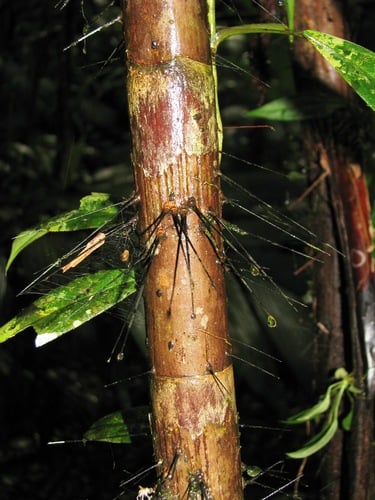
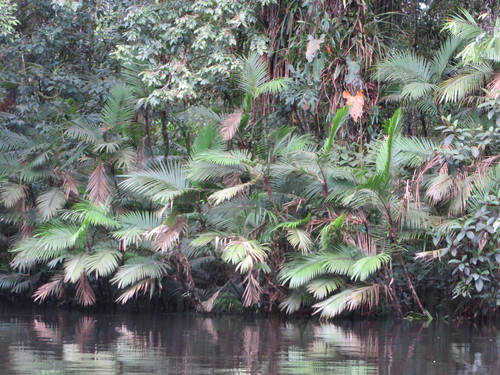
iNaturalist· cc-by-nc
(c) Philippe Gravel, some rights reserved (CC BY-NC)
Summary
Source: WikipediaSyagrus sancona is a species of palm tree native to Bolivia, Venezuela, Colombia, Ecuador and Peru.
Description
A solitary palm. It grows 7-30 m tall. The trunk is 20-30 cm across. The fruit are oval and 3 cm long by 2 cm wide. They are orange or yellow and fleshy.
Edible Uses
The fruit and seeds are edible, though some references indicate the fruit may not be palatable.
Traditional Uses
Some references say the fruit is not edible.
This uses section is brief — help expand it
Distribution
It is a tropical plant. It grows in the Amazon. It grows up to 1,200 m above sea level.
Where It Grows
Amazon, Andes, Bolivia, Colombia, Ecuador, Peru, South America, Venezuela,
Cultivation
Succeeds in the tropics and the subtropics, being able to tolerate occasional light frosts when temperatures fall to -2°c. The plant can take full sun from an early age. Extremely easy to grow in a wide variety of conditions, established plants are drought resistant.
Other Uses
The stems are used for fencing and as pipes for transporting water.
Synonyms
References (5)
- Balee, W. L. et al (Ed.), 2006, Time and Complexity in Historical Ecology: Studies in the Neotropical Lowlands. Columbia University press.
- Lopez-Diago, D. & Garcia, N., 2021, Wild edible fruits of Colombia. Biota ColomBiana 22 (2) p 32
- Marcia, M. J., et al, 2011, Palm Uses in Northwestern South America: A Quantitative Review. Bot. Rev. (2011) 77:462-570
- Roa, J. A. G. & Boada, D. S. G., 2018, Fundación para el Fortalecimiento de la Fruticultura y Plantas Alimenticias no Convencionales en Colombia.
- World Checklist of Useful Plant Species 2020. Royal Botanic Gardens, Kew