Cicerbita alpina
(L.) Waller
Blue sow thistle, Mountain sowthistle
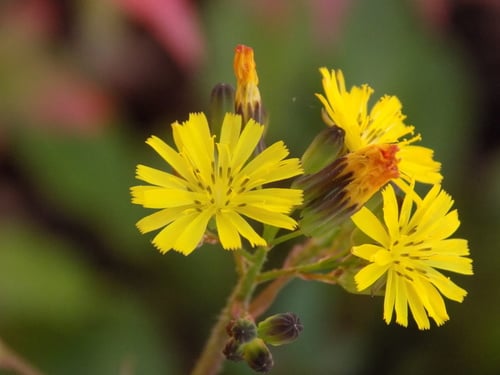
iNaturalist· cc-by-nc
(c) anschieber, some rights reserved (CC BY-NC), uploaded by anschieber
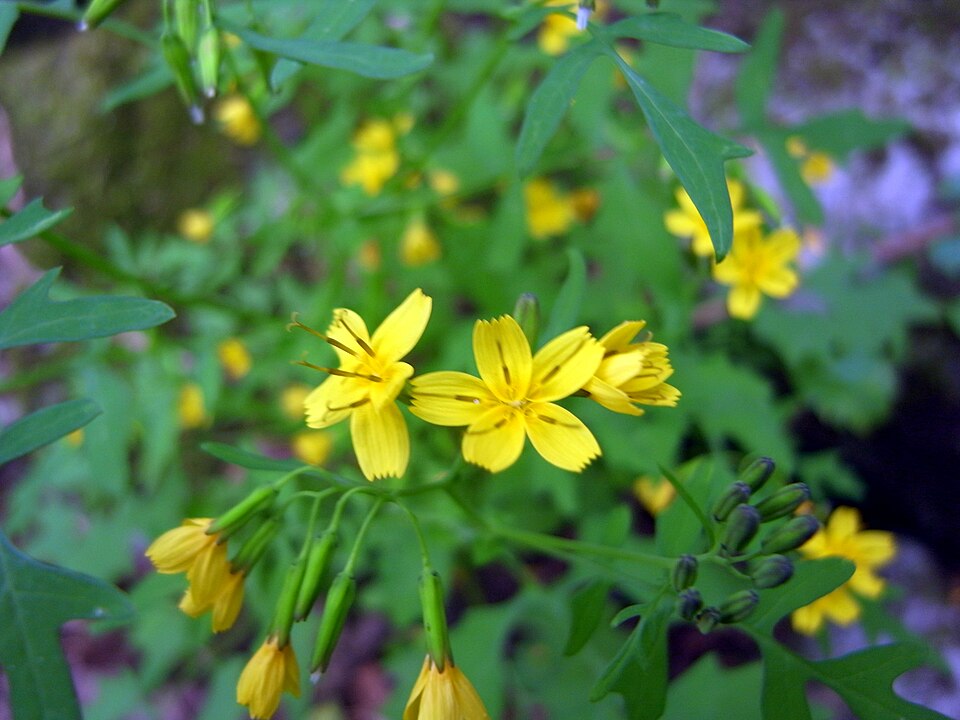
iNaturalist· cc-by-nc
(c) Marco Grandis, some rights reserved (CC BY-NC), uploaded by Marco Grandis
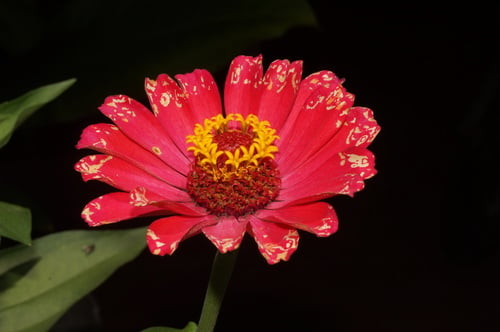
iNaturalist· cc-by-nc
(c) Sonja Bouwman-Gringhuis, some rights reserved (CC BY-NC), uploaded by Sonja Bouwman-Gringhuis
Summary
Source: WikipediaCicerbita alpina, commonly known as the alpine sow-thistle or alpine blue-sow-thistle is a perennial herbaceous species of plant formerly placed in the genus Lactuca as Lactuca alpina. It is native to upland and mountainous parts of Europe. It was once used as an herb in Sami cooking, and known as jierja.
Description
Cicerbita alpina is a perennial reaching 1 m (3 ft 3 in) tall and 0.3 m (1 ft) wide, hardy to UK zone 4 and not frost tender. It flowers July to September with seeds ripening August to October. The hermaphrodite, self-fertile plant is pollinated by bees, beetles, moths, and butterflies. It grows in light sandy and medium loamy well-drained soils with mildly acidic to neutral pH, thriving in semi-shade woodland conditions and preferring moist soil.
Edible Uses
Young shoots and stems can be eaten raw after peeling away the skin, though they remain quite bitter and unpalatable even after preparation. Older stems can likewise be peeled and eaten raw, but these are also bitter.
Traditional Uses
The bitter stems are peeled and eaten raw. They are preserved in oil or vinegar.
This uses section is brief — help expand it
Medicinal Uses
The leaves and milky sap were once commonly used in herbal medicine, though they are seldom employed today. They are diuretic and can be applied externally to inflammations.
Distribution
It is a temperate plant.
Where It Grows
Arctic, Australia, Britain, Europe, Finland, Norway, Scandinavia, Slovenia, Sweden,
Propagation
Sow seed in spring in a cold frame, barely covering it, and keep the compost consistently moist. Once seedlings are large enough to handle, prick them out into individual pots and plant into permanent positions during summer. Alternatively, divide plants in spring — potting up the clumps and growing them on in a cold frame until rooting well before planting out in summer or the following spring works best.
Other Uses
None known.
Synonyms
Also Known As
Navadna gorska laočika, Turt
References (9)
- Cerne, M., 1992, Wild Plants from Slovenia used as Vegetables. Acta Horticulturae 318
- Facciola, S., 1998, Cornucopia 2: a Source Book of Edible Plants. Kampong Publications, p 36
- Girard, N. J., 2020, Sustainable Foraging of Wild Edible Plants in Norway. A Biocultural Approach. M. Sc. thesis Norwegian University. p 128
- Hedrick, U.P., 1919, (Ed.), Sturtevant's edible plants of the world. p 365 (As Lactuca alpina)
- INFOODSUpdatedFGU-list.xls
Show all 9 references Hide references
- Martin, F.W. & Ruberte, R.M., 1979, Edible Leaves of the Tropics. Antillian College Press, Mayaguez, Puerto Rico. p 185 (As Lactuca alpina)
- Plants for a Future database, The Field, Penpol, Lostwithiel, Cornwall, PL22 0NG, UK. http://www.scs.leeds.ac.uk/pfaf/
- Sched. Crit. 1:434. 1822
- Turner, N. J. et al, 2011, Edible and Tended Wild Plants, Traditional Ecological Knowledge and Agroecology. Critical Reviews in Plant Sciences, 30:198-225