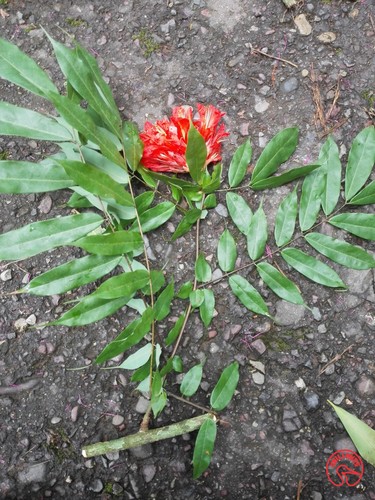
Swartzia simplex
(Sw.) Spreng.
iNaturalist· cc-by-nc
(c) Pablo Carrillo-Reyes, some rights reserved (CC BY-NC), uploaded by Pablo Carrillo-Reyes
iNaturalist· cc-by-nc
(c) Apipa, some rights reserved (CC BY-NC), uploaded by Apipa
iNaturalist· cc-by-nc
(c) Pablo Carrillo-Reyes, some rights reserved (CC BY-NC), uploaded by Pablo Carrillo-Reyes
Description
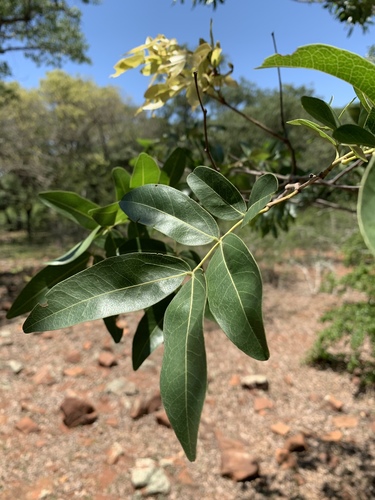
An evergreen tree. It grows 5-15 m tall. The crown is often irregular. The trunk is crooked and 10-40 cm across. The leaves can have one leaflet. The leaves are 6-15 cm long by 3-8 cm wide. The fruit are oval and 3-5 cm long by 1-2 cm wide. The fruit are red when ripe. There are black seeds in a white pulp.
Edible Uses
Fruit - raw. The fruit is red when mature, containing rounded, black seeds that are imbedded in a thin layer of a white, edible pulp.
Traditional Uses
The fruit are eaten raw.
This uses section is brief — help expand it
Known Hazards
The sawdust from wood of plants in this genus can be irritating to mill workers.
Distribution
It is a tropical plant. It is an under-storey tree in forests. It grows in humid and wet locations at low to medium elevations. In the West Indies it grows between 100-485 m above sea level.
Where It Grows
Amazon, Bolivia, Brazil, Caribbean, Central America, Colombia, Costa Rica, Dominica, Ecuador, El Salvador, Guadeloupe, Guatemala, Honduras, Jamaica, Martinique, Mexico, Nicaragua, North America, Panama, Peru, South America, Trinidad, West Indies,
Cultivation
This species has a symbiotic relationship with certain soil bacteria; these bacteria form nodules on the roots and fix atmospheric nitrogen. Some of this nitrogen is utilized by the growing plant but some can also be used by other plants growing nearby.
Other Uses
The heartwood is dark brown; it is clearly demarcated from the thick band of white or pale yellow sapwood. The grain is straight or interlocked; the texture very fine; there is a slightly foetid odour when it is freshly cut. The wood is heavy, hard, compact, strong and durable. It is not difficult to work, takes a smooth and fairly lustrous finish. The wood is used in heavy construction, fencing posts and to make handles for tools and tajonas.
Synonyms
References (2)
- Fern, K., 2012, Tropical Species Database http://theferns.info/tropical/
- Macbride. J. F., 1942, Flora of Peru. Leguminosae. Field Museum Natural History. Chicago. p 224(As Swartzia calophylla)