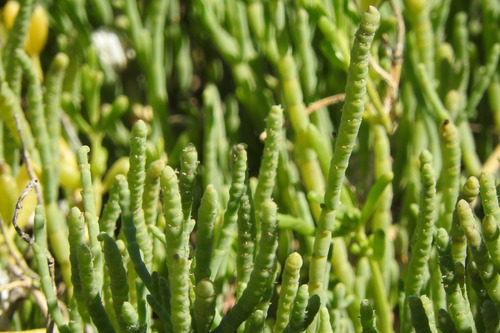
Chenopodium opulifolium
Schrad. ex Koch et Ziz
Roundleaf fat hen
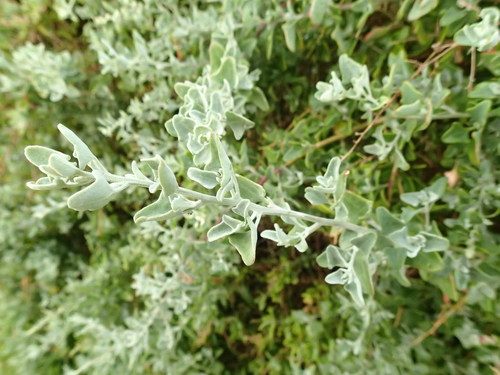
iNaturalist· cc-by-nc
(c) J. Richard Abbott, some rights reserved (CC BY-NC)
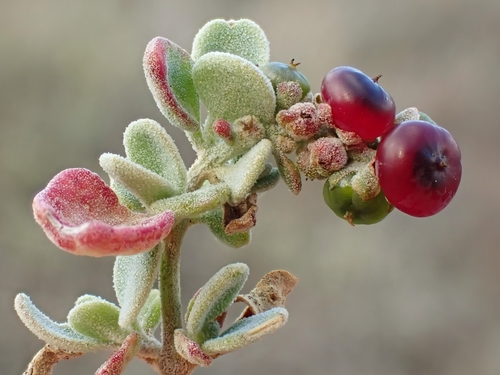
iNaturalist· cc-by-nc
(c) J. Richard Abbott, some rights reserved (CC BY-NC)
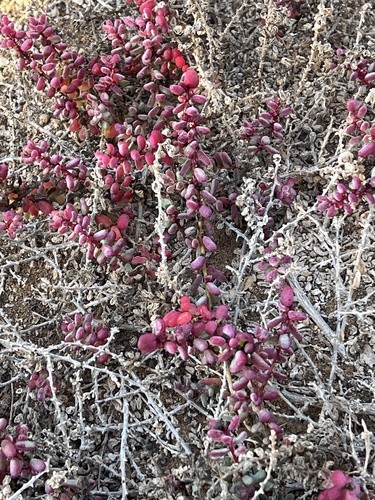
iNaturalist· cc-by-nc
(c) jeff_hickle, some rights reserved (CC BY-NC)
Summary
Source: WikipediaChenopodium opulifolium, the seaport goosefoot, is a species of annual herb in the family Amaranthaceae (pigweeds). They have a self-supporting growth form. They are associated with freshwater habitat and have simple, broad leaves. Individuals can grow to 67 cm tall.
Description
An annual herb. It grows 3 m high. The leaves have a mealy covering. The leaf blade is 15-20 mm long. They are oval and can have almost square lobes. The seeds are black and shiny. They are 1.5 mm across.
Edible Uses
The leaves can be eaten raw or cooked as a spinach substitute, though raw leaves should only be eaten in small quantities due to toxicity concerns. The seed is small and fiddly and can be ground into a powder and mixed with wheat or other cereals for making bread. Before use, soak the seed overnight and rinse thoroughly to remove saponins.
Traditional Uses
The young leaves are cooked and eaten as a vegetable. They are mixed with other vegetables. They are also used as a relish. Salt can be made from the plant.
Medicinal Uses
None known.
Known Hazards
The leaves and seeds of all members of this genus are more or less edible. However, many of the species in this genus contain saponins, though usually in quantities too small to do any harm. Although toxic, saponins are poorly absorbed by the body and most pass straight through without any problem. They are also broken down to a large extent in the cooking process. Saponins are found in many foods, such as some beans. Saponins are much more toxic to some creatures, such as fish, and hunting tribes have traditionally put large quantities of them in streams, lakes etc in order to stupefy or kill the fish. The plants also contain some oxalic acid, which in large quantities can lock up some of the nutrients in the food. However, even considering this, they are very nutritious vegetables in reasonable quantities. Cooking the plants will reduce their content of oxalic acid. People with a tendency to rheumatism, arthritis, gout, kidney stones or hyperacidity should take especial caution if including this plant in their diet since it can aggravate their condition.
Distribution
It grows in temperate and tropical places. It grows between 760-2,300 m above sea level. It can grow in arid places.
Where It Grows
Africa, Albania, Algeria, Angola, Armenia, Australia, Austria, Balkans, Belarus, Belgium, Botswana, Britain, Bulgaria, Burundi, Canary Islands, Caucasus, Central Africa, Central Asia, Congo, Czech Republic, Denmark, East Africa, Egypt, Eritrea, Eswatini, Ethiopia, Europe, France, Germany, Greece, Hungary, Iran, Iraq, Israel, Italy, Kazakhstan, Kenya, Lebanon, Mediterranean, Middle East, Mongolia, Morocco, Mozambique, North Africa, Portugal, Romania, Rwanda, Saudi Arabia, Scandinavia, Somalia, South Africa, Southern Africa, Spain, Sudan, Swaziland, Sweden, Switzerland, Tanzania, Turkey, Türkiye, Turkmenistan, Uganda, Ukraine, USA, Yemen, Zambia, Zimbabwe,
Cultivation
An easily grown plant, succeeding in most soils but disliking shade. It prefers a moderately fertile soil.
Propagation
Sow seed in spring in situ. Most of the seed usually germinates within a few days of sowing.
Other Uses
Gold and green dyes can be obtained from the whole plant.
Production
Leaves are collected during the rainy season.
Notes
There are about 100-150-250 Chenopodium species. They are mostly in temperate regions. Also put in the family Chenopodiaceae.
Synonyms
Also Known As
Ecamoya, Ikornit, Munyu, Shekazeu, Thekizeu, Tiga tiga
References (20)
- Al-Sodany, Y. M., et al, 2013, Medicinal Plants in Saudi Arabia: I. Sarrwat Mountains at Taif, KSA. Academic Journal of Plant Sciences 6 (4): 134-145
- Bidak, L. M., et al, 2015, Goods and services provided by native plants in desert ecosystems: Examples from the northwestern coastal desert of Egypt. Global Ecology and Conservation 3 (2015) 433–447
- Cunningham, 1985,
- Ertug, F, Yenen Bitkiler. Resimli Türkiye Florası -I- Flora of Turkey - Ethnobotany supplement
- Flora of Australia, Volume 4, Phytolaccaceae to Chenopodiaceae, Australian Government Publishing Service, Canberra (1984) p 138
Show all 20 references Hide references
- Goode, P., 1989, Edible Plants of Uganda. FAO p 36
- Grubben, G. J. H. and Denton, O. A. (eds), 2004, Plant Resources of Tropical Africa 2. Vegetables. PROTA, Wageningen, Netherlands. p 560
- Ichikawa, M., 1980, The Utilization of Wild Food Plants by the Suiei Dorobo in Northern Kenya. J. Anthrop. Soc. Nippon. 88(1): 25-48
- Jardin, C., 1970, List of Foods Used In Africa, FAO Nutrition Information Document Series No 2.p 66
- Johns, T., and Kokwaro, J.O., 1991, Food Plants of the Luo of Siayo District, Kenya. Economic Botany 45(1), pp 103-113
- Lazarides, M. & Hince, B., 1993, Handbook of Economic Plants of Australia, CSIRO. p 57
- Msuya, T. S., et al, 2010, Availability, Preference and Consumption of Indigenous Foods in the Eastern Arc Mountains, Tanzania, Ecology of Food and Nutrition, 49:3, 208-227
- Mutie, F. M., et al, 2023, Important Medicinal and Food Taxa (Orders and Families) in Kenya, Based on Three Quantitative Approaches. Plants 2023, 12, 1145
- Peters, C. R., O'Brien, E. M., and Drummond, R.B., 1992, Edible Wild plants of Sub-saharan Africa. Kew. p 82
- Plants for a Future database, The Field, Penpol, Lostwithiel, Cornwall, PL22 0NG, UK. http://www.scs.leeds.ac.uk/pfaf/
- Royal Botanic Gardens, Kew (1999). Survey of Economic Plants for Arid and Semi-Arid Lands (SEPASAL) database. Published on the Internet; http://www.rbgkew.org.uk/ceb/sepasal/internet [Accessed 8th April 2011]
- Ruffo, C. K., Birnie, A. & Tengnas, B., 2002, Edible Wild Plants of Tanzania. RELMA p 198
- Swaziland's Flora Database http://www.sntc.org.sz/flora
- Thiselton-Dywer, W.T., (Ed.), 1913, Flora of Tropical Africa. Vol VI-section 1. Reeve, p 78
- World Checklist of Useful Plant Species 2020. Royal Botanic Gardens, Kew