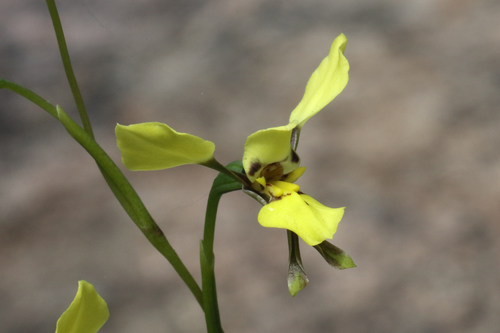
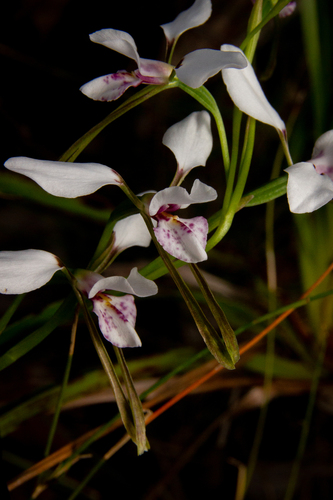
Bletilla striata
Rchb.f.
iNaturalist· cc-by-nc
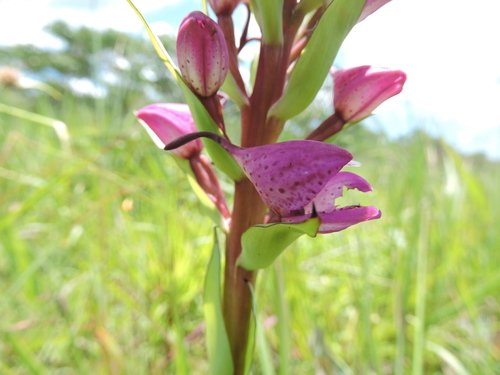
(c) Laurent Quéno, some rights reserved (CC BY-NC), uploaded by Laurent Quéno
iNaturalist· cc-by-sa
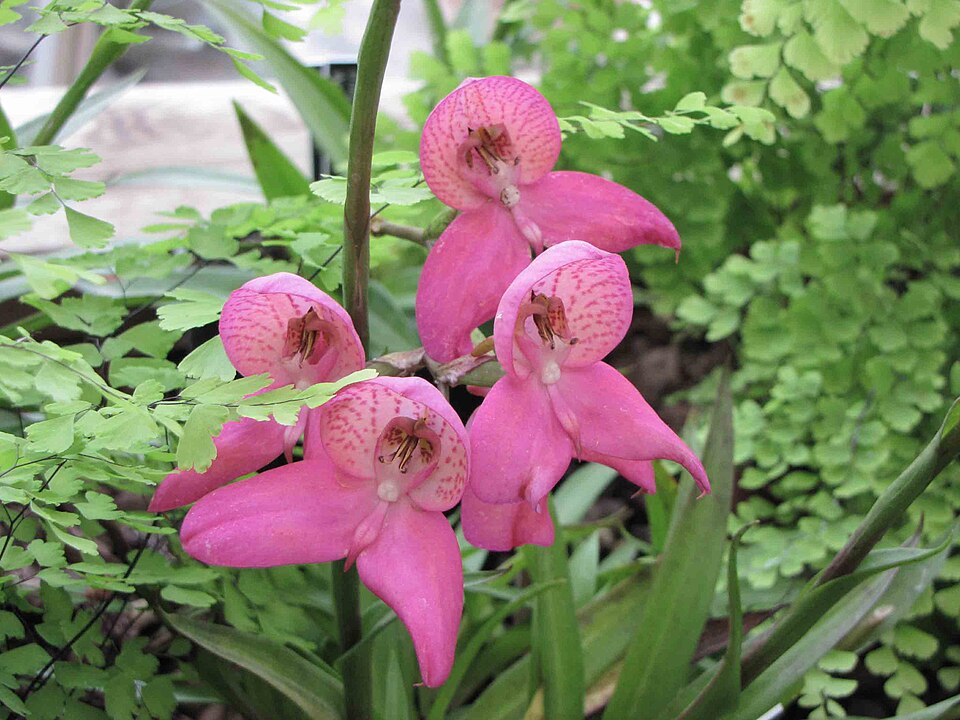
(c) Heidi Hellstern, some rights reserved (CC BY-SA), uploaded by Heidi Hellstern
iNaturalist· cc-by-sa
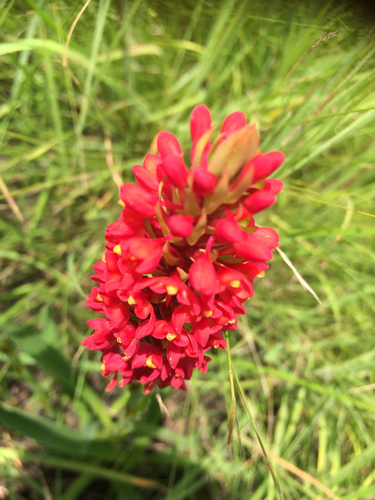
(c) Bouba, some rights reserved (CC BY-SA)
Summary
Source: WikipediaBletilla striata, known as hyacinth orchid or Chinese ground orchid, is a species of flowering plant in the orchid family Orchidaceae, native to Japan, Korea, Myanmar (Burma), and China (Anhui, Fujian, Gansu, Guangdong, Guangxi, Guizhou, Hubei, Hunan, Jiangsu, Jiangxi, Shaanxi, Sichuan, Zhejiang). It is most commonly found growing in clumps alongside grassy slopes with sandy soil. The Latin specific epithet striata means "striped", in reference to the ribbed leaves.
Description
An orchid. It grows 18-60 cm tall. The rhizome is flattened. It is 1-3 cm across. The stems are 3-25 cm long and stout and encloses several long tubular sheaths. There are 4-6 leaves. The leaves are widely spaced or clustered towards the tip of the stem. They are narrowly oval and 8-29 cm long by 2-4 cm wide.
Edible Uses
Edible Parts: Edible Uses: Gum None known
Traditional Uses
The bulb is stewed with pork or chicken.
This uses section is brief — help expand it
Medicinal Uses
Antibacterial Antiinflammatory Antiphlogistic Demulcent Pectoral Skin Styptic Vulnerary The hyacinth orchid is an important wound herb in China, where it has been used medicinally for over 1,500 years. The root (actually a pseudobulb) is antibacterial, anti-inflammatory, antiphlogistic, demulcent, pectoral, skin, styptic and vulnerary. It is taken internally in the treatment of haemorrhages of the stomach or lungs, uterine bleeding and nose bleeds. It is particularly effective against the endotoxin produced by Haemophilus pertusis in whooping cough. Externally, it is mixed with sesame oil and applied as a poultice to burns, cuts, abscesses and sores. The pseudobulbs are harvested when the plant is dormant and are dried for use in decoctions and powders.
Distribution
It is a temperate plant. It grows in evergreen broad-leaved forests between 100-3,200 m above sea level in China. In Sichuan.
Where It Grows
Asia, China, Japan, Korea, Myanmar, SE Asia,
Cultivation
It can be grown by division of the bulbs. It can be grown by seeds.
Propagation
Seed - surface sow, preferably as soon as it is ripe, in the greenhouse and do not allow the compost to dry out. The seed of this species is extremely simple, it has a minute embryo surrounded by a single layer of protective cells. It contains very little food reserves and depends upon a symbiotic relationship with a species of soil-dwelling fungus. The fungal hyphae invade the seed and enter the cells of the embryo. The orchid soon begins to digest the fungal tissue and this acts as a food supply for the plant until it is able to obtain nutrients from decaying material in the soil. It is best to use some of the soil that is growing around established plants in order to introduce the fungus, or to sow the seed around a plant of the same species and allow the seedlings to grow on until they are large enough to move. Division in autumn. Make sure that you keep plenty of soil with each plant. It is also said to be possible to transplant orchids after they have flowered but whilst they are still in leaf. Division is best carried out in the spring. Each division should have a leading point and two, or preferably three, pseudobulbs/joints of the rhizome. More propagating material can be obtained by cutting halfway through the rhizome during the previous growing season at the point where you wish to divide. This will stimulate the production of growth buds at the point of division.
Other Uses
Gum Ink Size The bulb is mucilaginous, it is used as a size to impart a glossiness to ink and also to make an invisible ink (seen by wetting the paper and holding it up to the light). Special Uses
Notes
It is a traditional Chinese medicinal herb.
Also Known As
Baiji
References (3)
- Cao, X., et al, 2017, Vast amount of Bletilla striata (Orchidaceae) seeds cultured in liquid media and seedling establishment in the field quickly. China Botanical Congress.
- Cheng, Z., et al, 2022, Ethnobotanical study on wild edible plants used by Dulong people in northwestern Yunnan, China. Journal of Ethnobiology and Ethnomedicine (2022) 18:3
- Kang, Y., et al, 2012, Wild food plants and wild edible fungi in two valleys on the Qinling Mountains (Shaanxi, central China) Journal of Ethnobiology and Ethnomedicine; 9:26