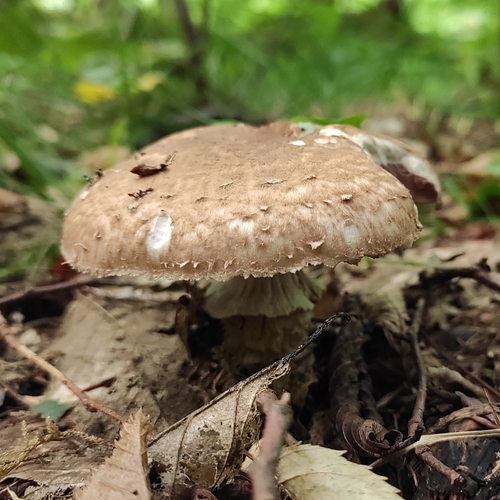
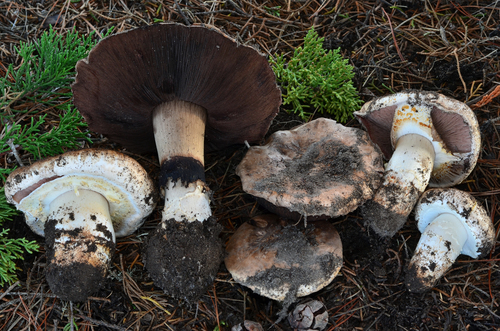
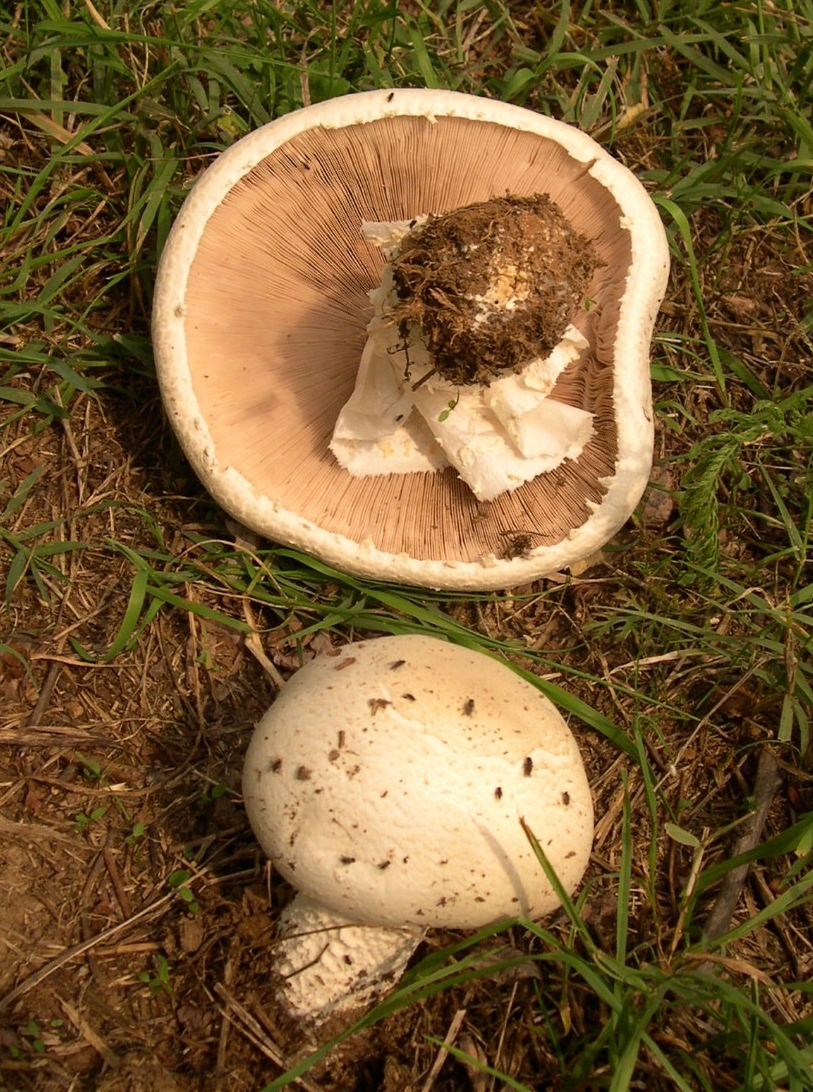
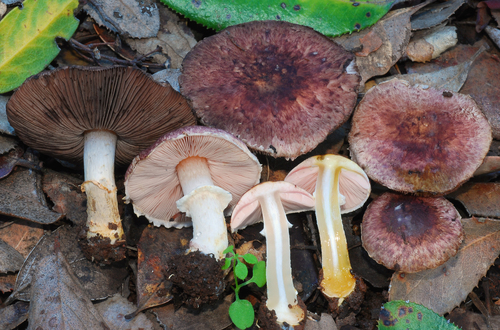
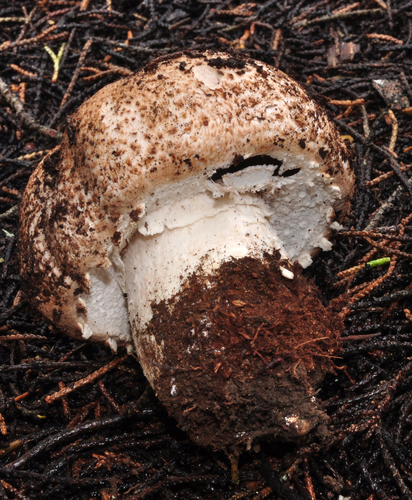
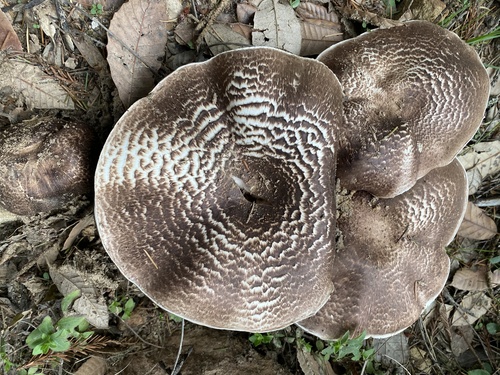
Macrolepiota procera var. vezo
Walleyn & Rammeloo
iNaturalist· cc-by
(c) Lucian Clanet, some rights reserved (CC BY), uploaded by Lucian Clanet
iNaturalist· cc-by-nc
(c) kayholford, some rights reserved (CC BY-NC)
iNaturalist· cc-by-nc
(c) kayholford, some rights reserved (CC BY-NC)
Summary
Source: WikipediaMacrolepiota procera, the parasol mushroom, is a basidiomycete fungus with a large, prominent fruiting body resembling a parasol. It resembles some toxic species. It is a fairly common species on well-drained soils. It is found solitary or in groups and fairy rings in pastures and occasionally in woodland. It is widespread in temperate regions of Eurasia and possibly North America. It is a well-regarded edible mushroom.
Description
A mushroom.
This description is brief — help expand it
Edible Uses
The species is choice as an edible mushroom. It is sought after and popular in Europe, due in part to its large size, seasonal frequency, and versatility in the kitchen. In the United Kingdom, it can be found from July through to November. The stipe is inedible due to being very fibrous in texture, unless dried and ground into a powder. These mushrooms are popularly sauteed in melted butter. In central and eastern European countries this mushroom is usually prepared similarly to a cutlet. It is usually run through egg and breadcrumbs and then fried in a pan with some oil or butter. A savory Slovak recipe is to bake caps stuffed with ground pork, oregano, and garlic. Italians and Austrians also serve the young, still-spherical caps stuffed with seasoned minced beef, baked in the same manner as stuffed peppers.
Distribution
It is a tropical plant.
Where It Grows
Africa, East Africa, Madagascar,
References (1)
- Boa, E. R., 2004, Wild edible fungi and their importance to people. FAO Non Wood Forest Products Booklet 17