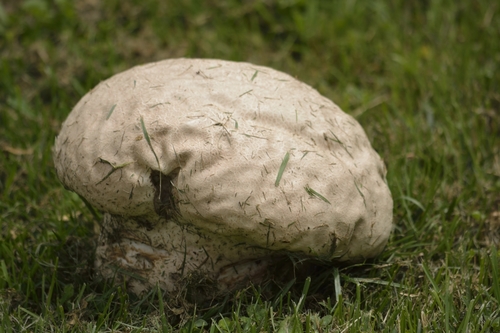
Calvatia craniiformis
(Schwein.) Fr. ex De Toni
iNaturalist· cc-by-sa
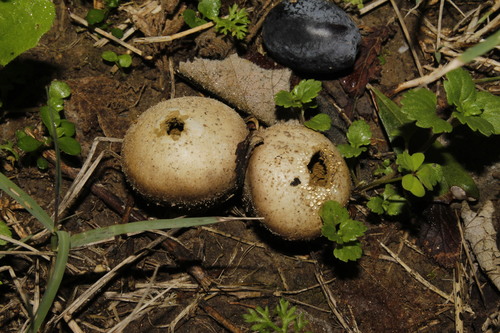
(c) Sindhu Ramchandran, the mushroom was identified by Mr Marco Della Maggiora, Italy, some rights reserved (CC BY-SA)
iNaturalist· cc-by-nc
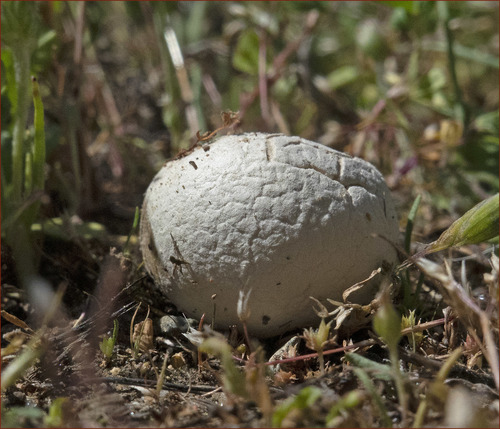
(c) louise_thomas, some rights reserved (CC BY-NC), uploaded by louise_thomas
iNaturalist· cc-by-sa
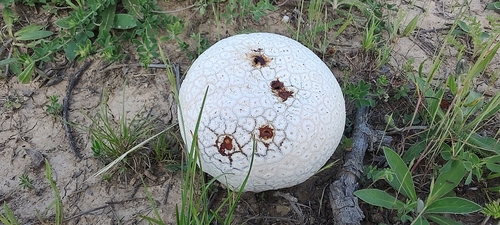
(c) David Whyte, some rights reserved (CC BY-SA), uploaded by David Whyte
Summary
Source: WikipediaCalvatia craniiformis, commonly known as the brain puffball or the skull-shaped puffball, is a species of puffball fungus in the family Agaricaceae. It is found in Asia, Australia, and North America, where it grows on the ground in open woods. Its name, derived from the same Latin root as cranium, alludes to its resemblance to an animal's brain. The skull-shaped fruit body is 8–20 cm (3–8 in) broad by 6–20 cm (2–8 in) tall and white to tan. Initially smooth, the skin (peridium) develops wrinkles and folds as it matures, cracking and flaking with age. The peridium eventually sloughs away, exposing a powdery yellow-brown to greenish-yellow spore mass (the gleba). The puffball is edible when the gleba is still white and firm, before it matures to become yellow-brown and powdery. Mature specimens have been used in the traditional or folk medicines of China, Japan, and the Ojibwe as a hemostatic or wound dressing agent. Several bioactive compounds have been isolated and identified from the brain puffball.
Description
Calvatia craniiformis is a mushroom in the puffball family found in temperate regions.
This description is brief — help expand it
Medicinal Uses
Calvatia craniiformis is an edible species. Young puffballs with a firm, white gleba have a mild odor and pleasant taste. Early 20th-century mycologist Charles McIlvaine noted over a century ago that "the slightest change to yellow makes it bitter." Versatile in cooking, the puffball absorbs flavors well. In the United States, the Ojibwe used the powdery gleba as a hemostatic agent to staunch the flow of nosebleeds: the spore powder was inhaled through the nostrils. It is now known that this practice can lead to the pulmonary disease lycoperdonosis, which causes symptoms similar to pneumonia. It is also used as a hemostatic agent in Chinese and Japanese folk medicines.
Distribution
It is a temperate plant.
Where It Grows
Asia, China, Hong Kong,
Dangerous Lookalikes
This plant can be confused with the following toxic species. Always verify identification carefully before consuming any wild plant.
Death Cap (button stage)
Amanita phalloides
Archenzo
Calvatia craniiformis
Calvatia craniiformis
(c) Sindhu Ramchandran, the mushroom was identified by Mr Marco Della Maggiora, Italy, some rights reserved (CC BY-SA)
Death Cap (button stage): When cut in half reveals developing gills, stem, and cap outline inside the round exterior.
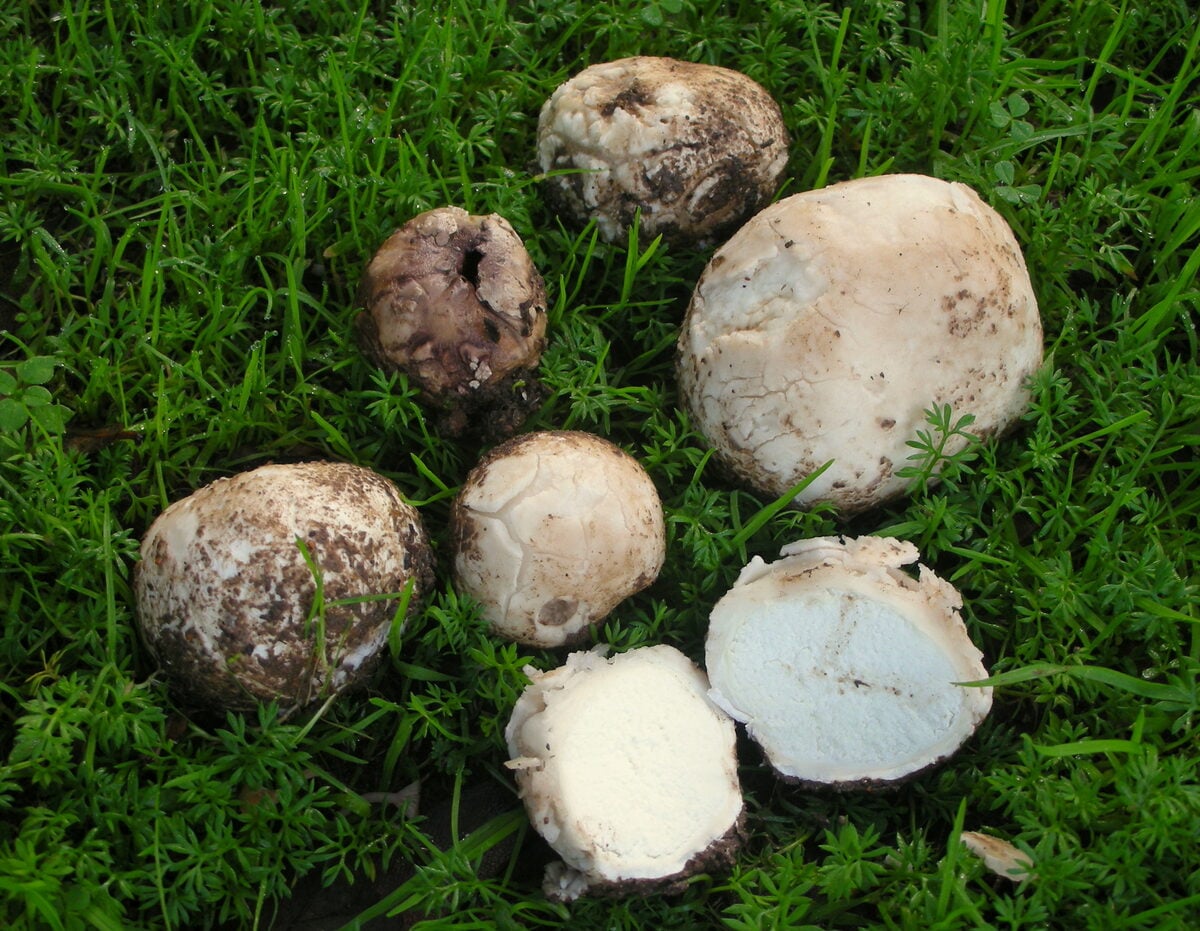
Calvatia craniiformis: Uniform pure white flesh when cut in half, no internal structures visible, very large when mature.
References (1)
- Boa, E. R., 2004, Wild edible fungi and their importance to people. FAO Non Wood Forest Products Booklet 17