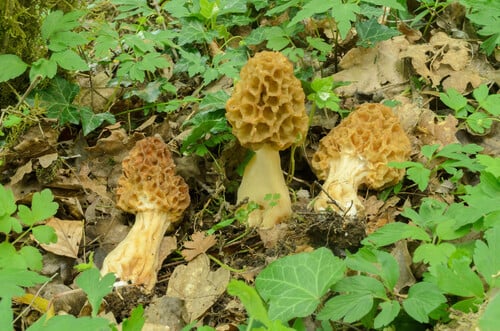
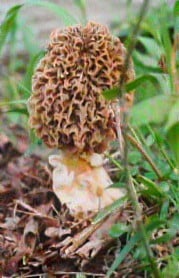
Morchella conica var. rigida
Krombh.
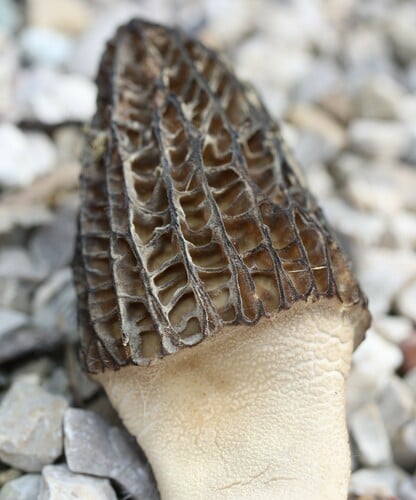
iNaturalist· cc-by-nc
(c) oliviarosen, some rights reserved (CC BY-NC)
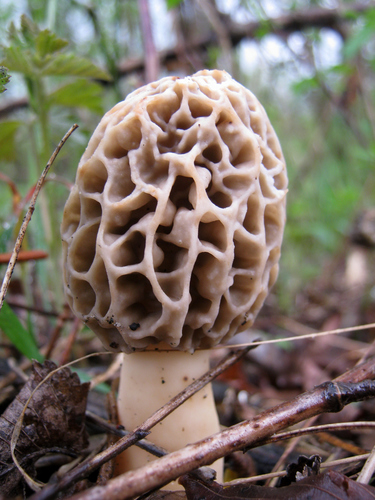
iNaturalist· cc-by-nc
(c) Joe Paquin, some rights reserved (CC BY-NC)
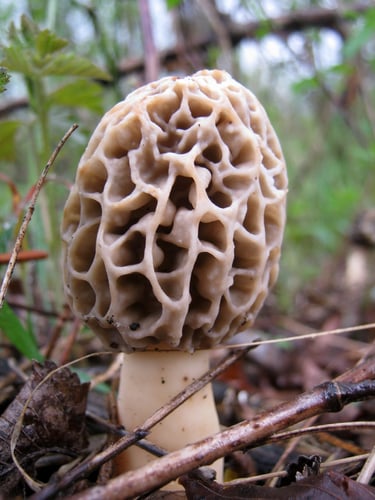
iNaturalist· cc-by-nc
(c) Joe Paquin, some rights reserved (CC BY-NC)
Summary
Source: WikipediaMorchella conica is an old binomial name previously applied to species of fungi in the family Morchellaceae. It is one of three scientific names that had been commonly used to describe black morels, the others being M. angusticeps and M. elata. It was first introduced by mycologist Christian Hendrik Persoon in 1818, as a superfluous name for the old taxon Morchella continua. According to Richard and colleagues, Fries’ sanctioning applies only at the subgeneric level and the name is illegitimate. Throughout the years, the name M. conica has been invariably applied to many different species by different authors, and DNA analysis in 2014 revealed that morels identified as "M. conica" indeed belonged to Morchella deliciosa, Morchella purpurascens, Morchella tridentina, and Morchella vulgaris.
Description
A temperate mushroom in the Morchellaceae family, sometimes classified in Agaricaceae.
This description is brief — help expand it
Edible Uses
The mushroom fruiting body is edible.
Distribution
It is a temperate plant.
Where It Grows
Asia, China,
Notes
They have also been put in the family Agaricaceae.
Dangerous Lookalikes
This plant can be confused with the following toxic species. Always verify identification carefully before consuming any wild plant.
False Morel
Gyromitra esculenta
Unknown
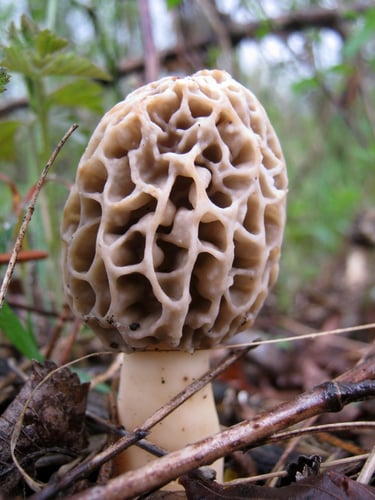
Morchella conica var. rigida
Morchella conica var. rigida
(c) oliviarosen, some rights reserved (CC BY-NC)
False Morel: Irregular brain-like wrinkles/folds, chambered or solid inside (not hollow), cap often hangs free from stem.
Morchella conica var. rigida: Regular honeycomb/pitted pattern on cap, completely hollow inside, cap attached directly to stem.
References (1)
- Boa, E. R., 2004, Wild edible fungi and their importance to people. FAO Non Wood Forest Products Booklet 17