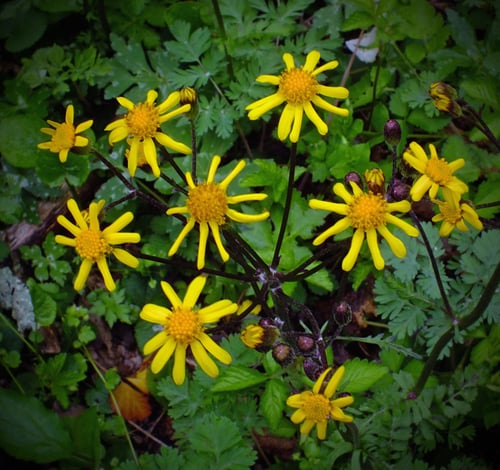
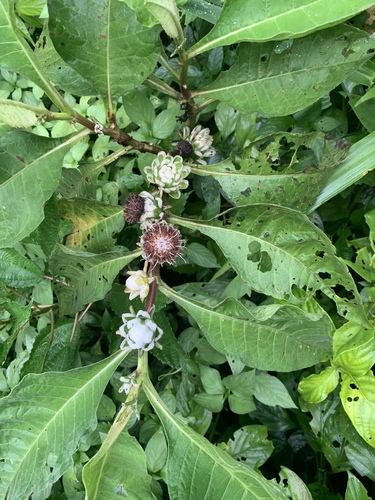
Centaurea calcitrapa
Linn.
Common star thistle, Star thistle, Caltrops
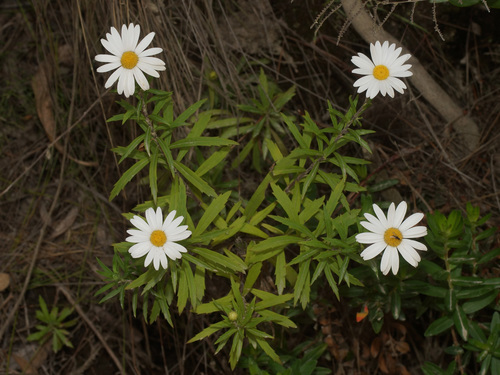
iNaturalist· cc-by-nc
(c) jjeveritt, some rights reserved (CC BY-NC)
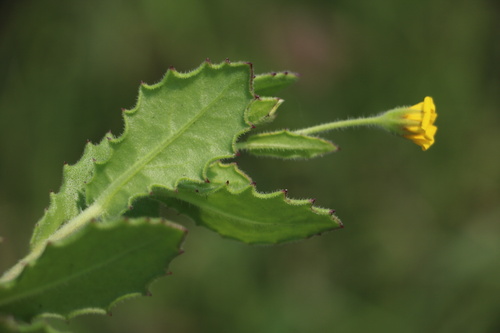
iNaturalist· cc-by-nc
(c) Gena Bentall, some rights reserved (CC BY-NC), uploaded by Gena Bentall
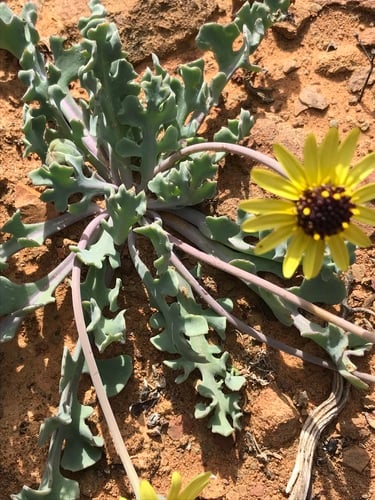
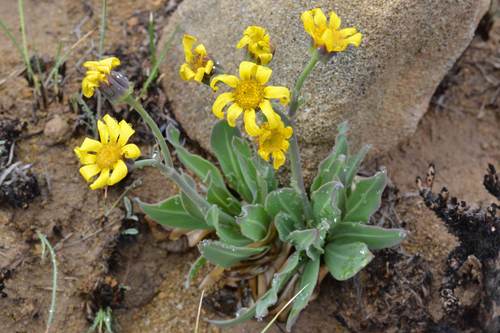
iNaturalist· cc-by-nc
(c) dgcurrywheel, some rights reserved (CC BY-NC)
Summary
Source: WikipediaCentaurea calcitrapa is a species of flowering plant known by several common names, including common star thistle, red star-thistle and purple star thistle. It is native to Europe but is known across the globe as an introduced species and often a noxious weed. The species name calcitrapa comes from the word caltrop, a type of weapon covered in sharp spikes.
Description
An annual plant although it sometimes takes 2 years to complete its life cycle. It forms a bush and is slightly woolly. It grows about 1 m high. The leaves at the base form a ring and are deeply divided into narrow lobes. The stem is pale coloured. It is branched, and hairy when young. It becomes smooth with age. The stem leaves are much divided and they get smaller towards the top of the plant. The flowers are pinkish-purple. They are surrounded by bracts with yellow spines at the ends. These spines can be 2.5 cm long. The plant can send out runners in sandy soil.
Edible Uses
The leaves and young stems can be eaten raw or cooked.
Traditional Uses
The young stems and leaves are eaten raw. They are also boiled and seasoned with olive oil and lemon. They are also used in stews.
This uses section is brief — help expand it
Medicinal Uses
The powdered seeds are taken as a drink to treat kidney or bladder stones. The powdered root is reputed to cure fistula and gravel.
Distribution
It is a Mediterranean climate plant. It grows in waste places. It will grow in most soils and conditions. It is resistant to drought and frost. It grows in temperate places. Tasmania Herbarium.
Where It Grows
Africa, Argentina, Asia, Australia, Britain*, Chile, Egypt, Europe, France, Germany, Greece, India, Italy, Luxembourg, Mediterranean, Netherlands, New Zealand, North Africa, Portugal, Sicily, South America, Spain, Tasmania, Turkey, Türkiye, Uruguay,
Cultivation
Succeeds in ordinary garden soil. Prefers a well-drained fertile soil and a sunny position. Tolerates dry, low fertility and alkaline soils. Members of this genus are rarely if ever troubled by browsing deer.
Propagation
Sow seed in April in a cold frame. Once seedlings are large enough to handle, prick them out into individual pots and plant them out during the summer. With sufficient seed, it can also be sown directly in situ during August or September.
Other Uses
None known.
Notes
There are about 450 Centaurea species.
Nutrition
| Part | Moisture | kJ | kcal | Protein | Vit A | Vit C | Iron | Zinc |
|---|---|---|---|---|---|---|---|---|
| Leaves | 91 | 106 | 25 | 2.4 | — | — | — | — |
Synonyms
Also Known As
Abrepuno colorado, Abriojos, Cardo abriojos, Obriulls, Sciaccablisci
References (19)
- Ambasta S.P. (Ed.), 2000, The Useful Plants of India. CSIR India. p 115
- Bidak, L. M., et al, 2015, Goods and services provided by native plants in desert ecosystems: Examples from the northwestern coastal desert of Egypt. Global Ecology and Conservation 3 (2015) 433–447
- Biscotti, N. et al, 2018, The traditional food use of wild vegetables in Apulia (Italy) in the light of Italian ethnobotanical literature. Italian Botanist 5:1-24
- Blamey, M and Grey-Wilson, C., 2005, Wild flowers of the Mediterranean. A & C Black London. p 455
- Bodkin, F., 1991, Encyclopedia Botanica. Cornstalk publishing, p 234
Show all 19 references Hide references
- Dashorst, G.R.M., and Jessop, J.P., 1998, Plants of the Adelaide Plains & Hills. Botanic Gardens of Adelaide and State Herbarium. p 156
- Food Composition Tables for the Near East. http://www/fao.org/docrep No. 423
- Geraci, A., et al, 2018, The wild taxa utilized as vegetables in Sicily (Italy): a traditional component of the Mediterranean diet. Journal of Ethnobiology and Ethnomedicine (2018) 14:14
- Hedrick, U.P., 1919, (Ed.), Sturtevant's edible plants of the world. p 178
- Hussey, B.M.J., Keighery, G.J., Cousens, R.D., Dodd, J., Lloyd, S.G., 1997, Western Weeds. A guide to the weeds of Western Australia. Plant Protection Society of Western Australia. p 92
- Lamp, C & Collet F., 1989, Field Guide to Weeds in Australia. Inkata Press. p 59
- Lentini, F. and Venza, F., 2007, Wild food plants of popular use in Sicily. J Ethnobiol Ethnomedicine. 3: 15
- Paczkowska, G. & Chapman, A.R., 2000, The Western Australian Flora. A Descriptive Catalogue. Western Australian Herbarium. p 158
- Pasta, S., et al, 2020, An Updated Checklist of the Sicilian Native Edible Plants: Preserving the Traditional Ecological Knowledge of Century-Old Agro-Pastoral Landscapes. Frontiers in Plant Science. Volume 11|Article 388
- Plants for a Future database, The Field, Penpol, Lostwithiel, Cornwall, PL22 0NG, UK. http://www.scs.leeds.ac.uk/pfaf/
- Rivera, C., et al, 2005, The Ethnobotanical Study of Local Mediterranean Food Plants as Medicinal Resources in Southern Spain. Journal of Physiologyand Pharmacology. 56, Suppl. 1, 97-114
- Sp. pl. 2:917. 1753
- Tasmanian Herbarium Vascular Plants list p 6
- Tardio, J., et al, Ethnobotanical review of wild edible plants in Spain. Botanical J. Linnean Soc. 152 (2006), 27-71