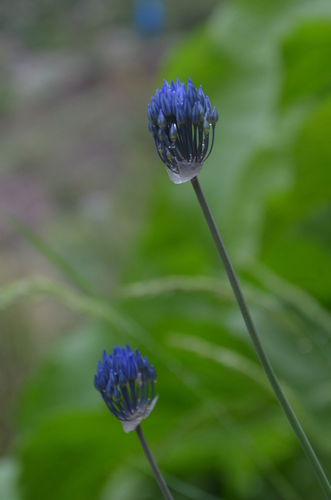
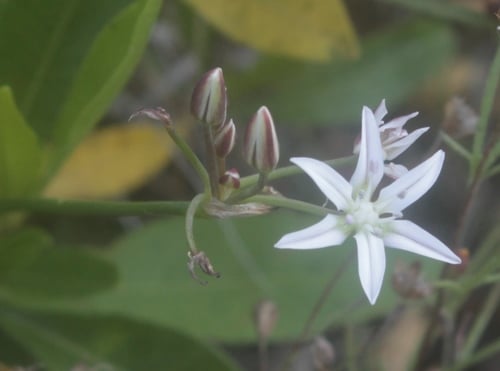
Allium nigrum
L.
Black garlic
iNaturalist· cc-by-nc
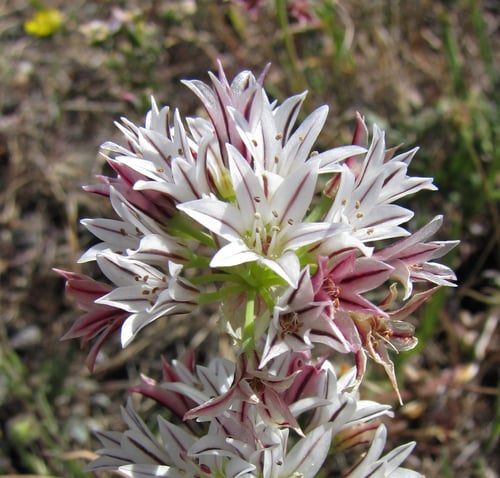
(c) Felix Riegel, some rights reserved (CC BY-NC), uploaded by Felix Riegel
iNaturalist· cc-by-nc
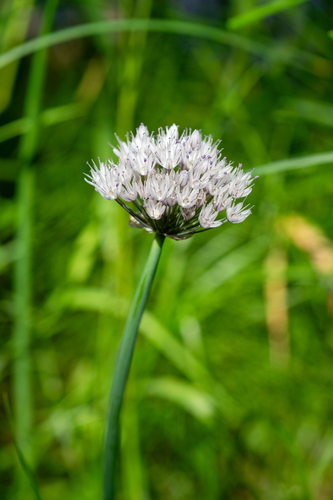
(c) Axel Albano, some rights reserved (CC BY-NC), uploaded by Axel Albano
iNaturalist· cc-by-nc
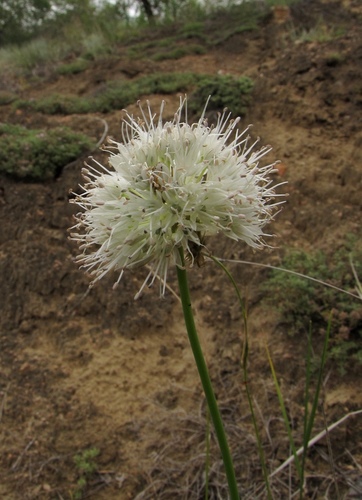
(c) Christian Herzig, some rights reserved (CC BY-NC), uploaded by Christian Herzig
Summary
Source: WikipediaAllium nigrum, common name black garlic, broad-leaved leek, or broadleaf garlic, is a Middle Eastern species of wild onion. It lacks the onion or garlic scent shared by most of the other species in the group. The species is native to Turkey, Cyprus, Syria, Lebanon, and the Palestine region but cultivated as an ornamental in many other places. It has become naturalized in some regions, including parts of the United States (especially Washington and Oregon).
Description
A temperate or Mediterranean herb in the Amaryllidaceae family (onion family) with edible leaves and bulbils.
This description is brief — help expand it
Edible Uses
The leaves and bulbils are used for flavoring and eaten raw or cooked, and can be used as a spice.
Traditional Uses
The leaves and bulbils are used for flavouring. They are eaten raw or cooked.
This uses section is brief — help expand it
Distribution
It is a temperate or Mediterranean plant.
Where It Grows
Africa, Europe, Italy, Mediterranean, Middle East, North Africa, Sicily, Syria, Turkey, Türkiye,
Notes
They have also been put in the family Alliaceae.
Synonyms
Also Known As
Agghiu d'i siminati, Broad leaf garlic, Porra
References (4)
- Biscotti, N. et al, 2018, The traditional food use of wild vegetables in Apulia (Italy) in the light of Italian ethnobotanical literature. Italian Botanist 5:1-24
- Geraci, A., et al, 2018, The wild taxa utilized as vegetables in Sicily (Italy): a traditional component of the Mediterranean diet. Journal of Ethnobiology and Ethnomedicine (2018) 14:14
- Pasta, S., et al, 2020, An Updated Checklist of the Sicilian Native Edible Plants: Preserving the Traditional Ecological Knowledge of Century-Old Agro-Pastoral Landscapes. Frontiers in Plant Science. Volume 11|Article 388
- Seidemann J., 2005, World Spice Plants. Economic Usage, Botany, Taxonomy. Springer. p 21