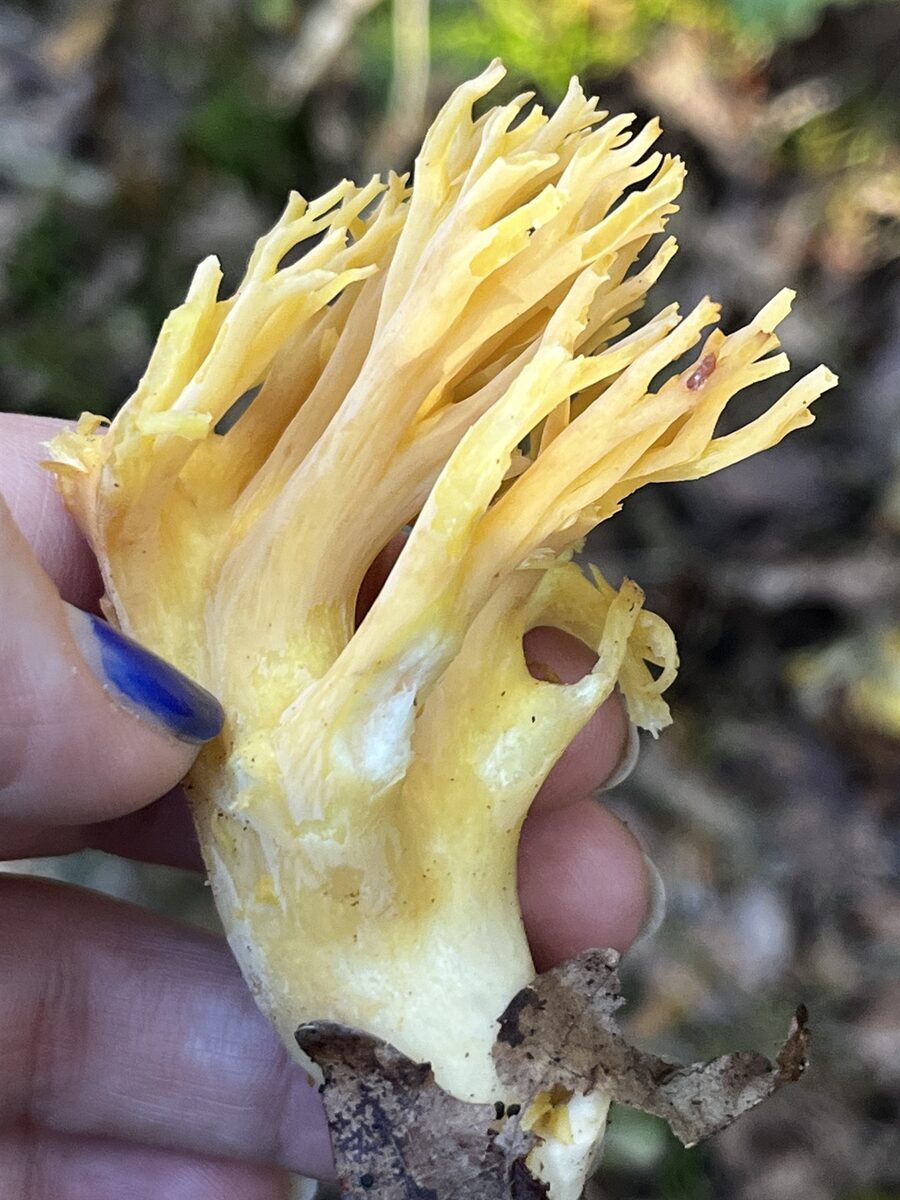
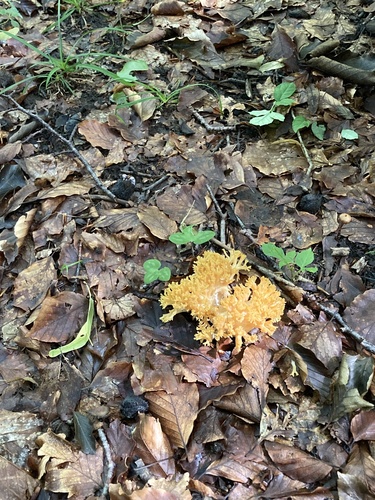
Ramaria formosa
(Fr.) Quel.
iNaturalist· cc-by-nc-sa
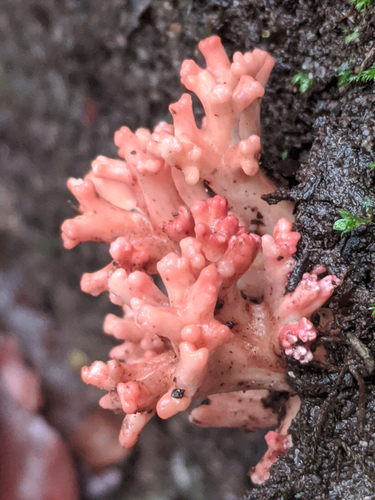
(c) Ahmed Mujčinović, some rights reserved (CC BY-NC-SA), uploaded by Ahmed Mujčinović
iNaturalist· cc-by-nc
(c) Cordula Bernert, some rights reserved (CC BY-NC)
Summary
Source: WikipediaRamaria formosa, commonly known as the pinkish coral mushroom, salmon coral, beautiful clavaria, handsome clavaria, yellow-tipped- or pink coral fungus, is a coral fungus found in Europe. It is a pinkish, much-branched coral-shape reaching some 20 cm (8 in) high. It is widely held to be mildly poisonous if consumed, giving rise to acute gastrointestinal symptoms of nausea, vomiting, diarrhea and colicky pain.
Description
A temperate fungal fruiting body in the Ramariaceae family that is sold in local markets in Nepal.
This description is brief — help expand it
Edible Uses
The mushroom fruiting body is eaten.
Known Hazards
Consumption of the fungus results in acute gastrointestinal symptoms of nausea, vomiting, colicky abdominal pain and diarrhea. The toxins responsible are unknown to date. It has been reported as edible if the acrid tips are removed.
Distribution
It is a temperate plant.
Where It Grows
Asia, Himalayas, Nepal, Russia,
Other Information
It is sold in local markets in Nepal.
Also Known As
Thokre chyau
References (3)
- Boa, E. R., 2004, Wild edible fungi and their importance to people. FAO Non Wood Forest Products Booklet 17
- Joshi, K. and Joshi, A. R., 2008, Ethnobotanical Studies on Some Lower Plants of the Central Development Region, Nepal. Ethnobotanical Leaflets 12:832-40
- Li, H., et al, 2020, Reviewing the world’s edible mushroom species: A new evidence-based classification system. Compr Rev Food Sci Food Saf. 2021;20:1982–2014.