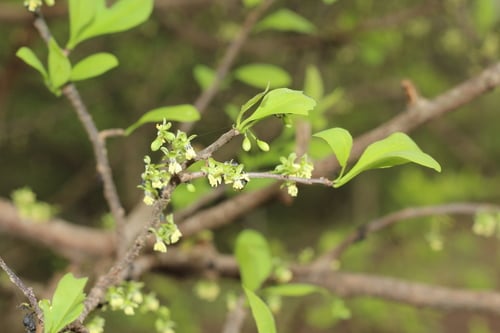
Achatocarpus nigricans
Triana
Blackish achatocarpus
iNaturalist· cc-by-nc
(c) Jeir Ortega Galvan, some rights reserved (CC BY-NC), uploaded by Jeir Ortega Galvan
iNaturalist· cc-by-nc
(c) Carlos Domínguez-Rodríguez, some rights reserved (CC BY-NC)
Description
A shrub or small tree. It grows 5 m tall. There are prickles along the stem. The leaves are twice divided and there are 8-18 pairs of pinnae. There are up to 50 pairs of pinnules on each pinnae. The flowers are yellow. They are in large clusters at the ends of branches. The pods are flattened.
Edible Uses
Drupes, whitish- to greenish-white-translucent when ripe, are edible (as reported in Mexico), but can be unpleasant tasting. The leaves are eaten in Bolivar, Colombia.
Traditional Uses
The ripe fruit can be eaten.
This uses section is brief — help expand it
Distribution
It is a tropical plant.
Where It Grows
Bolivia*, Central America, Colombia, Ecuador, El Salvador, Guatemala, Honduras, Mexico, Nicaragua, North America, South America, Venezuela,
Cultivation
The flowers are fragrent. A dioecious species; both male and female forms need to be grown if fruit and seed are required.
Other Uses
The heartwood is a pale greenish-brown, the sapwood white to pale yellowish-brown, . It is said to be used for railroad ties in southern Mexico.
Synonyms
Also Known As
Canfuncia, Cuenta de agua, Espino blanco, Guirakpupeti, Limonacho, Limoncillo, Negrito, Vanda negra
References (3)
- Kermath, B. M., et al, 2014, Food Plants in the Americas: A survey of the domesticated, cultivated and wild plants used for Human food in North, Central and South America and the Caribbean. On line draft. p 10
- Kew Plants of the World onLine
- Roa, J. A. G. & Boada, D. S. G., 2018, Fundación para el Fortalecimiento de la Fruticultura y Plantas Alimenticias no Convencionales en Colombia.