Canthium coromandelicum
(Burm.f.) Alston
Wild jessamine, Carray cheddie
iNaturalist· cc-by
(c) J.M.Garg, some rights reserved (CC BY)
iNaturalist· cc-by
(c) J.M.Garg, some rights reserved (CC BY)
iNaturalist· cc-by
(c) J.M.Garg, some rights reserved (CC BY)
Summary
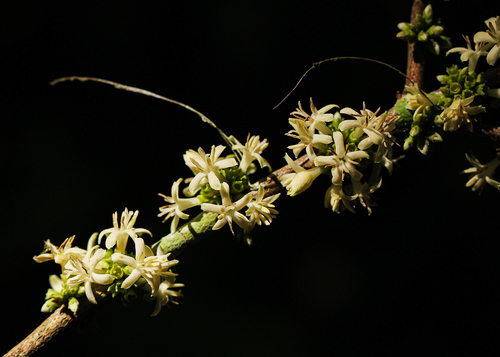
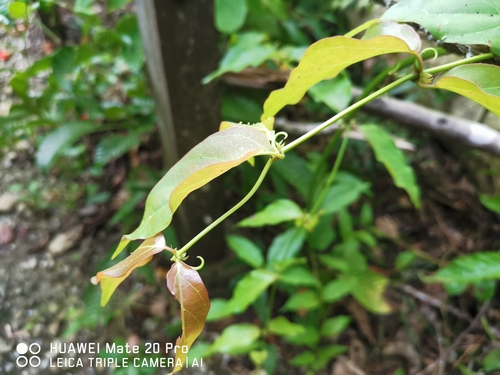
Source: WikipediaCanthium coromandelicum, also known as Karai, is a bushy thorny suffruticose herb, a native of India found mainly in the Coromandel region.
Description
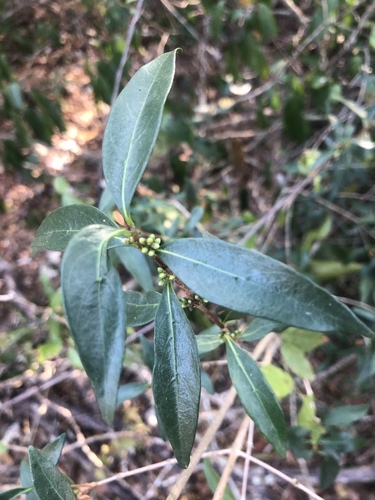
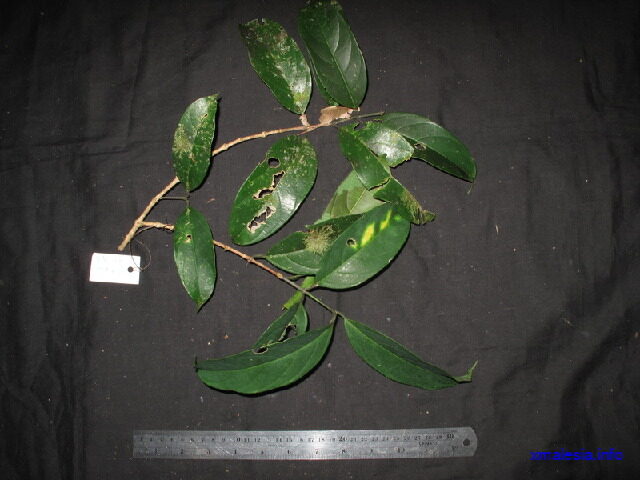
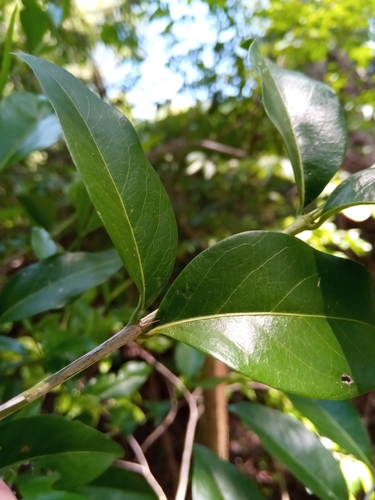
A shrub. It grows 5 m tall. It has thorns. The small branches are 4 angled. The bark is grey. The spines are 1-3 cm long. The leaves are opposite and the bases overlap. The leaves are oval and 2-4 cm long by 1-3 cm wide. The flowers are greenish. The fruit are 1-1.5 cm across. They are a flattened round shape and yellow or orange when ripe.
Edible Uses
Leaves - raw or cooked. They are eaten in salads and also used as a vegetable. Regular consumption of the leaves has been shown to significantly reduce cholesterol levels in the blood.
Traditional Uses
The ripe fruit are eaten raw. The young leaves are eaten as a vegetable.
This uses section is brief — help expand it
Medicinal Uses
Canthium coromandelicum is a commonly used medicinal herb in India, where it is considered to be a general tonic for the whole body. Specifically, it is said to control high blood pressure, reduce unwanted fats in the body, and purify the circulatory system. It is used in the treatment of a wide range of conditions, including diabetes, fevers, indigestion, nausea, diarrhoea, constipation, dysuria, impotence, decreased sperm count, and in renal calculi. The roots, combined with milk, are a traditional medicine for treating snake bites. The leaves are anthelmintic, antioxidant and diuretic. Taken at regular intervals, they are used to treat intestinal worms in children. Applied externally, the tender leaves are boiled and tied on the infected part in order to remove thorns that have got into the skin. A decoction of the leaves is used to help wound healing and to treat skin problems, including scabies and the ring worm infection.. The roots and leaves are astringent, cholagogue and diuretic. They are used in vitiated conditions of Kapha, and to treat diarrhoea, strangury, fever, leucorrhoea, intestinal worms, and general debility. The bark, combined with turmeric and lime, is made into a paste and applied on the forehead to cure headache. The fruits are astringent, cholagogue, strengthening and an expellant of phlegm and bile. They are given at regular intervals in order to treat intestinal worms in children.
Distribution
It is a tropical plant. It grows in dry forests. It grows up to 750 or 1,000 m above sea level.
Where It Grows
Asia, China, India, Indochina, Indonesia, Malaysia, SE Asia, Sri Lanka,
Cultivation
Plants are used as a hedge.
Other Uses
The branches are used for fencing. The grrey wood is hard and close-grained. It is used in turning.
Production
In southern India it flowers and fruits between April to June.
Synonyms
Also Known As
Babu jamal, Bahibali, Bellakarai, Kara, Karai, Karbit, Karemullu, Kari kaare-gida, Karkate, Katbor, Kattakara, Kayili, Kolhapur, Nandre, Ollepode, Totadi
References (10)
- Ajesh, T. P., et al, 2012, Ethnobotanical Documentation of Wild Edible Fruits used by Muthuvan Tribes of Idukki, Kerala-India. International Journal of Pharma and Bio Sciences 3(3): 479-487
- Ashton, M. S., et al 1997, A Field Guide to the Common Trees and Shrubs of Sri Lanka. WHT Publications Ltd. pdf p 327
- Jadhav, V. D. et al, 2011, Documentation and ethnobotanical survey of wild edible plants from Kolhapur district. Recent Research in Science and Technology. 3(12): 58-63
- Kiran, K. C., et al, 2019, Diversity and Seasonal Availability of Potential Wild Edible Plants from Vidarbha Region of Maharashtra State, India. Int.J.Curr.Microbiol.App.Sci (2019) 8(2): 1434-1446
- Misra, S., 2020, Survey of edible plants for human consumption in south Odisha, India. Journal of Emerging Technologies and Innovative Research (JETIR) Vol. 7, Issue 12 p 278
Show all 10 references Hide references
- Rasingam, L., 2012, Ethnobotanical studies on the wild edible plants of Irula tribes of Pillur Valley, Coimbatore district, Tamil Nadu, India. Asian Pacific Journal of Tropical Biomedicine. (2012) S1493-S1497
- Ravikrishna, S., 2011, Ethno-medico-botanical survey on Wild Edible fruits of Udupi Taluq, Udupi p 63
- Reddy, B. M., 2012, Wild edible plants of Chandrapur district, Maharashtra, India. Indian Journal of Natural Products and Resources. 3(1) pp 110-117 (As Canthium parviflorum Lamk.)
- Saidulu, P. et al, 2015, Ethnobotanical Knowledge Studied in Pocharam Wildlife Sanctuary, Telangana, India. Not Sci Biol, 2015, 7(2):164 -170
- Sukarya, D. G., (Ed.) 2013, 3,500 Plant Species of the Botanic Gardens of Indonesia. LIPI p 603