Castanopsis sclerophylla
(Lindley & Paxton) Schottky
Bitter chestnut, White rock chestnut
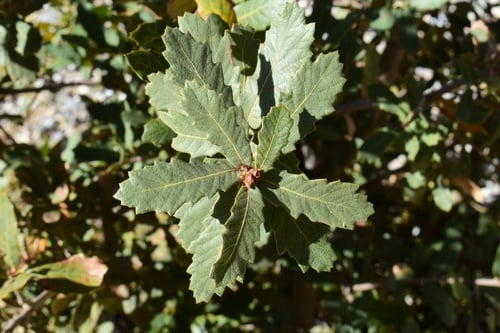
iNaturalist· cc-by-nc
(c) linnieeeee, some rights reserved (CC BY-NC)
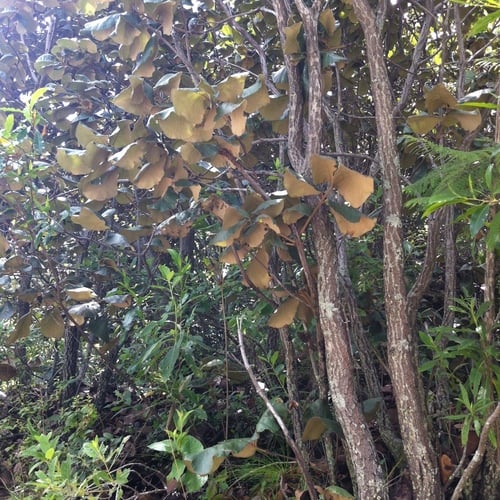
iNaturalist· cc-by-nc
(c) 小铖/Smalltown, some rights reserved (CC BY-NC)
iNaturalist· cc-by-nc
(c) 江国彬, some rights reserved (CC BY-NC)
Summary
Source: WikipediaCastanopsis sclerophylla (syn. Lithocarpus chinensis), the Chinese tanbark-oak, is a species of flowering plant in the family Fagaceae, native to southern China. In the wild it is typically found growing in broad-leaved evergreen forests at 200 to 1,000 m (700 to 3,300 ft) above sea level. It is an evergreen tree with glossy, thick leaves and attractive flaky bark, and reaches 20 m (66 ft) in height. The small nuts are edible, and the Chinese process them into a foodstuff similar to tofu. It is used as a street tree in a number of Chinese cities. Hardy to USDA zone 7b, it does well in the southeastern United States, and is offered by several nurseries there under its synonym Lithocarpus chinensis.
Description
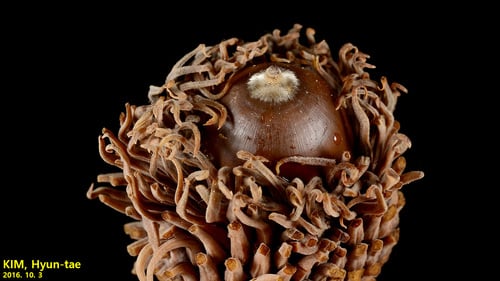
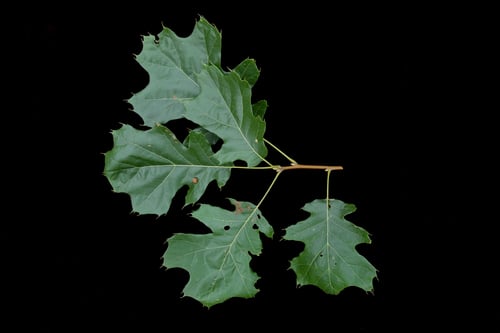
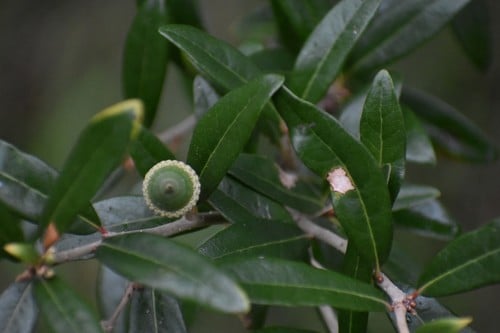
A tree. The branches and leaf blades are smooth. The young shoots are reddish brown and slightly angular. The leaf stalk is 1.5-2.5 cm long. The leaf blade is oblong and 7-15 cm long. It is leathery. It turns silvery grey on the upper surface with age. The base is rounded or wedge shaped and often unequal. The leaf blade can have irregular edges in the top section. They taper to the tip and it can be cup shaped. There are 10-15 side veins on each side of the midrib. The female flower arrangement is about 15 cm long. The cups are 1.2-1.5 cm across. They almost entirely enclose the nut. The outside is brownish and hairy. The are scale like bracts. They are 3-4 angled. There is usually one nut per cup but there can be 3. These are 1-1.4 cm across. They are hairy and the tip is sharp.
Edible Uses
The small seeds are eaten raw and are sweet, with a flavour similar to the North American chinquapin (Castanea pumila). The seed can also be crushed and converted into a paste known as 'tou-fu', which resembles bean curd — this process probably involves fermentation as well.
Traditional Uses
The nuts are used for food. Starch is extracted from them. This is used to prepare pudding.
This uses section is brief — help expand it
Medicinal Uses
The leaves are astringent and are used to arrest puerperal haemorrhage and applied to chronic ulcers. The seed is used in the treatment of diarrhoea.
Distribution
They grow in broad leafed forest between 200-1000 m altitude in China.
Where It Grows
Asia, China*,
Propagation
Seed requires a period of cold stratification and is best sown as soon as it is ripe in a cold frame. The seed has short viability and should not be allowed to dry out. It can be stored for a few months if kept cool and moist — a plastic bag in the salad compartment of a fridge works well. Stored seed should be soaked in warm water for 24–48 hours before sowing. Germination usually takes place within 1–3 months at 15°C. Prick out seedlings into individual pots as soon as they are large enough to handle and plant out in mid summer if possible, otherwise overwinter in a cold frame and plant out in late spring. Give young plants some protection from cold for their first few winters outdoors.
Other Uses
None known. The plant is noted for its scented qualities.
Notes
There are about 120 Castanopsis species. Many have edible nuts.
Synonyms
Also Known As
Ku zhu
References (7)
- Bot. Jahrb. Syst. 47:638. 1912
- Huang Chengjiu, Zhang Yongtian, Bartholomew, B., Fagaceae, Flora of China.
- Hu, Shiu-ying, 2005, Food Plants of China. The Chinese University Press. p 346
- Plants for a Future database, The Field, Penpol, Lostwithiel, Cornwall, PL22 0NG, UK. http://www.scs.leeds.ac.uk/pfaf/
- Wickens, G.E., 1995, Edible Nuts. FAO Non-wood forest products. FAO, Rome. p 125
Show all 7 references Hide references
- Wiersema, J. H. & Leon, B., 2013, World Economic Plants. A Standard Reference CRC Press. 2nd Ed. p 152
- World Checklist of Useful Plant Species 2020. Royal Botanic Gardens, Kew