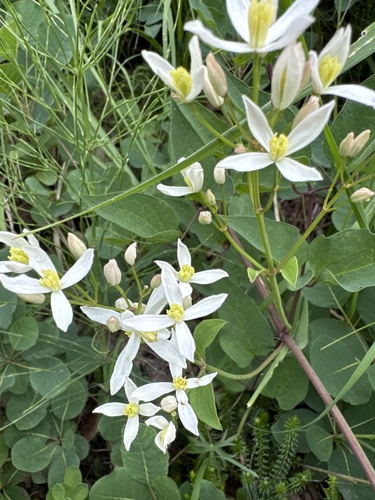
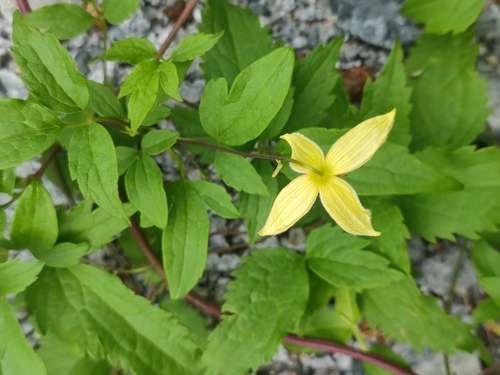
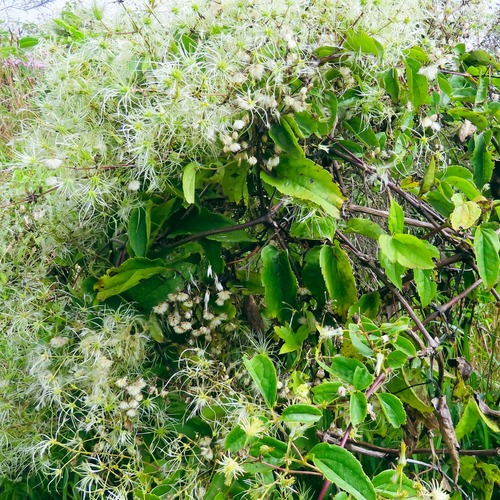
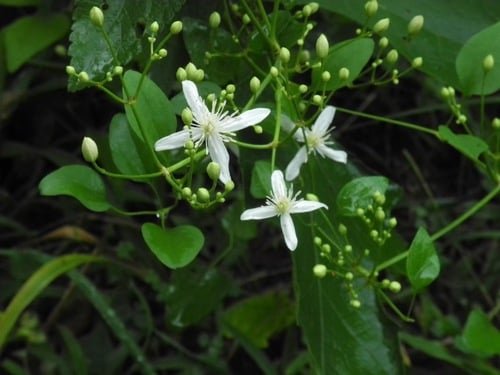
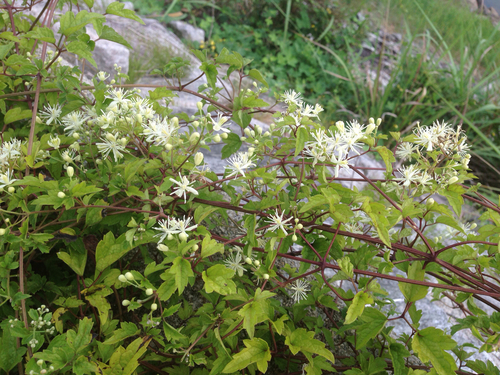
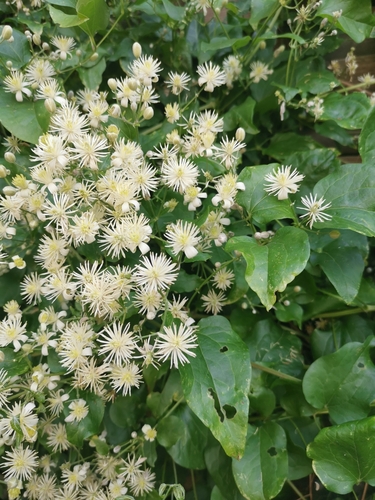
Coptis trifolia subsp. groenlandica
(Oeder) Hulten
iNaturalist· cc-by-nc
(c) Per Verdonk, some rights reserved (CC BY-NC)
iNaturalist· cc-by
(c) Superior National Forest, some rights reserved (CC BY)
iNaturalist· cc-by-nc
(c) Susan Elliott, some rights reserved (CC BY-NC), uploaded by Susan Elliott
Summary
Source: WikipediaCoptis trifolia, commonly known as the threeleaf goldthread or savoyane, is a perennial plant in the family Ranunculaceae native to North America.
Description
A temperate herb in the family Ranunculaceae growing 20 cm tall and spreading 50 cm wide, suited to USDA hardiness zone 2.
This description is brief — help expand it
Edible Uses
The leaves are eaten and used to flavor sassafras-root bark beer.
Traditional Uses
The leaves are eaten and also used to flavour sassafras-root bark beer.
This uses section is brief — help expand it
Medicinal Uses
The rhizome of the plant was used by several Native American peoples, including many Algonquian peoples and the Haudenosaunee, to relieve canker sores and other ailments of the mouth. This is the source of another common name, canker-root. It has also been used to make a tea that is used as an eyewash, as well as an anthelmintic, antiemetic, emetic, and gastroinestinal aid. Like the medicinal plant goldenseal, goldthread is used to treat symptoms of influenza and the common cold. C. trifolia has been shown to be biologically active against E. coli and Bacillus subtilis. The active compounds of C. trifolia are the alkaloids berberine and coptine.
Distribution
It is a temperate plant. It suits USDA hardiness zone 2.
Where It Grows
USA,
Synonyms
References (2)
- Ferns, Plants for a Future.
- Jackes, D. A., Edible Forest Gardens