Castanopsis acuminatissima
(Blume) A. DC.
Castanopsis chestnut, White oak
iNaturalist· cc-by-nc
(c) ytt, some rights reserved (CC BY-NC), uploaded by ytt
iNaturalist· cc-by-nc
(c) ytt, some rights reserved (CC BY-NC), uploaded by ytt
iNaturalist· cc-by-nc
(c) Akmal Idham, some rights reserved (CC BY-NC)
Summary
Source: WikipediaCastanopsis acuminatissima is an evergreen tree native to Southeast Asia and New Guinea. It is known by a variety of common names over its range, including white oak, New Guinea oak, Papua New Guinea oak, ki riung, ko-duai, ko-soi, ko-mat, meranak, and riung anak.
Description
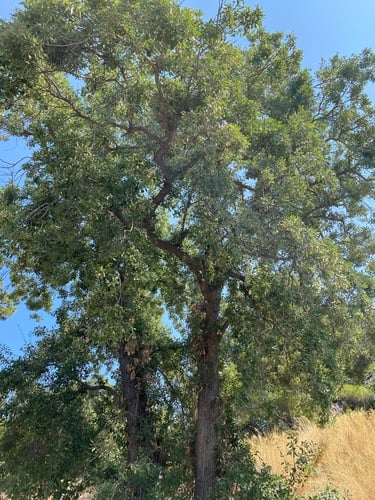
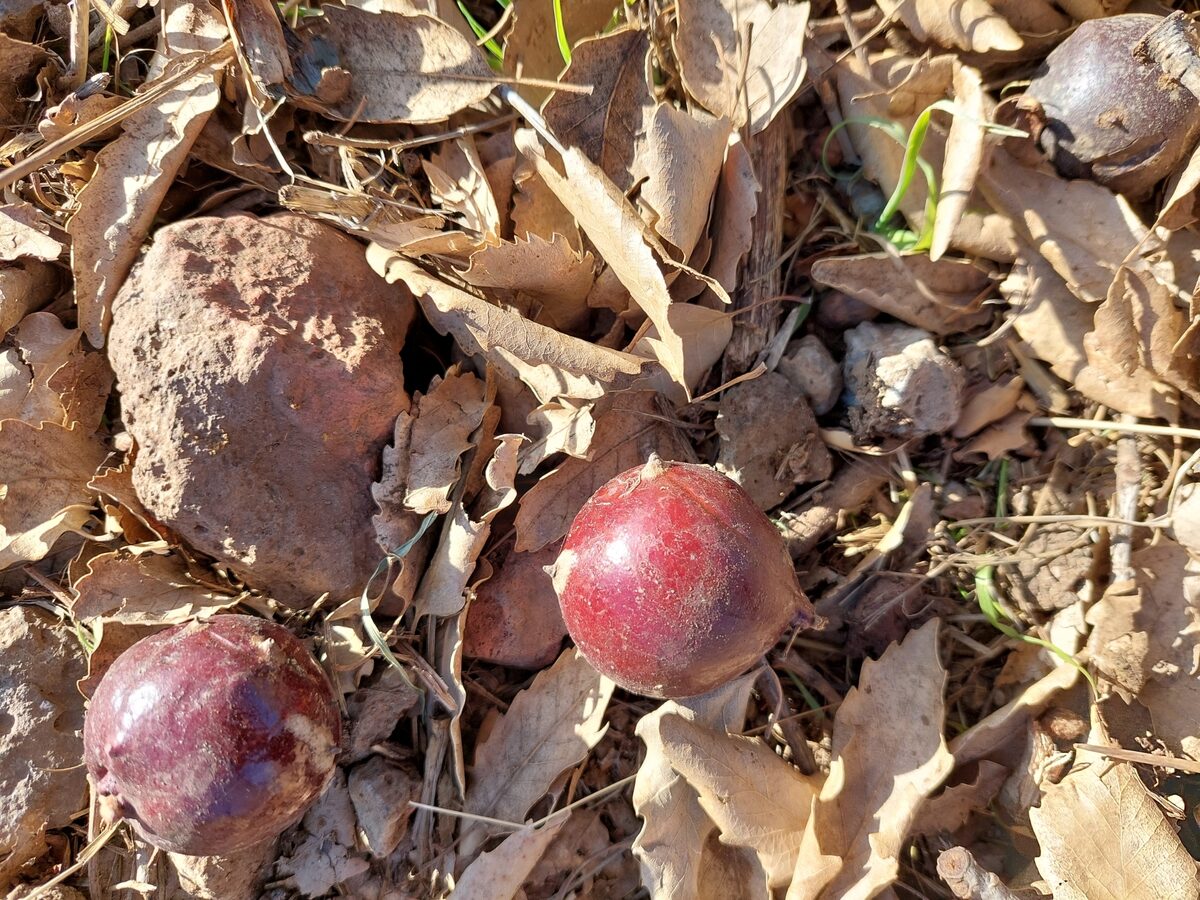
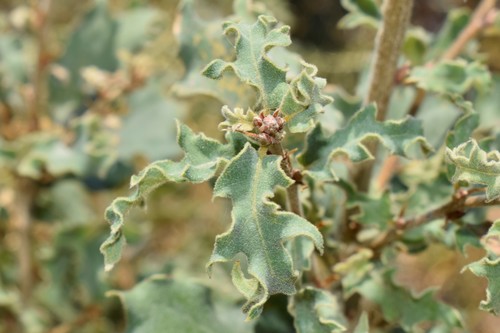
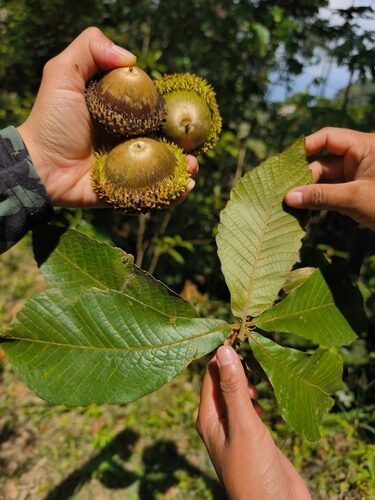
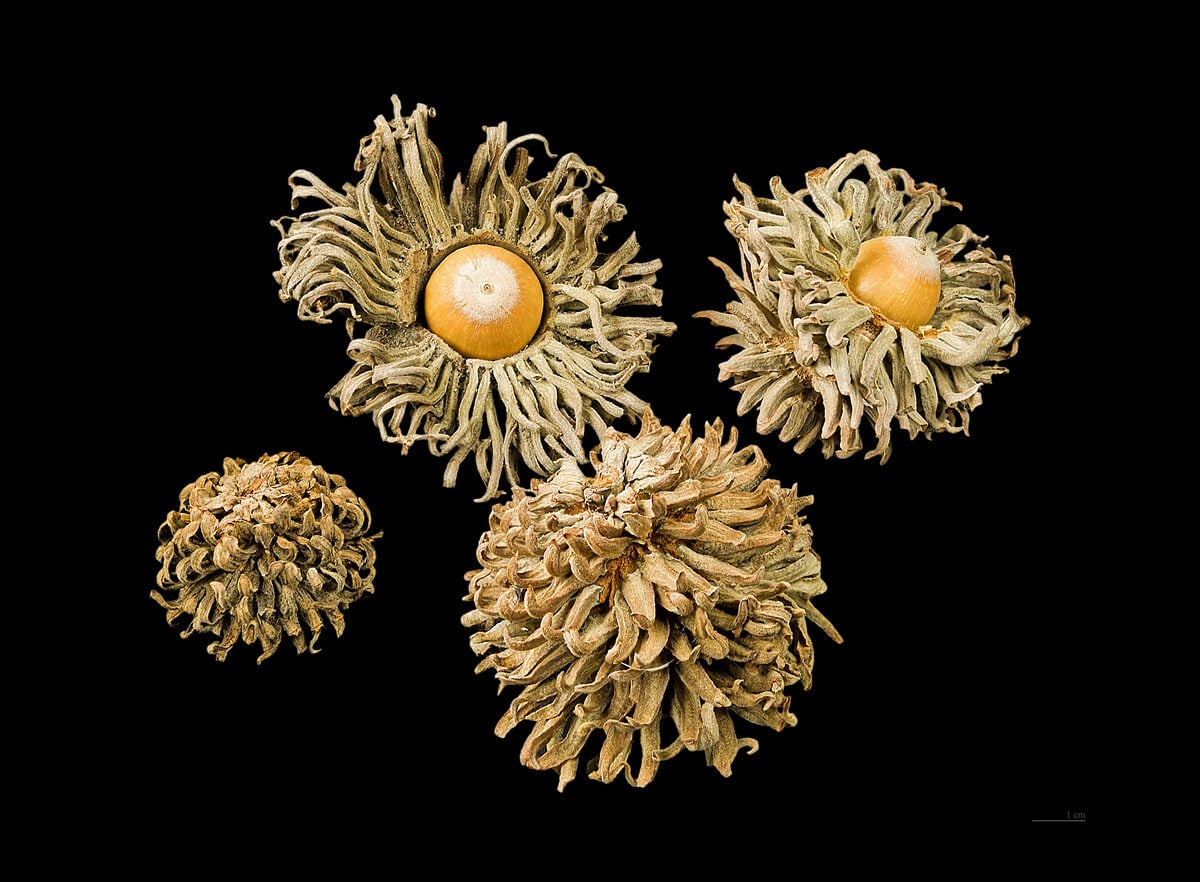
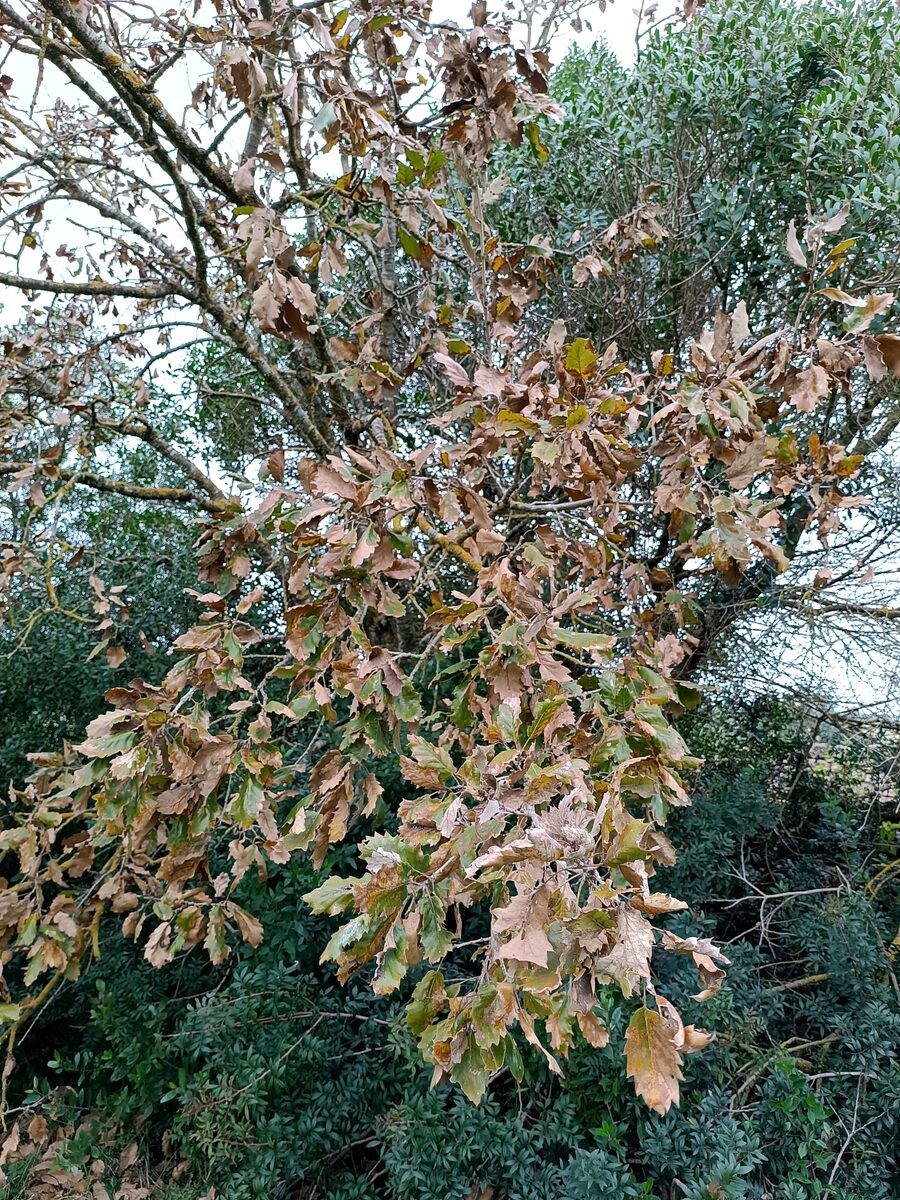
This tree grows up to 40 metres tall and it can have a trunk 1 metre through at the base. Most trees have several suckers growing from their base and the roots of the tree are close to the surface. It is a widely spreading tree. The bark is quite rough and yellowish. The leaves are mainly horizontal with re-curved tips. They are rich green on the upper surface and copper brown underneath. The male and female flowers occur separately but they both occur on the one tree. The tree has flushes of growth with new leaves having a slightly reddish colour. The fruit are borne on spikes 15 to 25 cm long carried near the ends of twigs. They are covered with a prickly envelope. The nut has a spiky type of covering around it and as it ripens this peels back and the nut falls. The nut is pointed, brown and slightly hairy. It is about 1.5 cm long and has two large "seeds" inside.
Edible Uses
The seeds can be eaten raw or cooked, though cooking is more common — children in particular tend to eat them raw. Boiled or roasted, the seeds have a flavour somewhat like rice. Each seed measures up to 15mm x 10mm and is held in a spiny seed case.
Traditional Uses
The seeds are eaten preferably after cooking. They are boiled. CAUTION Mouth ulcers and anaemia have been reported from eating large numbers of raw nuts. It is therefore safest to cook them. Small numbers of the nuts are eaten raw by children. Mostly the nuts are cooked and eaten. If small amounts are available they are boiled in a container. If large quantities are available they are cooked in earth ovens. Cooked they taste like rice. Pigs readily consume the nuts so people take their pigs out and tie them up under the trees in the bush during the nut season.
Medicinal Uses
None known.
Known Hazards
Mouth ulcers and anaemia have been reported from people eating large numbers of raw nuts.
Distribution
A tropical plant. It occurs throughout much of Papua New Guinea and can form pure stands in lower mountain rainforest between 500 and 2,000 m altitude. The most common place is between 1,100 and 2,300 metres above sea level but they can occur down to 500 metres in many places and are at the sea level. Often these chestnut trees are more common on the boundary between the grassland and the forest. They form a thick covering of leaves which stops many smaller plants from growing underneath. As well they commonly grow in groups or clumps made up only of chestnut trees. From planes, these Castanopsis forests can be picked out because they have a distinctive yellowish brown colour. Under the trees there is usually a thick layer of fallen leaves.
Where It Grows
Asia, Bangladesh, China, India, Indochina, Indonesia, Japan, Laos, Malaysia, Myanmar, Pacific, Papua New Guinea, PNG, SE Asia, Solomon Islands, Taiwan, Thailand, Vietnam,
Cultivation
The seeds grow easily. Self sown plants can often be found under large trees. These can be transplanted to where you want to grow a tree. A nursery can be used by planting some seeds and then transplanting them when they are big enough. Although suckers are common near the base of trees they do not grow easily. Pollination is most probably by wind.
Propagation
Seed germinates readily if sown fresh. Self-sown seedlings can be transplanted. Suckers form near the base of the plant but often do not transplant well.
Other Uses
The tree produces a heavy leaf fall that creates a deep mulch, suppressing the growth of other plants beneath it. It is used as a pioneer species in reforestation projects in northern Thailand, planted in degraded woodland and open areas alongside other fast-growing species capable of forming dense, weed-suppressing canopies and attracting seed-dispersing wildlife such as birds and bats. The wood is white and used for furniture, bridges, flooring, plywood, and boat building. Trunks and bark are used in traditional house construction, and the wood can also be used as fuel.
Production
Nut production is seasonal. Large numbers of nuts are produced in a good season. The nut is about 1.5 cm long and pointed at the end. A nut is quite small. One nut weighs about 1 gm and the edible seed inside weighs about 0.5g.
Other Information
A fairly common nut tree in most highland areas of Papua New Guinea, but more important in some areas. It is cultivated.
Notes
There are 137 Castanopsis species. 59 have been recorded as having edible nuts. The timber is a useful timber to build with.
Synonyms
Also Known As
Bai, Berangan pipit, Berangan, Dame gurego, Empili, Fidaawee, Gon, Gor, Ka wongo, Ko duel, Kogopon, Mempening, Pai, Pe, Pohon berangan, Pohon pasang putih, Ukam
References (28)
- Castanopsis chestnut references
- Anderson, E. F., 1993, Plants and people of the Golden Triangle. Dioscorides Press. p 205
- Bailey, ,1909, Castanopsis schlenkerae in Queensland Agr. J. 22:149
- Blume, ,1850, Mus. Bot.1:283.
- Bourke, R. M., Altitudinal limits of 230 economic crop species in Papua New Guinea. Terra australis 32.
Show all 28 references Hide references
- Castillo, C., 2013, The Archaeobotany of Khao Sam Kaeo and Phu Khao Thong: The Agriculture of Late Prehistoric Southern Thailand. Ph. D. thesis University College, London
- De Candolle, A.,1863, J.Bot. 1:283.
- Evans, B. R, 1999, Edible nut Trees in Solomon Islands. A variety collection of Canarium, Terminalia and Barringtonia. ACIAR Technical Report No. 44 96pp
- French, B.R., 1986, Food Plants of Papua New Guinea, A Compendium. Asia Pacific Science Foundation p 173
- Hartley, T.C., 1973, A Survey of New Guinea Plants for Alkaloids. Lloydia 36(3):240.
- Havel, J.J., 1975, Forest Botany, Volume 3 Part 2 Botanical taxonomy. Papua New Guinea Department of Forests, p 39
- Henty, T.,1980, in Bourke, M., (ed.), 1982, Proc. 2nd PNG Food Crops Conference.
- Henty, E.E., 1980, Harmful Plants in Papua New Guinea. Botany Bulletin No 12. Division Botany, Lae, Papua New Guinea. p 62, 63
- Hide, R., et al, 1979, A checklist of some plants in the territory of the Sinasina Nimai (Simbai Province, Papua New Guinea), with notes on their uses. Department Anthropology, University of Aukland
- Hoare, A., 2003, Food use of the Lundayeh SW Sabah. Borneo Research Council.
- Jacquat, C., 1990, Plants from the Markets of Thailand. D.K. Book House p 64
- J. Bot. 1:182. 1863
- Menninger, E.A., 1977, Edible Nuts of the World. Horticultural Books. Florida p 16
- Powell, J.M., Ethnobotany. In Paijmans, K., 1976, New Guinea Vegetation. Australian National University Press. p 108
- Sillitoe, P. 1995, An Ethnobotanical Account of the Plant Resources of the Wola Region, Southern Highlands Province, Papua New Guinea. J. Ethnobiol. 15(2): 201-235
- Slik, F., www.asianplant.net
- Soepadmo, ,1968, Malesian Castanopsis. Reinwardtia Vol.7:385-387.
- Soepadmo, E. and Saw, L. G., 2000, Tree Flora of Sabah and Sarawak. Forestry Malaysia. Volume Three. p 5
- Sukarya, D. G., (Ed.) 2013, 3,500 Plant Species of the Botanic Gardens of Indonesia. LIPI p 482 (As Quercus acuminatissima)
- Suksri, S., et al, 2005, Ethnobotany in Bung Khong Long Non-Hunting Area, Northeast Thailand. Kasetsart J., (Nat. Sci) 39: 519-533
- Walter, A. & Sam C., 2002, Fruits of Oceania. ACIAR Monograph No. 85. Canberra. p 136
- Wickens, G.E., 1995, Edible Nuts. FAO Non-wood forest products. FAO, Rome. p 122
- World Checklist of Useful Plant Species 2020. Royal Botanic Gardens, Kew