Pyrus caucasica
Fed.
iNaturalist· cc-by-nc
(c) Tom Allen, some rights reserved (CC BY-NC)
iNaturalist· cc-by-nc
(c) Tom Allen, some rights reserved (CC BY-NC)
iNaturalist· cc-by-nc
(c) Tom Allen, some rights reserved (CC BY-NC)
Description
A temperate tree in the Rosaceae family that is cultivated and sold in local markets.
This description is brief — help expand it
Edible Uses
The fruit are eaten fresh, made into jam, used for desserts and pies, and fermented.
Traditional Uses
The fruit are eaten fresh and made into jam. They are also used for desserts and pies. The fruit are also fermented.
This uses section is brief — help expand it
Distribution
A temperate plant.
Where It Grows
Armenia, Caucasus, Georgia, Turkey, Türkiye,
Other Information
It is sold in local markets. It is cultivated.
Synonyms
Also Known As
Apidea, Apive, Akhladia, Dikaia grusha, Karcin, Miroy, Panda, P'ant'a, Tandzeni, Yabani armut
References (10)
- Asanidze, Z., et al, 2011, Comparative morphometric study and relationships between the Caucasian species of wild pear (Pyrus spp.) and local cultivars in Georgia. Flora 206 (2011) 974-986
- Bussman, R. W., et al, 2016, A comparative ethnobotany of Khevsureti, Samtskhe-Javakheti, Tusheti, Svaneti, and Racha-Lechkhumi, Republic of Georgia (Sakartvelo), Caucasus. Journal of Ethnobiology and Ethnomedicine.
- Bussman, R. W. et al, 2017, Ethnobotany of Samtskhe-Javakheti, Sakartvelo (Republic of Georgia), Caucasus. Indian Journal of Traditional Knowledge Vol. 16(1) pp 7-24
- Bussman, R. W., et al, 2021, Unity in diversity—food plants and fungi of Sakartvelo (Republic of Georgia), Caucasus. Journal of Ethnobiology and Ethnomedicine (2021) 17:72 p 14
- INFOODSUpdatedFGU-list.xls
Show all 10 references Hide references
- Nanagulyan, S., et al, 2020, Wild plants and fungi sold in the markets of Yerevan (Armenia). Journal of Ethnobiology and Ethnomedicine 16:26
- Pieroni, A., et al, 2020, Wild food plants traditionally gathered in central Armenia: archaic ingredients or future sustainable foods? Environment, Development and Sustainability. Springer p 10
- Polat, R., et al, 2015, Survey of wild food plants for human consumption in Elazig (Turkey). Indian Journal of Traditional Knowledge. Vol. 1(1): 69-75 (As Prunus communis subsp. caucasica)
- Postman, J. D., et al, 2012, Recent NPGS Coordinated Expeditions in the Trans-Caucasus Region to Collect Wild Relatives of Temperate Fruit and Nut Crops. In Acta Horticulturae Number 948 p 191-198 (As Prunus communis subsp. caucasica)
- Zeven, A. C. & de West, J. M. J., 1982, Dictionary of cultivated plants and their regions of diversity. Wageningen. p 101
More from Rosaceae
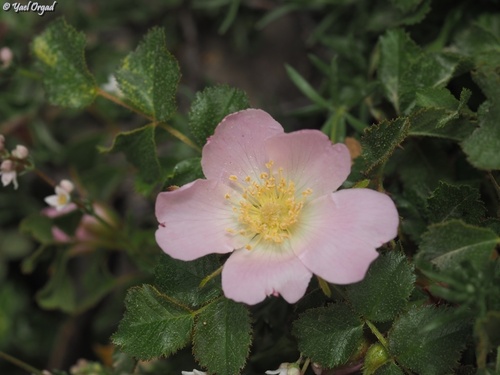
Rosa pulverulenta
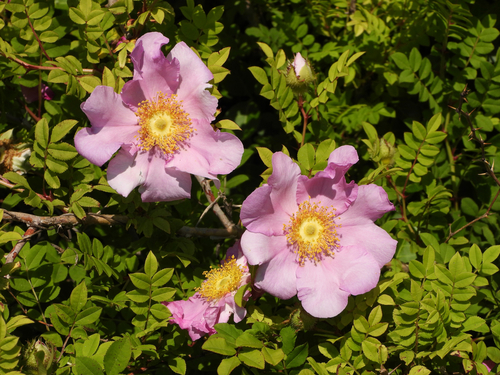
Rosa roxburghii
Sweet chestnut rose, Burr rose, Silk-reeling flower, Roxburgh's rose
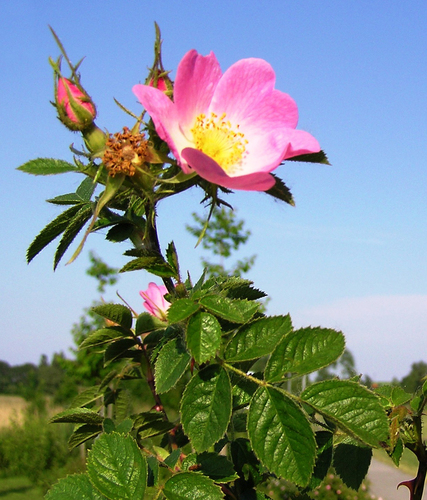
Rosa rubiginosa
Sweetbrier rose, Eglantine Rose, Briar rose
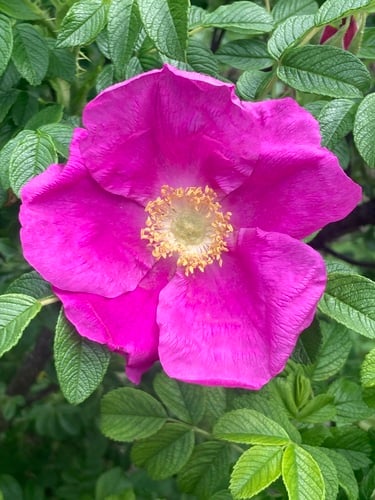
Rosa rugosa
Japanese Rose, Ramanas Rose, Wrinkled rose, Turkestan rose, Meigui, Mau, Humanasi, Beach rose, Hedgehog rose, Rugose rose, Tomato rose, Mei gui
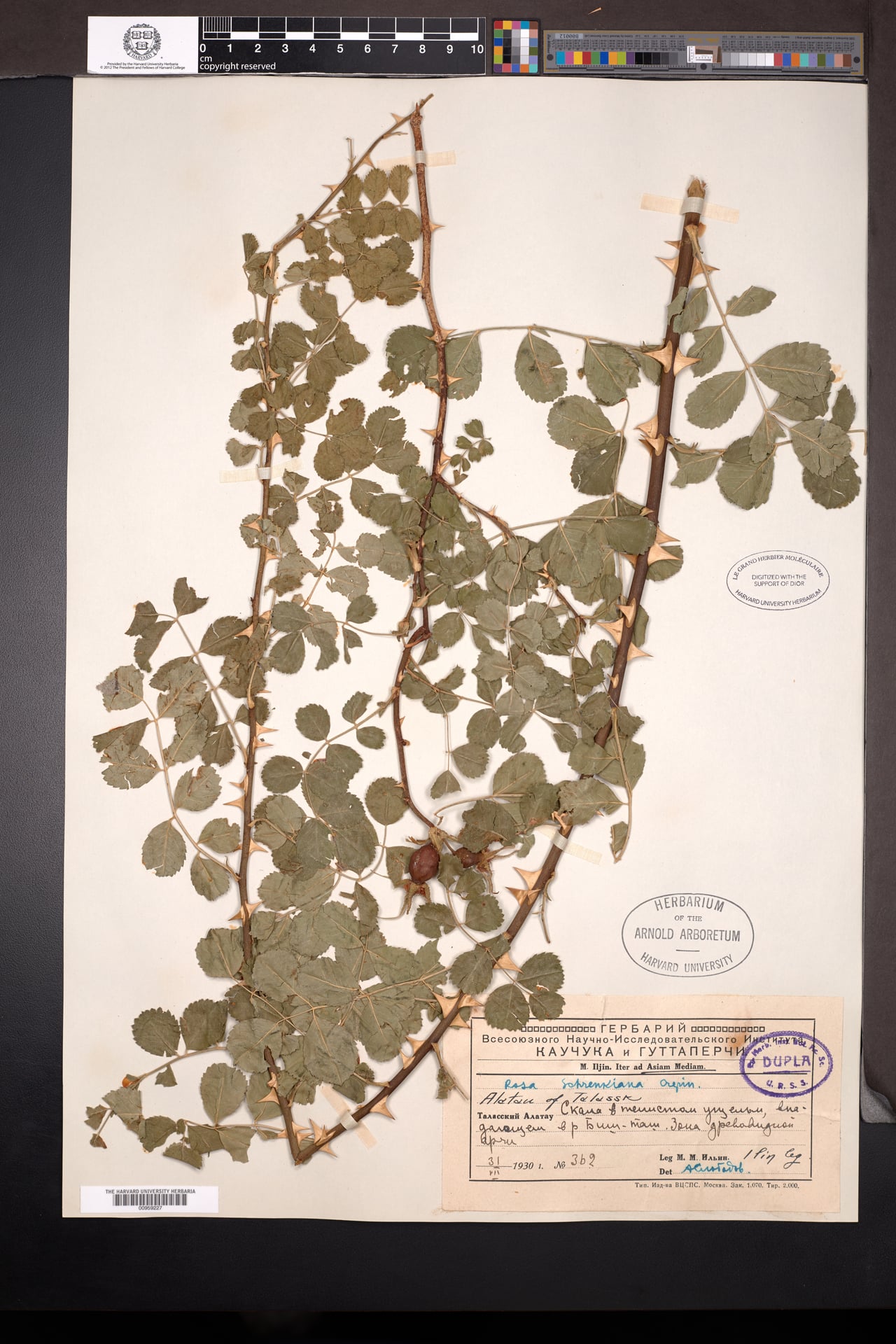
Rosa schrenkiana
Schrenkovskiy rose
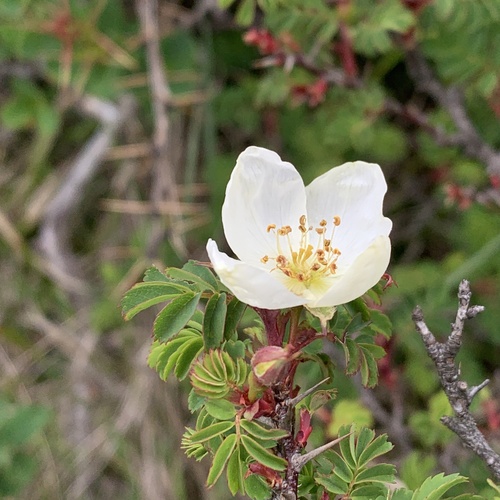
Rosa sericea
Himalayan rose, Maltese cross rose, Silky rose