Cantharellus luteopunctatus
(Beeli) Heinem.
wikimedia· cc-by
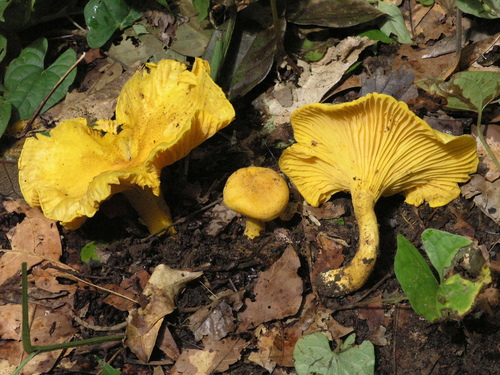
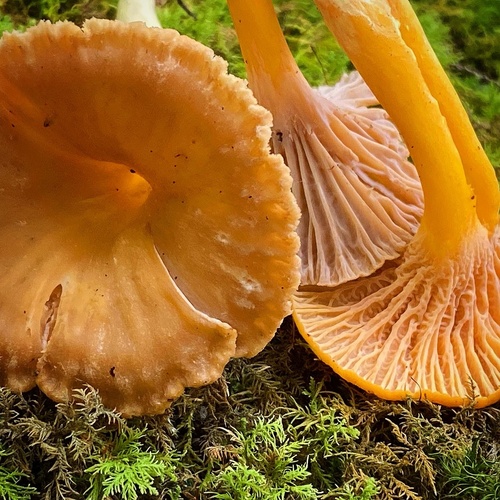
Wikimedia Commons - [Photos: Noah Siegel] Buyck B, Henkel TW, Hofstetter V (2019) Epitypification of the Central African Cantharellus densifolius and C. luteopunctatus allows for the recognition of two additional species. MycoKeys 49: 49-72. https://doi.org/10.3897/mycokeys.49.32034
wikimedia· cc-by
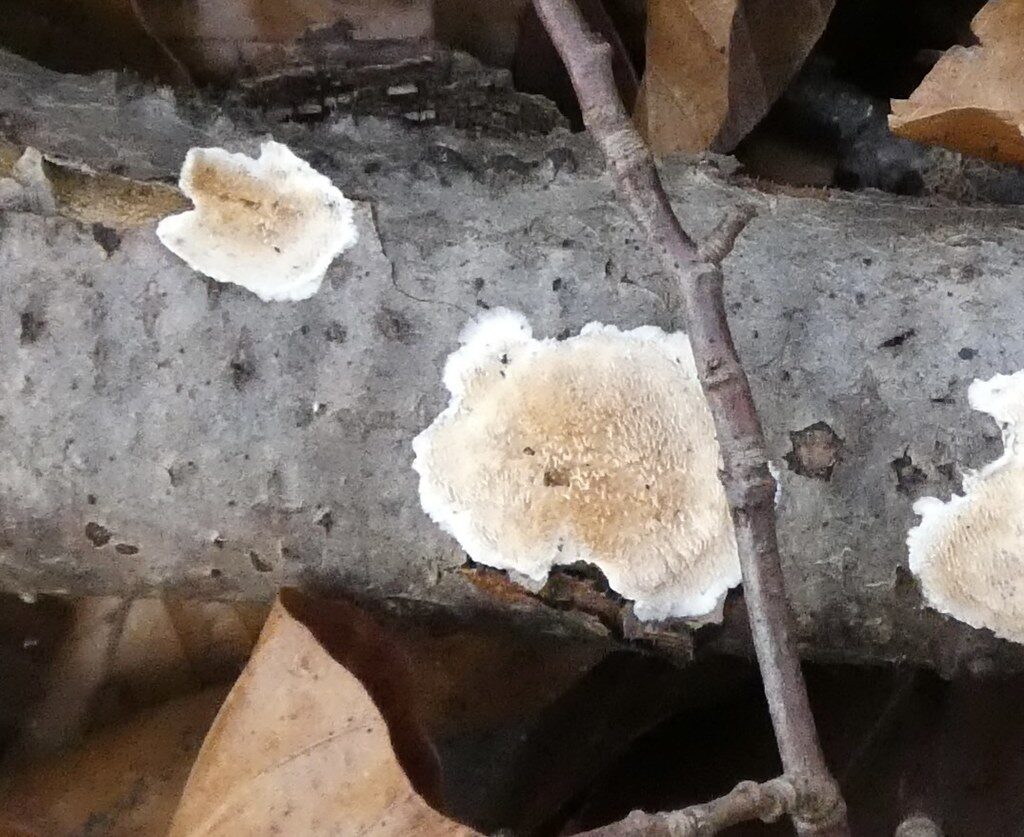
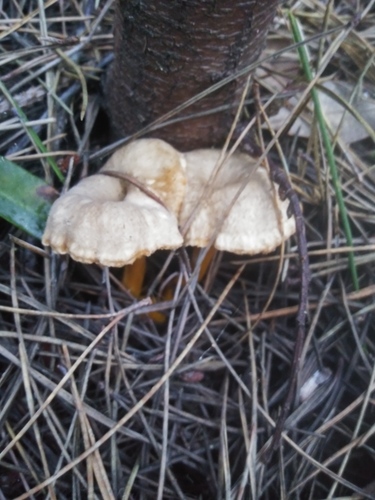
Wikimedia Commons - [Photos: Terry Henkel and Todd Elliott Watercolor: Mme. Goossens-Fontana] Buyck B, Henkel TW, Hofstetter V (2019) Epitypification of the Central African Cantharellus densifolius and C. luteopunctatus allows for the recognition of two additional species. MycoKeys 49: 49-72. https://doi.org/10.3897/mycokeys.49.32034
Summary
Source: WikipediaCantharellus luteopunctatus is a species of fungus in the genus Cantharellus. Found in Africa, it was described as new to science in 1928 by Belgian mycologist Maurice Beeli as Lentinus luteopunctatus. Paul Heinemann transferred it to Cantharellus in 1958.
Description
A tropical mushroom (family Cantharellaceae) found in Miombo woodland, often on termite mounds.
This description is brief — help expand it
Edible Uses
The fruiting body (mushroom/fungus) is eaten.
Distribution
It is a tropical plant. It can grow in Miombo woodland. It can be on termite mounds.
Where It Grows
Africa, Central Africa, Congo DR, East Africa, Tanzania,
Dangerous Lookalikes
This plant can be confused with the following toxic species. Always verify identification carefully before consuming any wild plant.
Jack-O'-Lantern Mushroom
Omphalotus olearius
Antonio Abbatiello
Cantharellus luteopunctatus
Cantharellus luteopunctatus
Wikimedia Commons - [Photos: Noah Siegel] Buyck B, Henkel TW, Hofstetter V (2019) Epitypification of the Central African Cantharellus densifolius and C. luteopunctatus allows for the recognition of two additional species. MycoKeys 49: 49-72. https://doi.org/10.3897/mycokeys.49.32034
Jack-O'-Lantern Mushroom: True knife-like gills, grows in clusters on wood/stumps, glows in the dark, orange throughout.
Cantharellus luteopunctatus: Blunt forked ridges (not true gills), grows singly from soil, apricot/fruity smell, solid flesh.
Nutrition
| Part | Moisture | kJ | kcal | Protein | Vit A | Vit C | Iron | Zinc |
|---|---|---|---|---|---|---|---|---|
| Mushroom | — | 313 | 21.4 | — | — | — | — | — |
Also Known As
Kasununu, Udjuu
References (6)
- Boa, E. R., 2004, Wild edible fungi and their importance to people. FAO Non Wood Forest Products Booklet 17
- Degreef, J., et al, 1997, Edible Mushrooms of the Zambezian woodland area. A nutritional and ecological approach. Biotechnol. Agron. Soc. Envir. 1(3): 221-231
- efta-online.org, Edible Fungi of Tropical Africa, Jardin botanique Meise
- Grivetti, L. E., 1980, Agricultural development: present and potential role of edible wild plants. Part 2: Sub-Saharan Africa, Report to the Department of State Agency for International Development. p 34
- Kamalebo, H. M., et al, 2018, Uses and importance of wild fungi: traditional knowledge from the Tshopo province in the Democratic Republic of the Congo. Journal of Ethnobiology and Ethnomedicine (2018) 14:13
Show all 6 references Hide references
- Tibuhwa, 2013, Wild Mushroom - an underutilized healthy food resource and income generator: experience from Tanzania rural areas. Journal of Ethnobiology and Ethnomedicine 9:49