Sterculia lanceolata var. coccinea
(Jack) Phengklai
iNaturalist· cc-by-nc-nd
(c) Sunnetchan, some rights reserved (CC BY-NC-ND), uploaded by Sunnetchan
iNaturalist· cc-by-nc
(c) amyhk, some rights reserved (CC BY-NC)
iNaturalist· cc-by-nc-sa
(c) Kai Yan, Joseph Wong, some rights reserved (CC BY-NC-SA)
Summary
Source: WikipediaSterculia lanceolata is a tree species, belonging to the genus Sterculia and the family Malvaceae (previously the Sterculiaceae, now relegated to a subfamily). The species can be found in southern China (including Hainan island) and Vietnam (where it is variously known as: trôm mề gà, sang sé, sảng, trôm lá mác, trôm thon, che van, chóc móc or tròm thon). The flowers contain five free carpels, or follicles, each of which splits open shortly after pollination so that the seeds grow while fully exposed to the elements. Each scarlet or orange follicle has up to six oblong black seeds.
Description
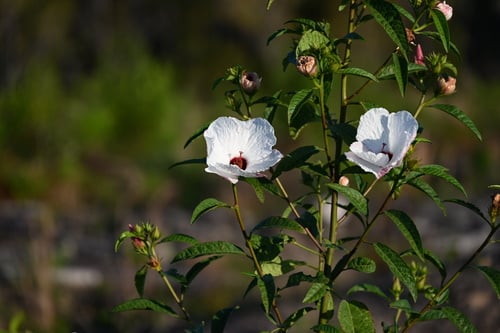
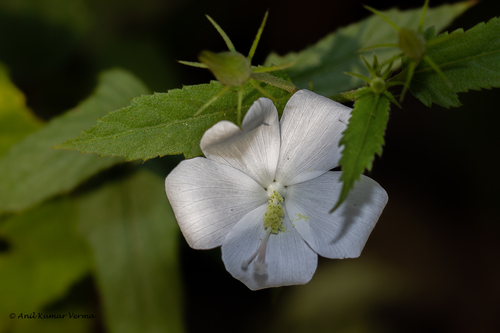
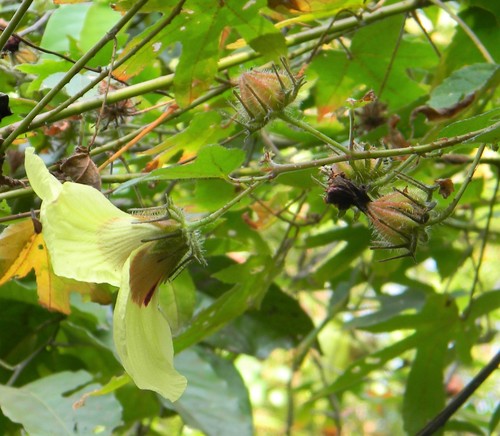
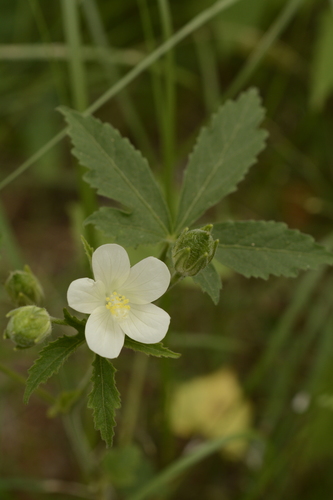
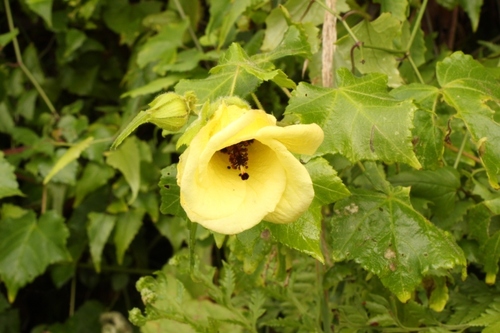
A shrub or small tree. The flowers are pale white. The follicles or fruit pods are red and velvety.
This description is brief — help expand it
Edible Uses
Young tender fruit follicles are cooked and eaten. Mature seeds are fried or roasted and eaten. Fruit can be stored for up to 15 days.
Traditional Uses
The young tender fruit follicles are cooked and eaten. The mature seeds are fried or roasted and eaten. The fruit can be stored for 15 days.
This uses section is brief — help expand it
Distribution
It is a tropical and subtropical plant. It grows in moist and deciduous forests.
Where It Grows
Asia, Bangladesh, India, Indochina, Indonesia, Laos, Malaya, Myanmar, Nepal, Northeastern India, SE Asia, Singapore, Thailand, Vietnam,
Cultivation
Plants are grown from seeds.
Notes
Also put in the family Sterculiaceae.
Synonyms
Also Known As
Konkelo, Nak chepeta, Sagla papio
References (4)
- Dutta, U., 2012, Wild Vegetables collected by the local communities from the Churang reserve of BTD, Assam. International Journal of Science and Advanced Technology. Vol. 2(4) p 124 (As Sterculia coccinea)
- Majumdar, K and Datta, N., 2009, Traditional wild edible fruits for the forest dwellers of Tripura, India. Pleione 3(2) 167-178 (As Sterculia indica)
- Patiri, B. & Borah, A., 2007, Wild Edible Plants of Assam. Geethaki Publishers. p 15
- Sawian, J. T., et al, 2007, Wild edible plants of Meghalaya, North-east India. Natural Product Radiance Vol. 6(5): p 422