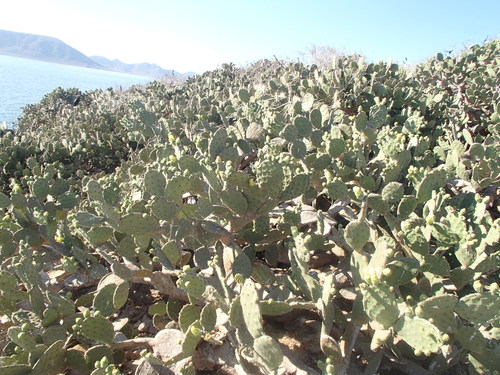
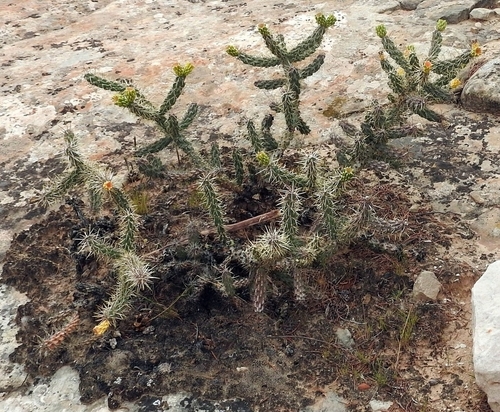
Opuntia soederstromiana
Britton & Rose
Ecuador prickly pear
iNaturalist· cc-by-nc-sa
(c) Jenny Ampudia, some rights reserved (CC BY-NC-SA), uploaded by Jenny Ampudia
iNaturalist· cc-by-nc
(c) Hugo Romero-Saltos, some rights reserved (CC BY-NC), uploaded by Hugo Romero-Saltos
iNaturalist· cc-by
(c) Julien Renoult, some rights reserved (CC BY), uploaded by Julien Renoult
Description
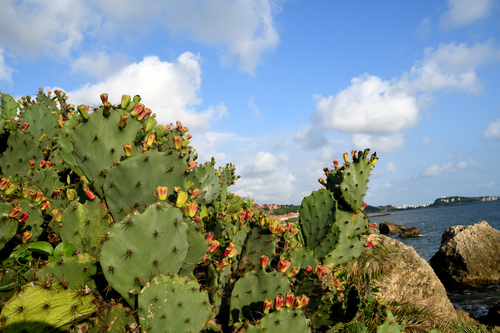
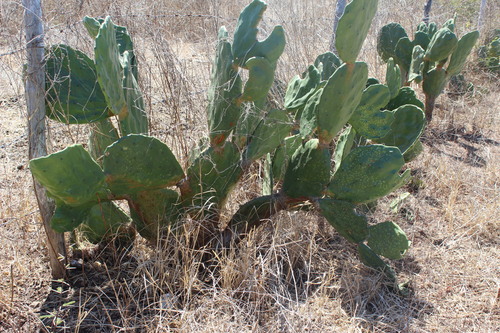
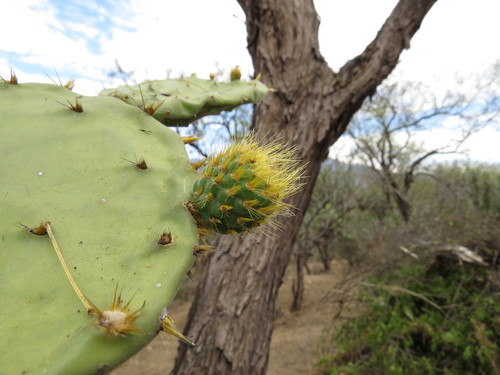
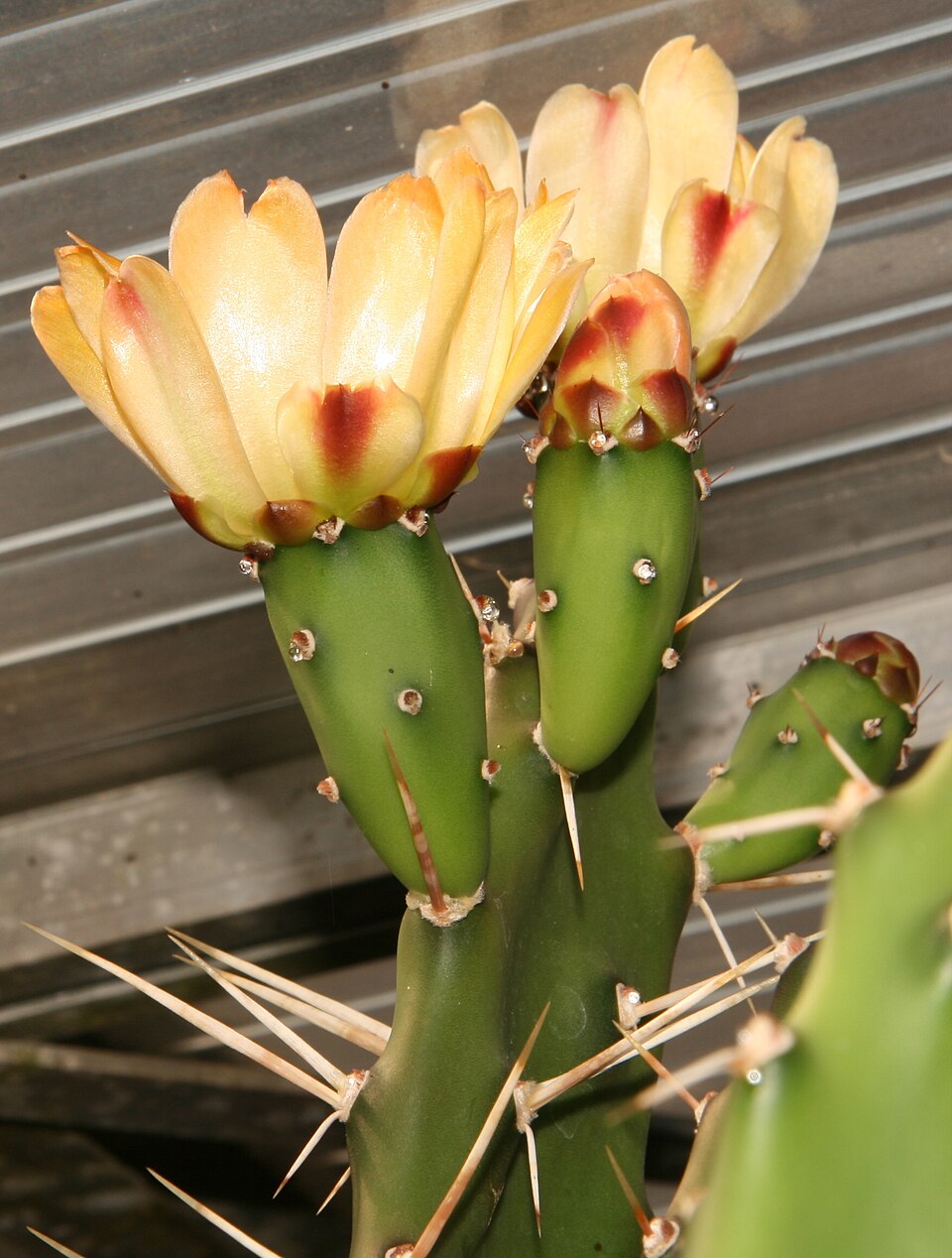
A cactus. It is shrubby and has loose branches. When young it is brilliant green. The leaves are green with red tips 2-4 mm long. The spines can be 6 cm long. They are curved and twisted. The flowers are yellow and orange. The fruit are red and covered with spines.
Edible Uses
Fruit - raw. The small, juicy, red fruits are edible, though infrequently eaten. The deeply umbilicate, dark red fruits usually have spines or bristles; the fruits can be 30 - 60mm long and 25 - 40mm in diameter. The tender young stem segments of various species are often cooked as a vegetable. Known as ‘nopals’ in Mexico, where they are a common ingredient in numerous dishes, they can be eaten raw or cooked, used in marmalades, soups, stews and salads. The most commonly used species are Opuntia ficus-indica or Opuntia hyptiacantha (syn Opuntia matudae), although the stems of almost all Opuntia species are edible.
Traditional Uses
The fruit are edible but only occasionally eaten.
This uses section is brief — help expand it
Medicinal Uses
The stem juice is used as an expectorant and to treat fevers and skin blemishes. The root is used to treat diarrhoea and dysentery. We have no further specific information on medicinal uses for this species, but the following notes are likely to apply universally to Opuntia species and other related genera. The flesh of tender young stem segments can be applied as a poultice to reduce inflammation. The mucilage and soluble fibre found in the flowers and stem segments have been shown to help control blood-sugar levels associated with adult-onset diabetes. There is clinical evidence that the soluble fibre in the stem segments helps reduce blood cholesterol levels.
Known Hazards
The plant has numerous minutely barbed glochids - these are barbed spines that are usually small to minute and are very sharp and brittle. The glochids are very easily dislodged when the plant is touched and can penetrate the skin where, because of their barbs, they become stuck and are very difficult to see and remove. They can cause considerable irritation and discomfort. Opuntia species can contain quite high levels of oxalic acid, especially in older parts of the plant. Perfectly alright in small quantities, foods containing oxalic acid should not be eaten in large amounts since it can lock-up other nutrients in the food, especially calcium, thus causing mineral deficiencies. The oxalic acid content will be reduced if the plant is cooked. People with a tendency to rheumatism, arthritis, gout, kidney stones or hyperacidity should take especial caution if including this plant in their diet since it can aggravate their condition.
Distribution
It is a tropical plant. It grows in the highlands of Ecuador between 1,000-3,000 m above sea level.
Where It Grows
Andes, Ecuador*, South America,
Other Information
It is cultivated.
Synonyms
Also Known As
Pishco tuna, Pishku tuna
References (5)
- Grandtner, M. M. & Chevrette, J., 2013, Dictionary of Trees, Volume 2: South America: Nomenclature, Taxonomy and Ecology. Academic Press p 461
- Kermath, B. M., et al, 2014, Food Plants in the Americas: A survey of the domesticated, cultivated and wild plants used for Human food in North, Central and South America and the Caribbean. On line draft. p 589
- Martin, F. W., et al, 1987, Perennial Edible Fruits of the Tropics. USDA Handbook 642 p 88 (Also as Opuntia dobbieana)
- Quintana, C. M., 2010, Wild Plants in the Dry Valleys Around Quito Ecuador. An Illustrated Guide. Publicationes del Harbario, QCA p 97
- Torre, de la, L., et al, 2008, Enciclopedia de las Plantas Útiles del Ecuador. Herbario QCA. Pontificia Universidad Católica del Ecuador. p 268