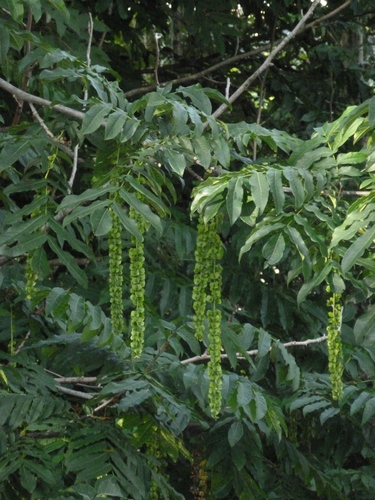
Carya x laneyi
Sarg.
iNaturalist· cc-by-nc
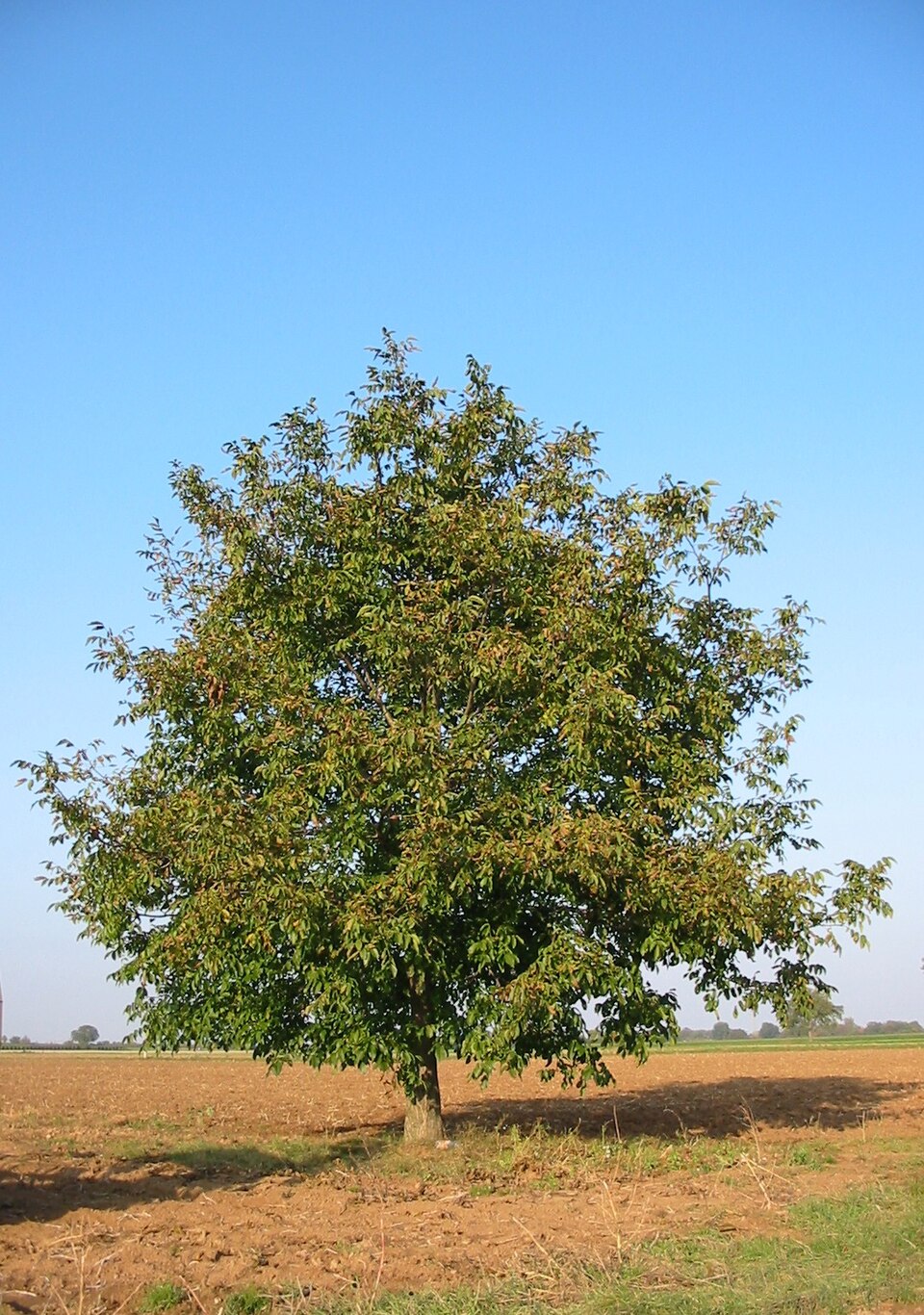
(c) Keith Kutsko, some rights reserved (CC BY-NC)
iNaturalist· cc-by-nc
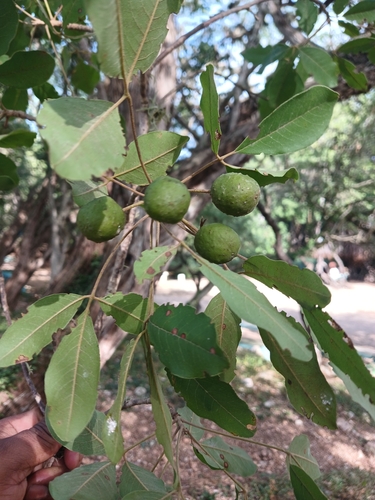
(c) Keith Kutsko, some rights reserved (CC BY-NC)
iNaturalist· cc-by-nc
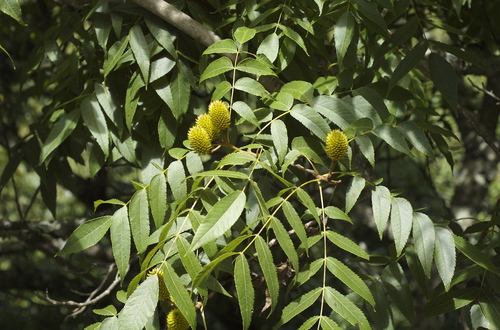
(c) Keith Kutsko, some rights reserved (CC BY-NC)
Summary
Carya x laneyi is a deciduous tree reaching 20 m tall, growing at a slow rate. Hardy to UK zone 5. Leaves appear June to October; flowers April to May. Monoecious with wind pollination and self-fertile. Grows in light sandy, medium loamy, and heavy clay soils across mildly acid to basic pH. Requires full sun and prefers moist conditions.
Description
Carya x laneyi is a deciduous tree reaching 20 m tall, growing at a slow rate. Hardy to UK zone 5. Leaves appear June to October; flowers April to May. Monoecious with wind pollination and self-fertile. Grows in light sandy, medium loamy, and heavy clay soils across mildly acid to basic pH. Requires full sun and prefers moist conditions.
Edible Uses
The seed can be eaten raw or cooked and has a thin shell. It ripens in late autumn and will keep for at least 6 months when stored in the shell in a cool place.
Traditional Uses
The nuts are eaten.
This uses section is brief — help expand it
Medicinal Uses
None known.
Distribution
It is a temperate plant.
Where It Grows
North America, USA,
Cultivation
Prefers a deep moisture-retentive loam in a sunny sheltered position, requiring a good summer for best development. A natural hybrid, C. cordiformis x C. ovata, it is generally faster growing, bears at an earlier age and ripens its seed earlier than C. ovata, but lacks the high quality kernel. There are some named varieties. Plants are strongly tap-rooted and should be planted in their permanent positions as soon as possible. Sowing in situ would be the best method so long as the seed could be protected from mice. Trees are late coming into leaf (usually late May to June) and lose their leaves early in the autumn (usually in October). During this time they cast a heavy shade. These factors combine to make the trees eminently suitable for a mixed woodland planting with shrubs and other trees beneath them. Plants in this genus are notably resistant to honey fungus. Most species in this genus have quite a wide range of distribution and, in order to find trees more suited to this country, seed from the most appropriate provenances should be sought. Most trees growing in Britain at present tend to only produce good seed after hot summers. Trees are self-fertile but larger crops of better quality seeds are produced if cross-pollination takes place.
Propagation
Seed requires cold stratification before it will germinate. Sow in a cold frame as soon as seed is ripe; stored seed should be kept moist (but not wet) and sown in a cold frame as soon as possible. Where possible, sow 1 or 2 seeds per deep pot and thin to the strongest seedling. Transplant seedlings as soon as they are large enough to handle, using deep pots to accommodate the taproot, and move plants to their permanent positions as soon as possible — ideally in their first summer — with cold protection for at least the first winter. Seed can also be sown in situ with protection from mice and cold; a bottomless plastic bottle capped with wire mesh works well for both purposes.
Other Uses
The wood is close-grained, tough, strong, and brittle. It is used mainly as fuel, burning well and producing a great deal of heat.
Production
It grows fairly quickly and bears early. The nuts mature more early.
Notes
There are about 14-25 Carya species.
Synonyms
References (3)
- Facciola, S., 1998, Cornucopia 2: a Source Book of Edible Plants. Kampong Publications, p 123
- Plants for a Future database, The Field, Penpol, Lostwithiel, Cornwall, PL22 0NG, UK. http://www.scs.leeds.ac.uk/pfaf/
- Trees & shrubs 2:196. 1913