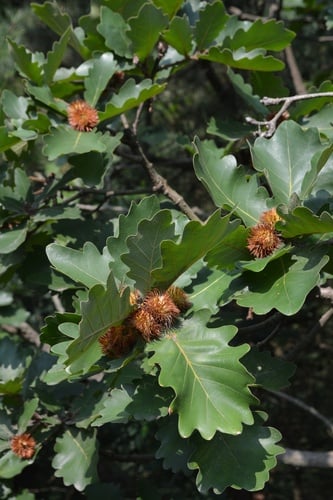
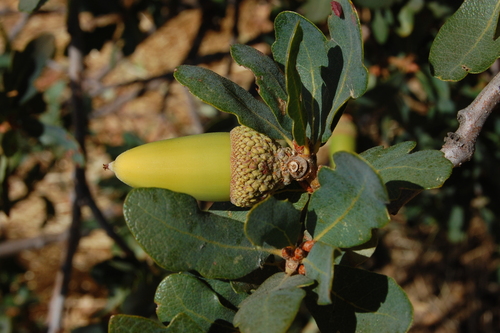
Quercus turbinella
Greene
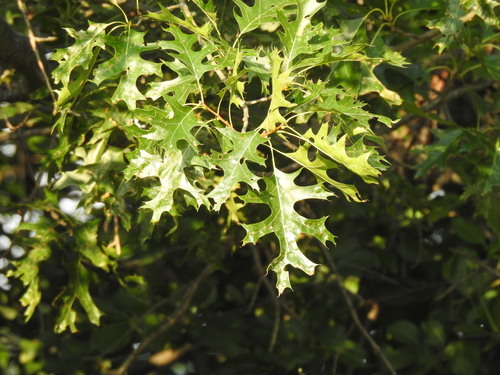
iNaturalist· cc-by-nc
(c) Brandt Magic, some rights reserved (CC BY-NC), uploaded by Brandt Magic
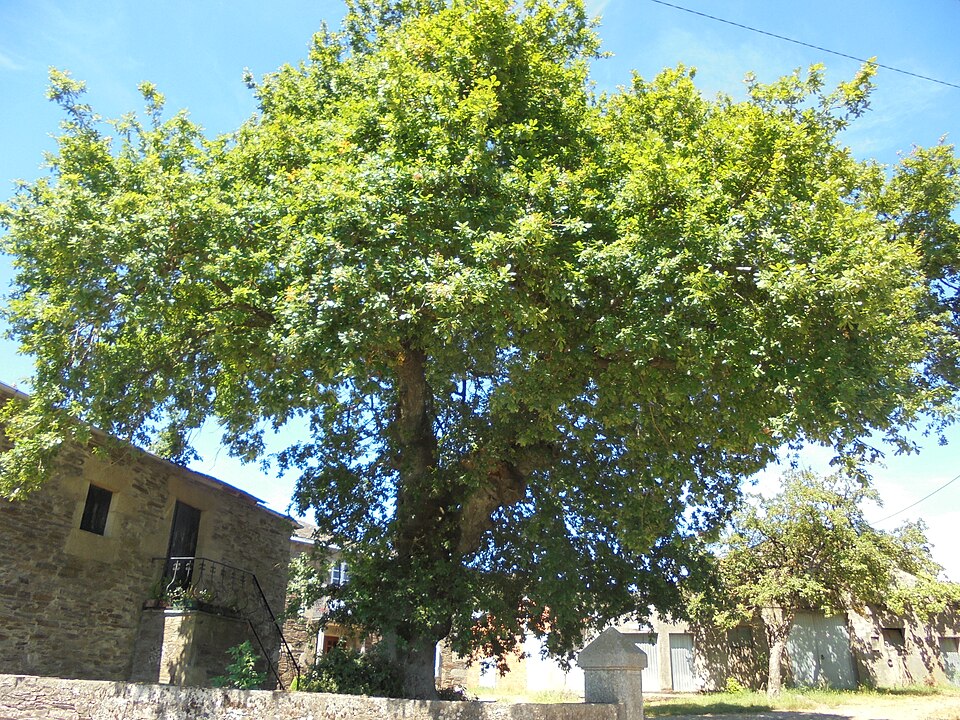
iNaturalist· cc-by
(c) Andrey Zharkikh, some rights reserved (CC BY)
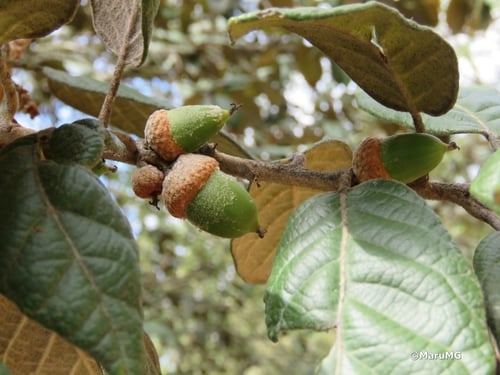
iNaturalist· cc-by-nc
(c) Mart Hughes, some rights reserved (CC BY-NC), uploaded by Mart Hughes
Summary
Source: WikipediaQuercus turbinella is a North American species of oak known by the common names shrub oak, turbinella oak, shrub live oak, and gray oak. It is native to Arizona, California, New Mexico, Utah, Colorado, and Nevada in the western United States. It also occurs in northern Mexico.
Description
Shrub live oak is an evergreen shrub growing 2 meters tall and wide at a slow rate. Hardy to UK zone 8 and not frost tender. Wind-pollinated, it attracts wildlife. The plant grows in sandy, loamy, and clay soils, preferring well-drained conditions and tolerating poor soil. It adapts to mildly acid to basic pH ranges. Full sun is required; the plant cannot tolerate shade. It prefers dry or moist soil and tolerates drought.
Edible Uses
Indigenous peoples have long used the acorns of shrub live oak as food. The brown, ovoid seed is up to 20mm long and 11mm wide and can be eaten raw or cooked, whole or ground. Drying and grinding the seed into a powder allows it to be used as a stew thickener or mixed with cereals for bread. The seeds are strongly bitter due to high tannin content, with fresh nutmeat being creamy white but requiring multiple leaching cycles — often three changes of water — to reduce bitterness to a tolerable level. Tannins are water-soluble, so soaking is the primary method of removal, though other water-soluble substances including minerals are lost at the same time. Several approaches work: burying seeds in boggy ground over winter allows gradual tannin leaching, with the germinating seed dug up in spring once most astringency is gone. Wrapping seeds in a cloth bag and placing them in a stream for several weeks achieves a similar result. Grinding to powder first speeds things up considerably. Hot water is fastest — cook the powder and change the water repeatedly until it is no longer bitter. Cold water leaching is slower but said to produce the best flour: soak the powdered seed for 12–24 hours, discard the water, and repeat until the soak water is no longer bitter. After leaching, acorns can be dried, roasted, and ground into flour of fair quality suitable for baking. Despite the processing effort, these acorns are a worthwhile resource, particularly in times of scarcity — they tend to be abundant and suffer less from insect infestation than those of other species. The roasted seed also serves as a coffee substitute.
Traditional Uses
The acorns are used to make bread, stew and porridge. They are also eaten raw as a snack food.
This uses section is brief — help expand it
Medicinal Uses
Oak species are widely used in traditional medicine across many cultures, valued primarily for their tannins. Leaves, bark, seeds, seed cups, and insect-produced galls are all used medicinally. A decoction or infusion is astringent, antibacterial, antifungal, antiseptic, styptic, and haemostatic, taken internally for acute diarrhoea, dysentery, and haemorrhages. Externally, it is used as a mouthwash for toothache and gum problems, and as a topical wash on cuts, burns, skin conditions, haemorrhoids, and inflammation of oral, genital, and anal mucosa. Plant extracts can be added to ointments to support wound healing.
Known Hazards
All parts of the plant contain tannins. Whilst tannins are found in many foods, and have a range of medicinal uses. They are usually only present in low concentrations. In some foods made from oaks (particularly the seeds), the tannin content can be quite high unless the food is treated to reduce tannin content. Tannins are only of low toxicity and, because of their bitter taste and astringency, are unlikely to be eaten in large quantities. However, if they are taken in excess, they can cause stomach pains; constipation followed by bloody diarrhoea: excessive thirst; and excessive urination.
Distribution
It is a temperate plant.
Where It Grows
North America, USA,
Cultivation
Quercus turbinella is a very cold-hardy tree, tolerating temperatures down to around -25°c when dormant. Native to semi-arid environments, characterized by a biseasonal precipitation pattern with summer and winter precipitation and spring and autumn droughts, the mean annual precipitation can range from 410 - 640mm. Suitable for growing in cold, dry areas, it also seems to be able to cope with moister climates such as western England, though it needs hot summers if it is to thrive. The plant grows well on dry hillsides and mesas and tolerates a wide range of soil types, growing best on sandy to clay loams. The soils are often slightly acidic. It is not restricted to deep soils and can grow on shallow, broken and fractured substrates. Soils are typically coarse-textured and poorly developed. Established plants are drought-tolerant. Plants can resprout freely from the base if top-killed by fire. This species hybridises freely with the most disparate-seeming partners, including the European oak (Quercus robur), and is a parent of several wild hybrids. USDA Hardiness & Weed Potential: Turbinella oak is a hardy evergreen shrub widely distributed across marginal lands in the southwestern U.S. It thrives in dry, rocky, or poor soils and is suited to USDA Hardiness Zones 7–10. Though tough and widespread, it is a native species and not considered weedy or invasive. The shrub’s small, spiny leaves make handling more difficult, so gloves are recommended during acorn collection.
Propagation
Seed loses viability rapidly if allowed to dry out. It can be stored moist and cool over winter but is best sown as soon as it is ripe in an outdoor seed bed, with protection from mice and squirrels. Small quantities can be sown in deep pots in a cold frame. Because plants develop a deep taproot, they should be moved to their permanent positions as soon as possible — seed sown in situ produces the best trees. Trees left in a nursery bed for more than 2 growing seasons transplant very poorly.
Other Uses
Leaves across this genus are more or less rich in tannins. A mulch of partially decayed leaves placed around vulnerable plants repels slugs, snails, and grubs, and breaks down over time to add humus and nutrients to the soil. Fresh leaves should be used with caution, as decomposing fresh leaves draw nitrogen from the soil and can inhibit plant growth. Oak galls caused by insect larvae provide a rich source of tannin once the insect has left; the tannin is also used as a dyestuff and by many cultures for making ink. Oak bark is similarly tannin-rich and has been used as a dyestuff and for waterproofing rope. Indigenous peoples use the wood for fashioning tools, and the wood of many oak species is a favoured fuel, burning well and producing substantial heat.
Synonyms
Also Known As
Desert Scrub Oak, Turbinella, scrub, or shrub live oak (Quercus turbinella)
References (1)
- Moerman, D. F., 2010, Native American Ethnobotany. Timber Press. p 466