Carpolobia goetzei
Gurke
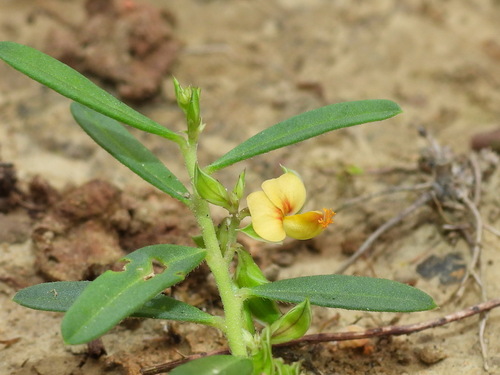
iNaturalist· cc-by-nc
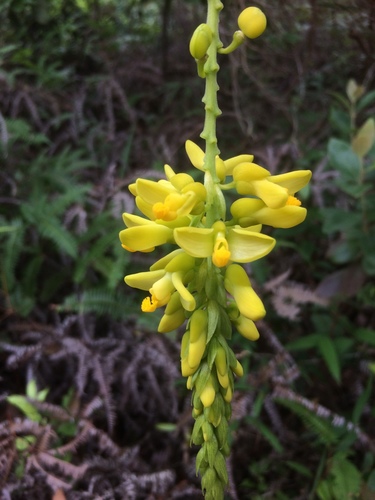
(c) Graeme White, some rights reserved (CC BY-NC), uploaded by Graeme White
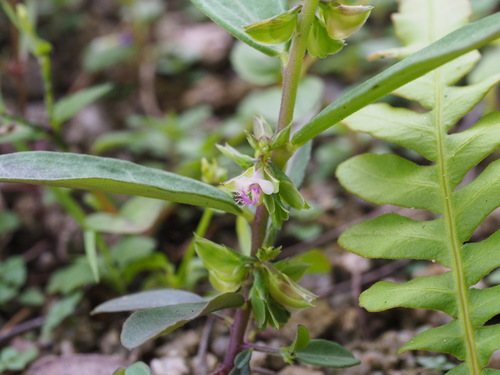
iNaturalist· cc-by-nc
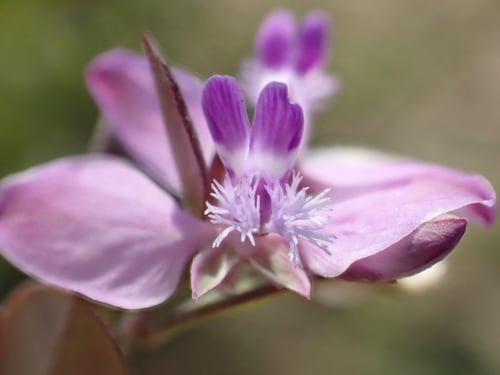
(c) Bart Wursten, some rights reserved (CC BY-NC)
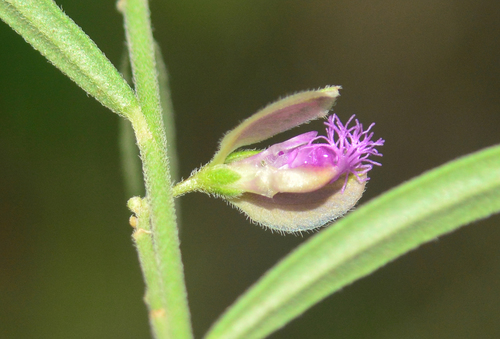
iNaturalist· cc-by-nc
(c) Bart Wursten, some rights reserved (CC BY-NC)
Summary
Source: WikipediaCarpolobia goetzei (also known as Carpolobia goetzii) is a plant species in the milkwort family (Polygalaceae). It is endemic to forested areas, wooded steppes, and areas with alluvial soil with altitudes below 1,400 metres (4,600 ft) in Tropical East Africa between South Sudan and Mozambique, as well as northern Madagascar. It is a shrub or small tree which has an average height in the range between 1 and 5 metres (3.3 and 16.4 ft). It starts out pubescent, before losing its hairs and becoming glabrous. The leaves the plant produces are mostly 3 to 11 centimetres (1.2 to 4.3 in) long and 1 to 4 centimetres (0.39 to 1.57 in), though some forms exist with short leaves. They are petiolate with stems 1.5 to 3 millimetres (0.059 to 0.118 in) long. The leaves have been described as stiff and leathery and they end in a pointed tip. The flowers the plant produces are white, cream, or yellow and pinkish-brown after fertilization with purple, red, or bright pink honey guides on their tips. It contains 5 petals which are 8 to 15 millimetres (0.31 to 0.59 in) long. The flowers are sometimes scented. The plant produces a sweet, fleshy, edible fruit which is about 1 centimetre (0.39 in) across. It is eaten raw and collected between April and June. The fruit starts as lime green before turning yellow. When it is ripe, it is orange and very shiny. The fruits are not marketed commercially or cultivated by the local people but are well-liked by chimpanzees. It was first written about in 1900 in the Botanische Jahrbücher für Systematik, Pflanzengeschichte und Pflanzengeographie by Robert Gürke.
Description
An evergreen shrub. It has many slender branches. It grows about 3 m tall. It can be a scrambler. The leaves are sword shaped and smooth. They are 10 cm long by 4 cm wide. They taper to the tip. They are stiff and leathery. They are a shiny green on both surfaces. The veins are easy to see on both sides. The flowers are small and white with purple tips. They occur as a few flowers in slender stalks 3 cm long. The fruit are black and 8 mm across. They are shiny when ripe. They are very sweet and edible.
Edible Uses
Fruit - raw. The fully ripe fruits are fleshy and sweet. The fruit is lime green at first, turning pale yellow to orange and very shiny when ripe, about 10mm across.
Traditional Uses
The ripe fruit are fleshy and sweet and eaten raw.
This uses section is brief — help expand it
Distribution
A tropical plant. It grows in coastal forests. It suits the lowlands. In Tanzania it grows from sea level to 1,100 m above sea level.
Where It Grows
Africa, Central Africa, Congo, East Africa, Kenya, Tanzania, Uganda,
Cultivation
Plants can be grown from seed.
Other Uses
The flowers are much foraged by bees.
Production
In Tanzania the fruit are collected from April to June.
Notes
There may be 14 Carpolobia species. Polygalaceae mostly grow in warm and temperate coastal areas which are not arid.
Synonyms
Also Known As
Msiki, Mtindapo, Mzukizuki
References (9)
- Dale, I. R. and Greenway, P. J., 1961, Kenya Trees and Shrubs. Nairobi. p 382
- East African Herbarium records, 1981,
- Grivetti, L. E., 1980, Agricultural development: present and potential role of edible wild plants. Part 2: Sub-Saharan Africa, Report to the Department of State Agency for International Development. p 47
- Jardin, C., 1970, List of Foods Used In Africa, FAO Nutrition Information Document Series No 2.p 125
- Mutie, F. M., et al, 2023, Important Medicinal and Food Taxa (Orders and Families) in Kenya, Based on Three Quantitative Approaches. Plants 2023, 12, 1145
Show all 9 references Hide references
- Pakia, M., 2000, Plant Ecology and Ethnobotany of two sacred forests (Kayas) at the Kenya Coast. M. Sc. Thesis.
- Peters, C. R., O'Brien, E. M., and Drummond, R.B., 1992, Edible Wild plants of Sub-saharan Africa. Kew. p 161
- Ruffo, C. K., Birnie, A. & Tengnas, B., 2002, Edible Wild Plants of Tanzania. RELMA p 190
- World Checklist of Useful Plant Species 2020. Royal Botanic Gardens, Kew