Urera cordifolia
Engl.
Description
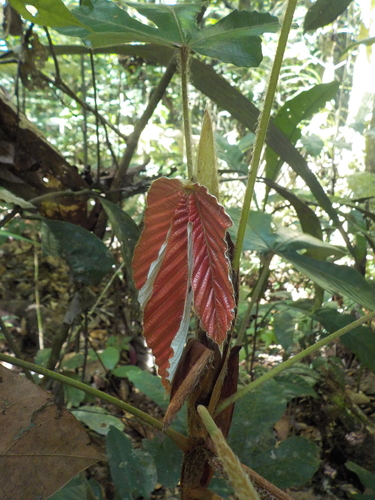
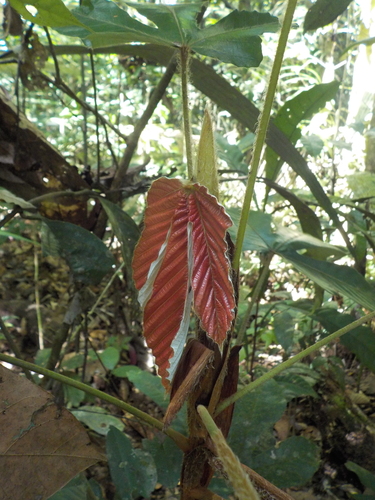
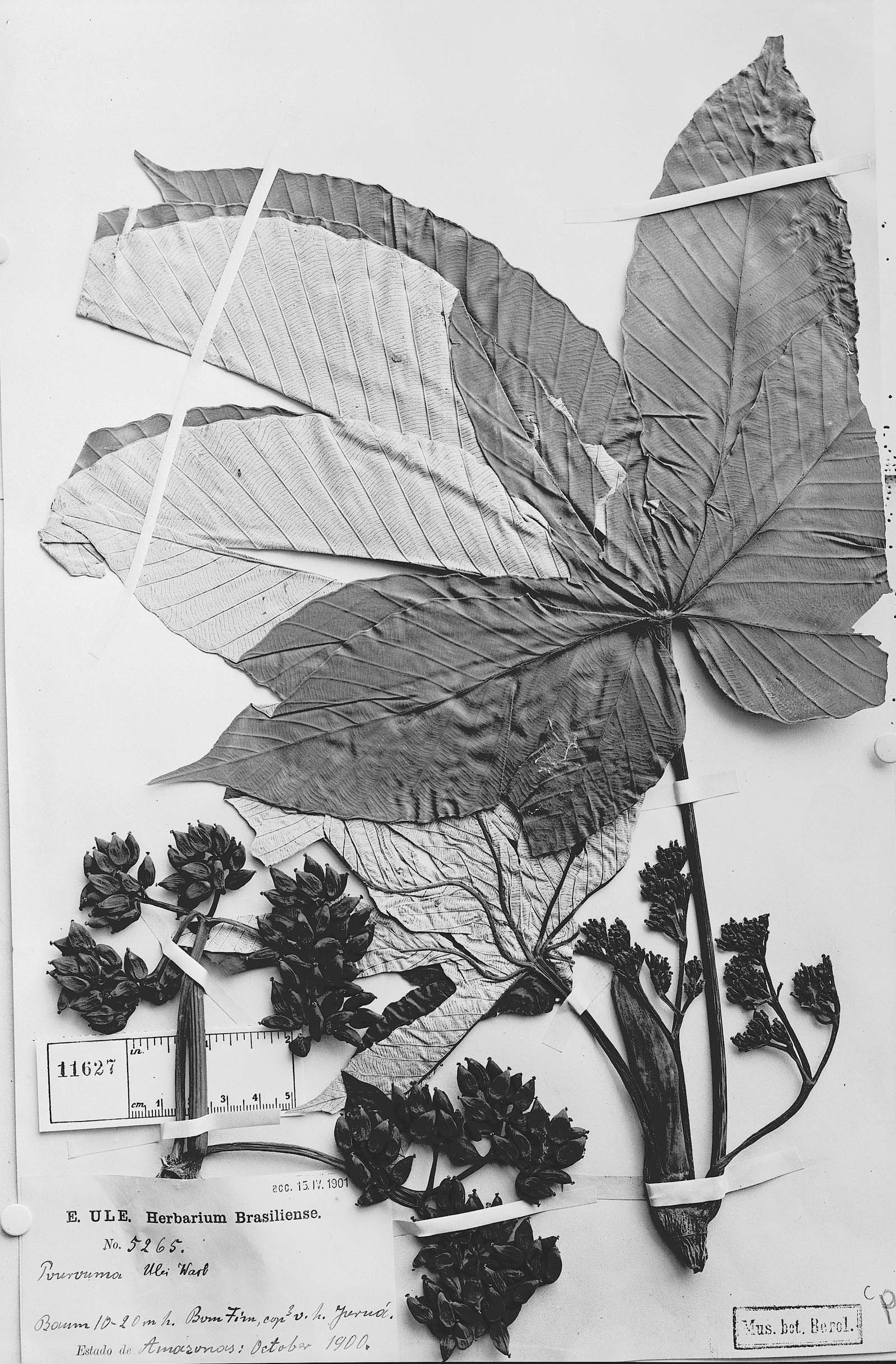
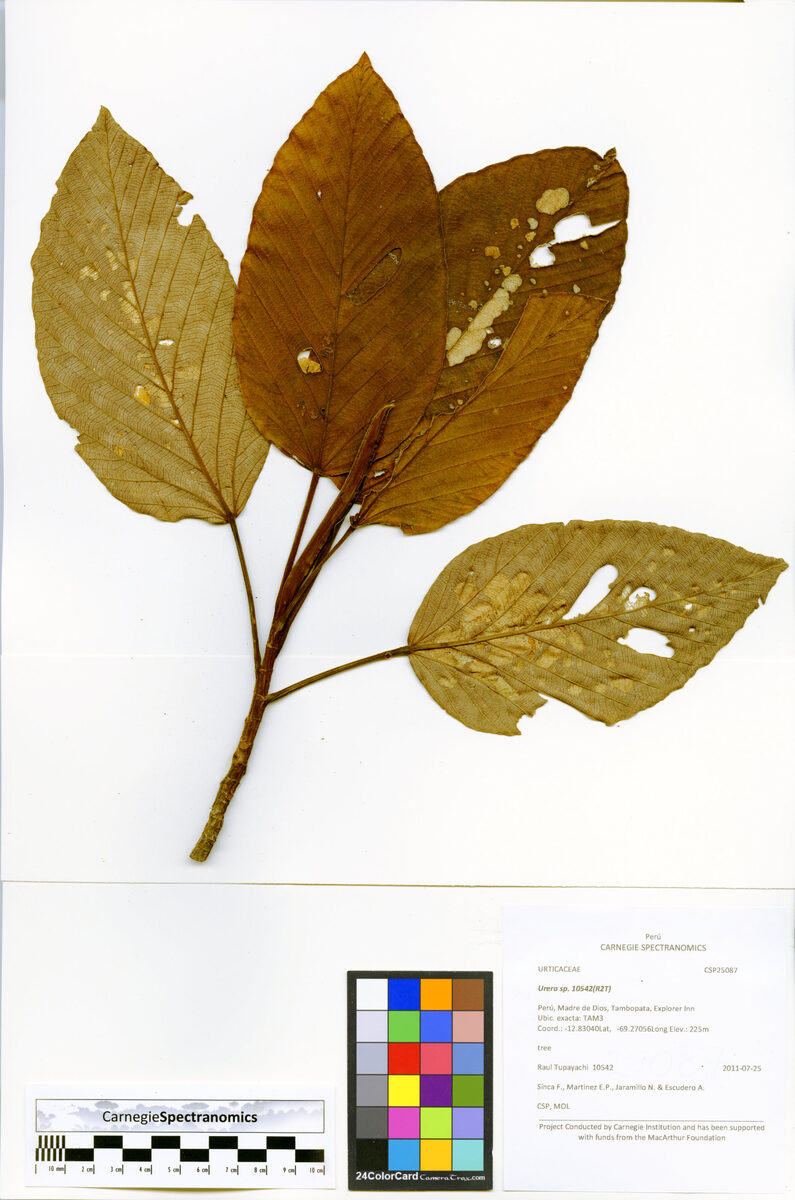
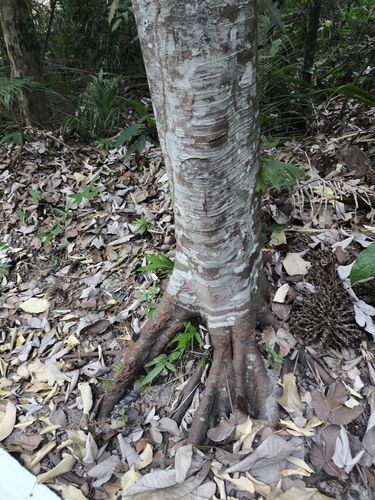
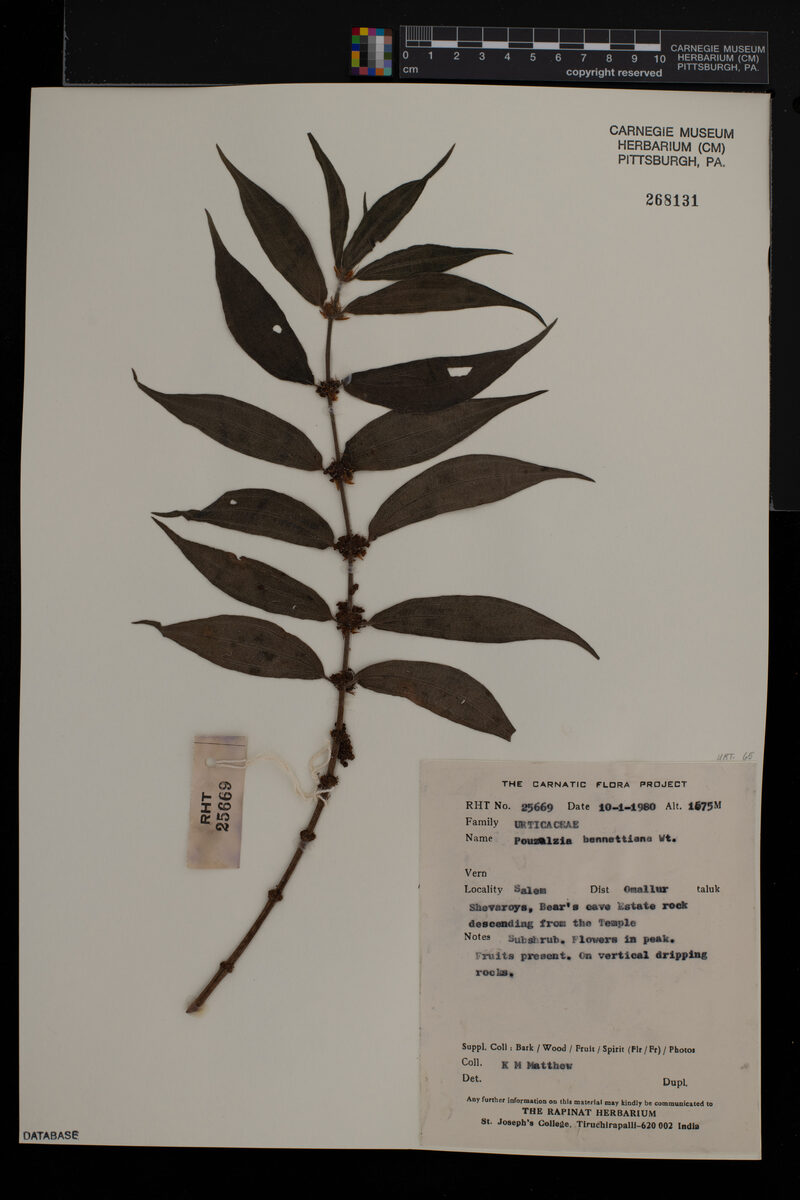
A woody climber. Male and female plants are separate. It grows 10 m long. The stems are 3 cm across. They attach to other plants by roots along the stem. The stem is 5 lobed in cross section. Younger branches have stinging hairs. The leaves are simple and alternate. The leaf stalk is 12 cm long. The leaf blade is oval and 18 cm long. The base is rounded or heart shaped and it tapers to the tip. The flowers are in loose groups in the axils of leaves. The male stalks are 16 cm long and the female ones 6 cm long. The flowers are only of one sex. Male flowers have a 2 mm long stalk. Female flowers do not have a stalk. The fruit is dry and 2 mm long.
Edible Uses
The leaves are cooked in soups and stews.
Traditional Uses
The leaves are cooked in soups and in stews.
This uses section is brief — help expand it
Medicinal Uses
There are numerous local medicinal uses reported for the leaf sap, leaf decoctions and dried, powdered leaves. These include in the treatment of dysentery; neuralgia; deafness and other ear affections; diarrhoea with blood; chest pain; male impotency; and furuncles. The leaves are also used as an aphrodisiac and laxative. The whole plant is used as a diuretic. The sap of crushed inflorescences is taken as a poison antidote.
Known Hazards
The plant, particularly the inflorescence, is armed with strongly stinging hairs. The leaves are used as a component of arrow poison.
Distribution
It is a tropical plant. It grows in dense, humid lowland forest.
Where It Grows
Africa, Cameroon, Central Africa, Central African Republic, CAR, Gabon, Nigeria, West Africa,
Cultivation
A plant of lowland areas in the humid tropics. A dioecious species, both male and female forms need to be grown if fruit and seed are required.
Other Uses
A strong fibre is obtained from the bark. It is used for making ropes and fishing lines.
Other Information
It is a minor local vegetable.
Notes
There are about 35 Urera species.
References (3)
- Chapman, J. D. & Chapman, H. M., 2001, The Forest Flora of Taraba and Andamawa States, Nigeria. WWF & University of Canterbury. p 206
- Grubben, G. J. H. and Denton, O. A. (eds), 2004, Plant Resources of Tropical Africa 2. Vegetables. PROTA, Wageningen, Netherlands. p 538
- World Checklist of Useful Plant Species 2020. Royal Botanic Gardens, Kew