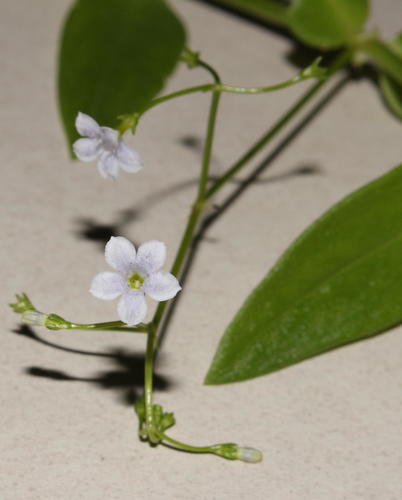
Aidia micrantha
(K. Schum.) Bullock ex F. White
iNaturalist· cc-by-nc
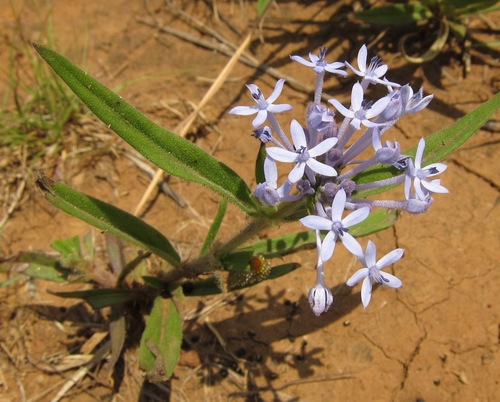
(c) Bart Wursten, some rights reserved (CC BY-NC), uploaded by Bart Wursten
iNaturalist· cc-by-nc
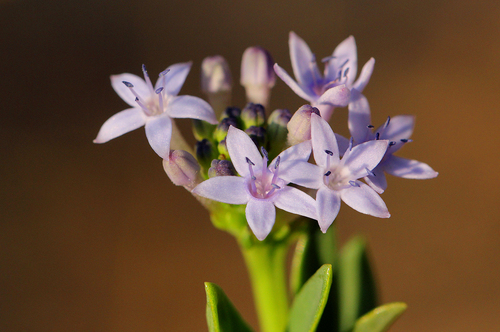
(c) Bart Wursten, some rights reserved (CC BY-NC), uploaded by Bart Wursten
iNaturalist· cc-by-nc
(c) Bart Wursten, some rights reserved (CC BY-NC), uploaded by Bart Wursten
Description
A shrub or small tree. It can grow 12 m tall. The leaves are simple and opposite. The leaf blade is 10-16 cm long by 3-7 cm wide. They are narrow and wedge shaped at the base and taper to the tip. The flowers are pink, purple or white. They have a scent. The fruit are round and green and turn red. They can be 1 cm across.
Edible Uses
The fruit pulp is eaten raw as a stimulant. The bark is chewed raw as a stimulant.
Traditional Uses
The fruit pulp is eaten raw as a stimulant. The bark is chewed raw as a stimulant.
This uses section is brief — help expand it
Distribution
It is a tropical plant. It grows in wet evergreen forest. It can also be in open forest and along rivers.
Where It Grows
Africa, Cameroon, Central Africa, Central African Republic, CAR, Congo, Congo DR, East Africa, Mozambique, Southern Africa, West Africa, Zimbabwe,
Other Uses
The wood is used for poles, bows, tool handles and spoons. The wood is used for fuel.
Production
Fruit occur throughout the year.
Also Known As
Arum Karu, Mispel, Mo.lombo, Oemanbarklak, Okenia
References (3)
- http://aflora.africa.kyoto-u.ac.jp
- Terashima, H., et al, 1992, Ethnobotany of the Lega in the Tropical Rainforest of Eastern Zaire (Congo): Part Two, Zone de Walikale, African Study Monographs, Suppl. 19:1-60
- Termote, C., et al, 2011, Eating from the wild: Turumbu, Mbole and Bali traditional knowledge of non-cultivated edible plants, District Tshopo, DRCongo, Gen Resourc Crop Evol. 58:585-618