Citropsis articulata
(Willd. ex Spreng.) Swingle & Kellerm.
African cherry orange
iNaturalist· cc-by-nc
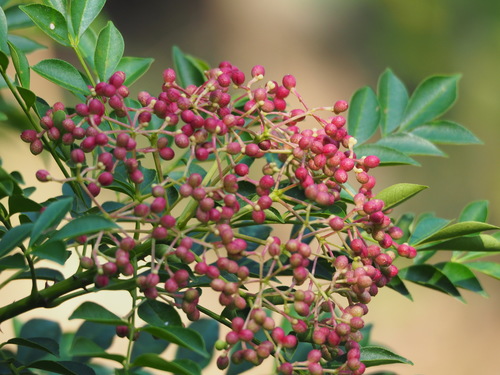
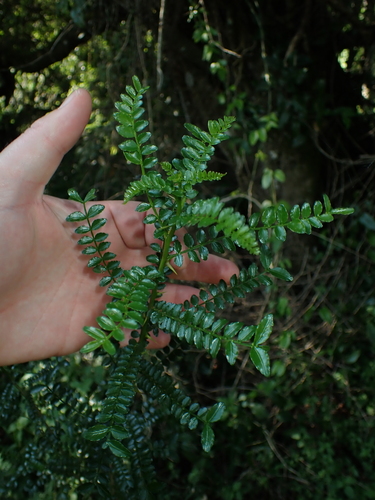
(c) Carel Jongkind, some rights reserved (CC BY-NC), uploaded by Carel Jongkind
iNaturalist· cc-by-nc
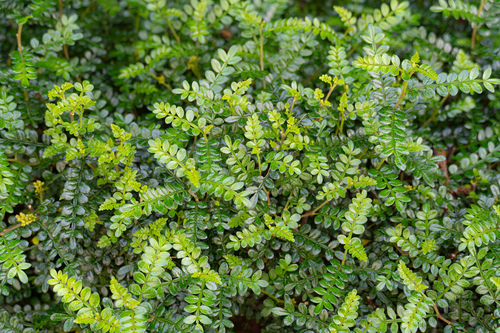
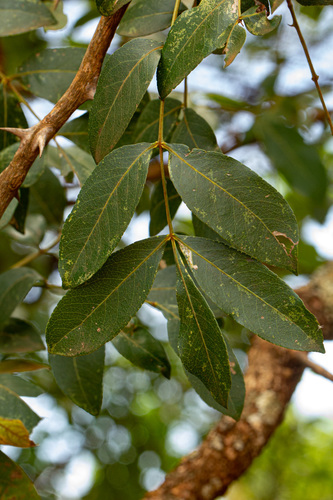
(c) Carel Jongkind, some rights reserved (CC BY-NC), uploaded by Carel Jongkind
Summary
Source: WikipediaCitropsis articulata, known commonly as the African cherry orange, West African cherry orange, Uganda cherry orange, and locally as omuboro, is a species of flowering plant in the citrus family, Rutaceae. It is native to tropical West Africa. The species is usually a shrub, sometimes a tree. The leaves are up to 33 centimeters long and are made up of pointed leaflets. The inflorescence is a cluster of flowers with four white petals each nearly 2 centimeters long. The style may be 1.5 centimeters long. The fruit is 2 or 3 centimeters long. In Uganda, an infusion made of the ground root of omuboro, drunk once a day for three days is considered to be a powerful aphrodisiac for men only. Science has not investigated the veracity of this belief. The herbal preparation is sold locally. Conservationists in Uganda are concerned that demand for the plant is such that the species may require conservation efforts.
Description
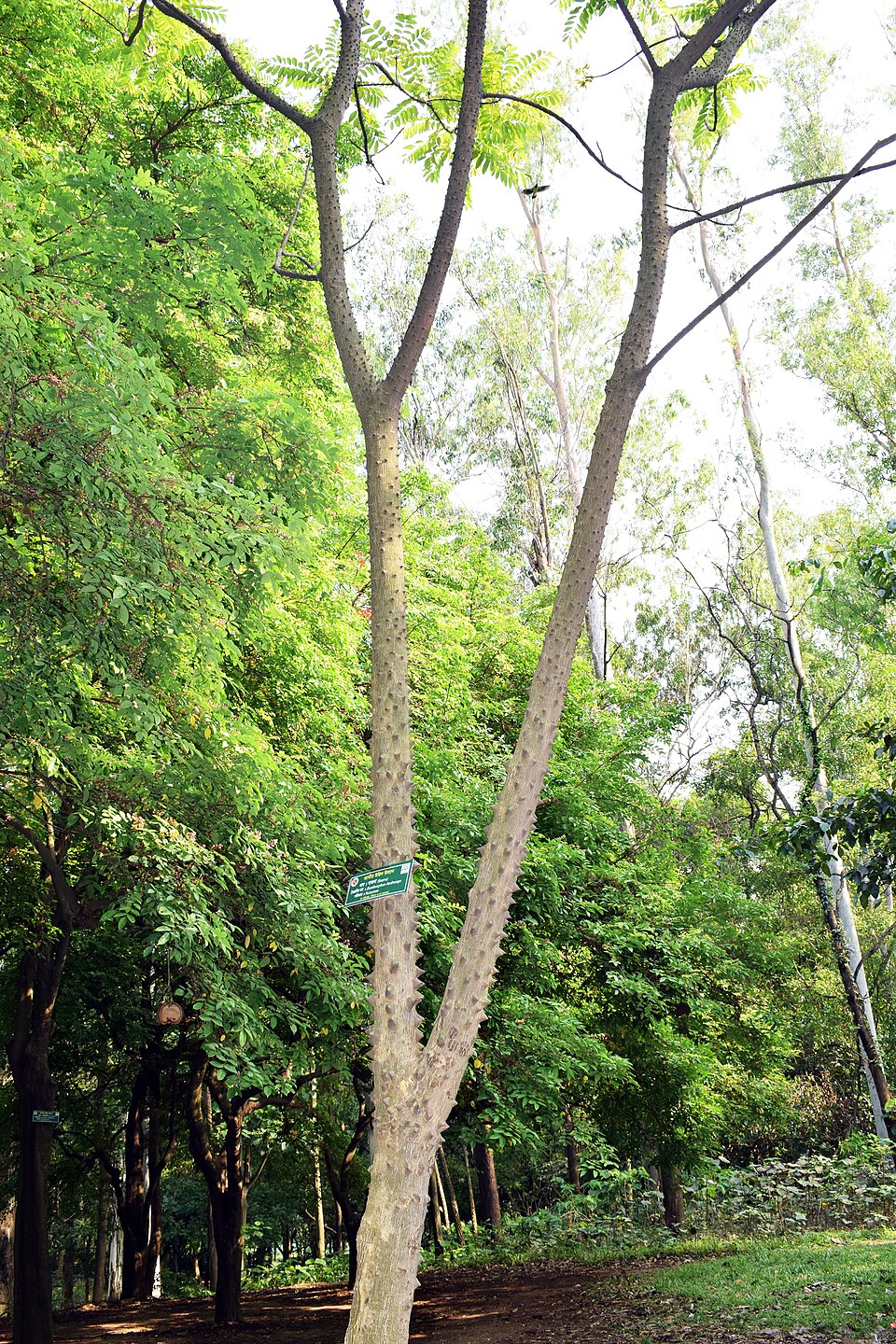
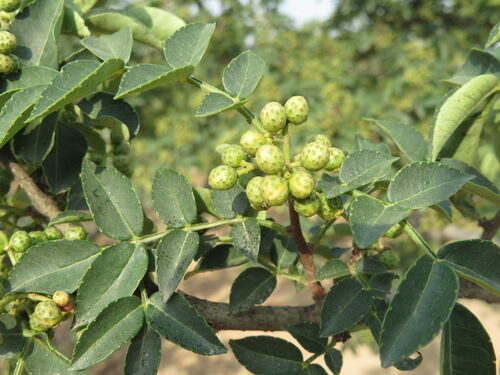
A shrub or small tree. It grows 3-7 m high. It has large prickles on the stems. The leaves are narrowly oval. They taper to the tip and are wedge shaped at the base. They are 15 cm long by 6 cm wide. The leaf stalk is 9 cm long and has wings. The flowers are white. They have a scent.
Edible Uses
The fruit are eaten raw.
Traditional Uses
The fruit are eaten raw.
This uses section is brief — help expand it
Medicinal Uses
The bark is used medicinally. The root is aphrodisiac. It is claimed by some to be the herbal equivalent of 'Viagra'.
Distribution
It is a tropical plant. It grows along rivers between 480-1,550 m above sea level. It suits a sunny position and fertile, well-drained moist soil.
Where It Grows
Africa, Benin, Central Africa, Central African Republic, CAR, Congo DR, East Africa, Ghana, Liberia, Nigeria, Sierra Leone, Sudan, Tanzania, Togo, Uganda, West Africa,
Cultivation
Plants can be grown from seed. The seed are slow to germinate but breed fairly true to the parents.
Propagation
Seed - rather slow to germinate, but usually coming relatively true to their parent.
Production
In Central African Republic fruit have been observed in April and October.
Synonyms
Also Known As
Adekindelindu, Amesalosalo, Fekekpa, Nganga, Omuboro
References (4)
- Martin, F. W., et al, 1987, Perennial Edible Fruits of the Tropics. USDA Handbook 642 p 73 (Also as Citropsis schweinfurthii)
- Terashima, H., et al, 1992, Ethnobotany of the Lega in the Tropical Rainforest of Eastern Zaire (Congo): Part Two, Zone de Walikale, African Study Monographs, Suppl. 19:1-60
- Terashima, H., & Ichikawa, M., 2003, A comparative ethnobotany of the Mbuti and Efe hunter-gatherers in the Ituri Forest, Democratic Republic of Congo. African Study Monographs, 24 (1, 2): 1-168, March 2003
- World Checklist of Useful Plant Species 2020. Royal Botanic Gardens, Kew