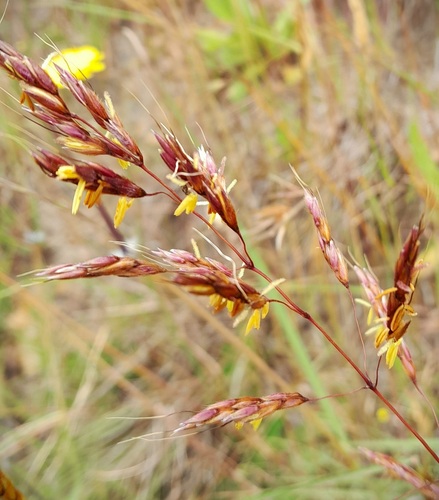
Stipagrostis hirtigluma
(Trin. & Rupr.) De Winter
Blue bushman-grass
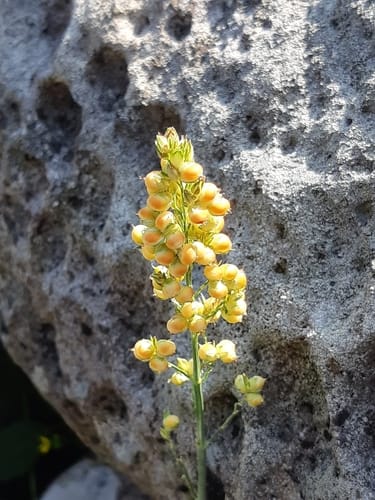
iNaturalist· cc-by-nc
(c) Ron Frumkin, some rights reserved (CC BY-NC), uploaded by Ron Frumkin
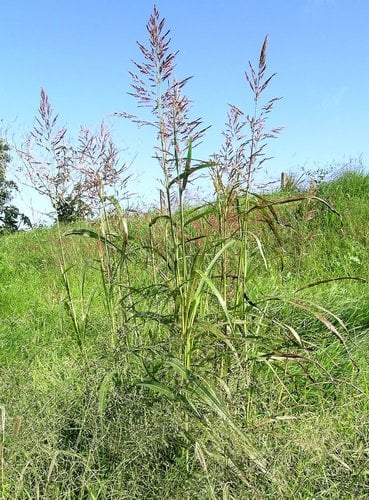
iNaturalist· cc-by-nc
(c) Ron Frumkin, some rights reserved (CC BY-NC), uploaded by Ron Frumkin
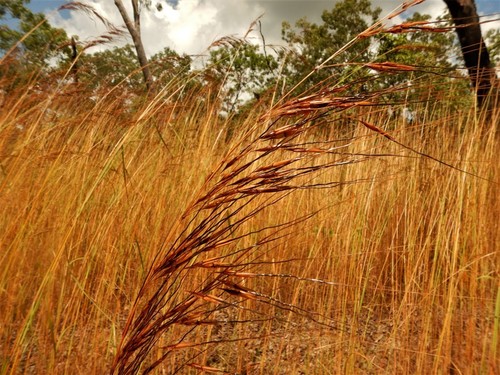
iNaturalist· cc-by-nc
(c) Nick Helme, some rights reserved (CC BY-NC), uploaded by Nick Helme
Summary
Source: WikipediaStipagrostis hirtigluma (Afrikaans: bloutwa) is a densely tufted perennial grass. It occurs across most of Africa east to Pakistan in bushveld, karoo, and desert regions. In Namibia, it grows in dry, warm parts, in stony or sandy places and on rocky outcrops. There are three subspecies of Stipagrostis hirtigluma: Stipagrostis hirtigluma subsp. hirtigluma (Steud. ex Trin. & Rupr.) De Winter – most of Africa through Middle East to South Asia (Pakistan) Stipagrostis hirtigluma subsp. patula (Hack.) De Winter – southern Africa, from Angola to Mozambique and south Stipagrostis hirtigluma var. pearsonii (Henrard) De Winter – Angola and Namibia Stipa hirtigluma subsp. hirtigluma and S. h. subsp. pearsonii display many similarities.
Description
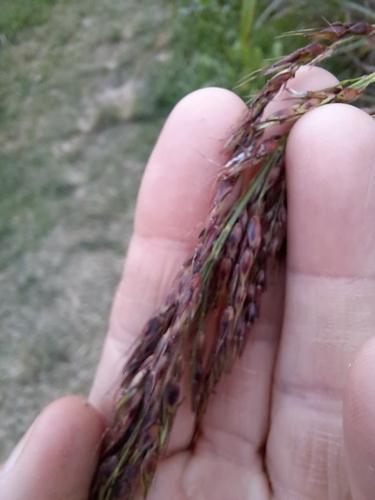
A herb. It is an annual grass that forms tufts. It can keep growing fro a few years. It grows 80 cm high. The leaf blades are 6-20 cm long.
This description is brief — help expand it
Edible Uses
The seeds are used in porridge served with milk or meat, and also for making beer.
Traditional Uses
The seeds are used in porridge. This is eaten with milk or meat. They are also used for making beer.
This uses section is brief — help expand it
Distribution
It is a tropical plant. It grows in dry sandy and stony soils. It is often over limestone material. It can be on flood plains and in the desert. It grows between 500-2,100 m above sea level. It can grow in arid places.
Where It Grows
Africa, Angola, Botswana, Central Africa, East Africa, Egypt, Ethiopia, India, Iran, Israel, Kenya, Lesotho, Mali, Mediterranean, Middle East, Mozambique, Namibia, Nigeria, North Africa, Oman, Pakistan, Saudi Arabia, Somalia, South Africa, Southern Africa, Sudan, Tanzania, Uganda, West Africa, Yemen, Zambia, Zimbabwe,
Production
The seeds are collected from ants nests and winnowed then ground into flour.
Synonyms
Also Known As
Onkumba, Oshoke
References (4)
- Royal Botanic Gardens, Kew (1999). Survey of Economic Plants for Arid and Semi-Arid Lands (SEPASAL) database. Published on the Internet; http://www.rbgkew.org.uk/ceb/sepasal/internet [Accessed 4th June 2011]
- Ruiters-Welcome, A. K., 2019, Food plants of southern Africa. Ph.D. thesis. Univ. of Johannesburg p 90
- Welcome, A. K. & Van Wyk, B.-E., 2019, An inventory and analysis of the food plants of southern Africa. South African Journal of Botany 122 (2019) 136–179
- World Checklist of Useful Plant Species 2020. Royal Botanic Gardens, Kew