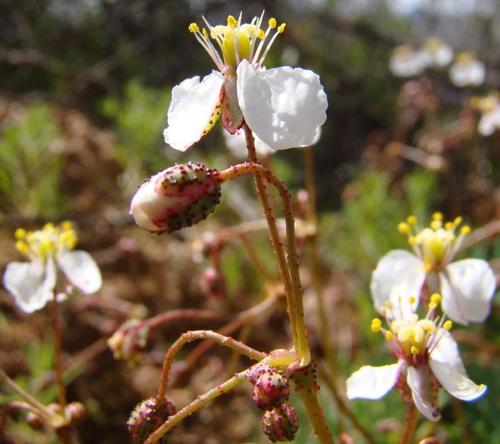
Kewa acida
(Hook. f.) Christenh.
St Helena salad
iNaturalist· cc-by-nc
(c) annelieee, some rights reserved (CC BY-NC)
iNaturalist· cc-by-nc
(c) annelieee, some rights reserved (CC BY-NC)
iNaturalist· cc-by-nc
(c) Julian, some rights reserved (CC BY-NC)
Summary
Source: WikipediaKewa acida, commonly called the Salad Plant, is one of the eight species currently recognized in the genus Kewa, the sole genus in the family Kewaceae. It is a bushy grey-leaved annual or short-lived perennial plant, with white flowers, endemic to St Helena. It is regarded as Critically Endangered. The succulent leaves are high in Vitamin C and were used by sailors in the past as a scurvy preventative.
Description
A herb. It lies along the ground.
This description is brief — help expand it
Edible Uses
On St Helena, Kewa acida has been called the "salad plant". Its leaves have a salty acid taste and are high in vitamin C, so were used by sailors to prevent scurvy.
Distribution
It can grow in salty soils. It can grow in arid places.
Where It Grows
Africa, Atlantic, St Helena*,
Synonyms
References (1)
- Royal Botanic Gardens, Kew (1999). Survey of Economic Plants for Arid and Semi-Arid Lands (SEPASAL) database. Published on the Internet; http://www.rbgkew.org.uk/ceb/sepasal/internet [Accessed 4th May 2011] (As Hypertelis acida)