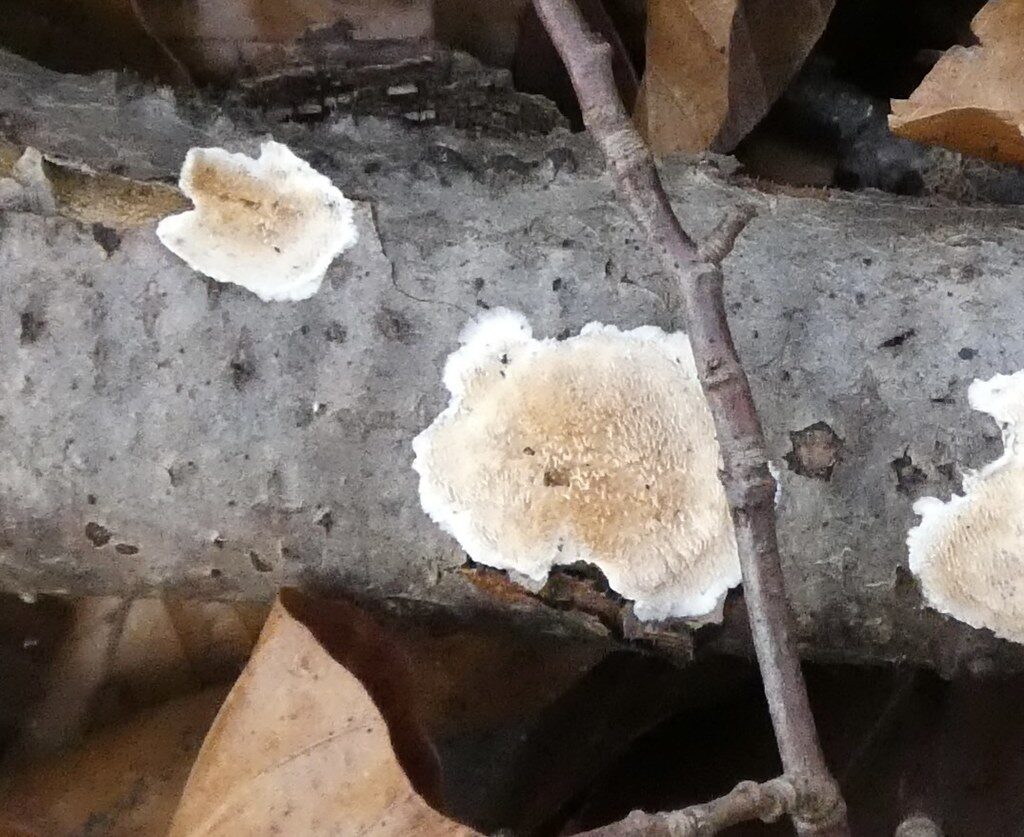
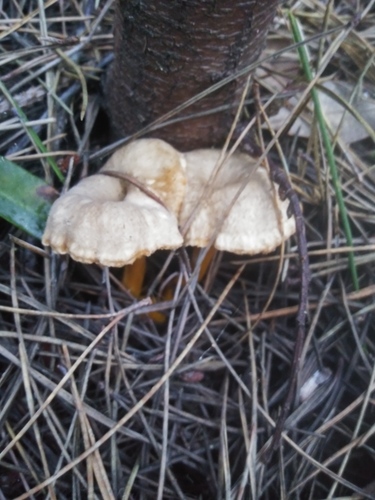
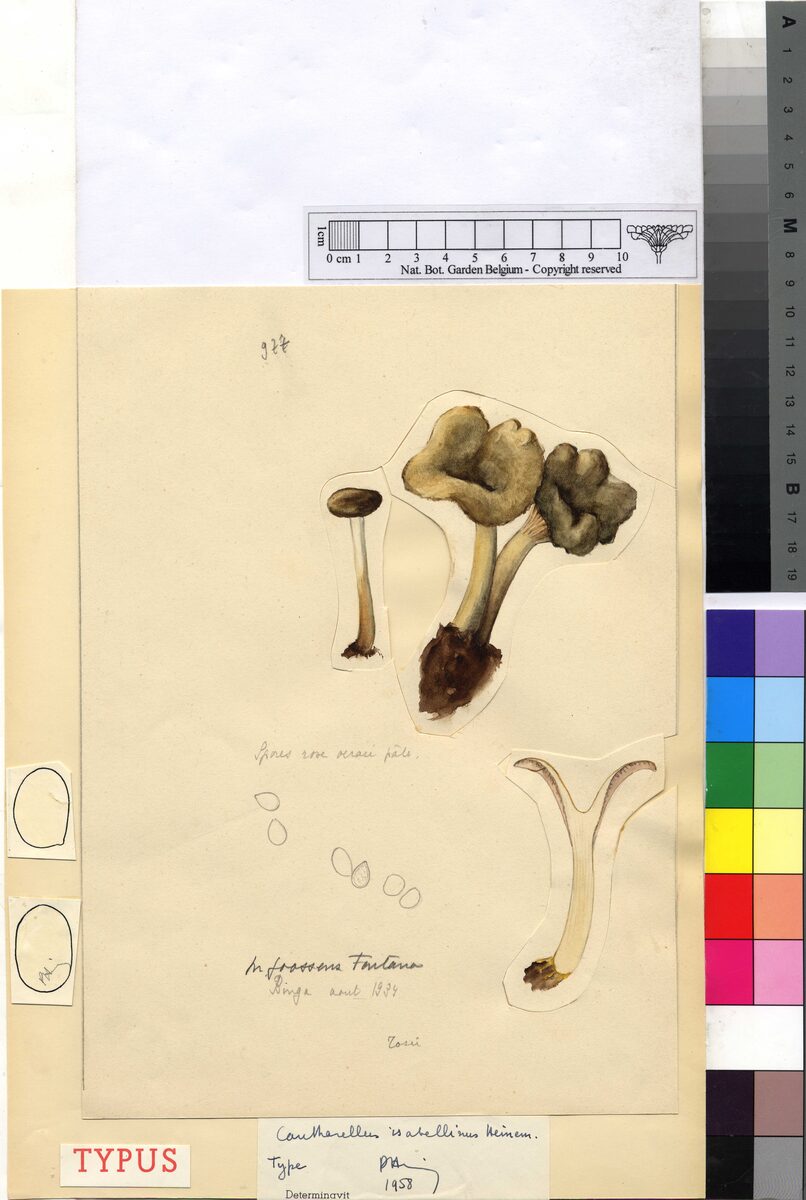
Cantharellus subalbidus
A. H. Sm. & Morse
White chanterelle
iNaturalist· cc-by-nc-sa
(c) Richard Tehan, some rights reserved (CC BY-NC-SA), uploaded by Richard Tehan
iNaturalist· cc-by
(c) Alan Rockefeller, some rights reserved (CC BY)
Summary
Source: WikipediaCantharellus subalbidus, the white chanterelle, is a species of fungus native to western North America. It is a member of the genus Cantharellus along with other popular edible chanterelles.
Description
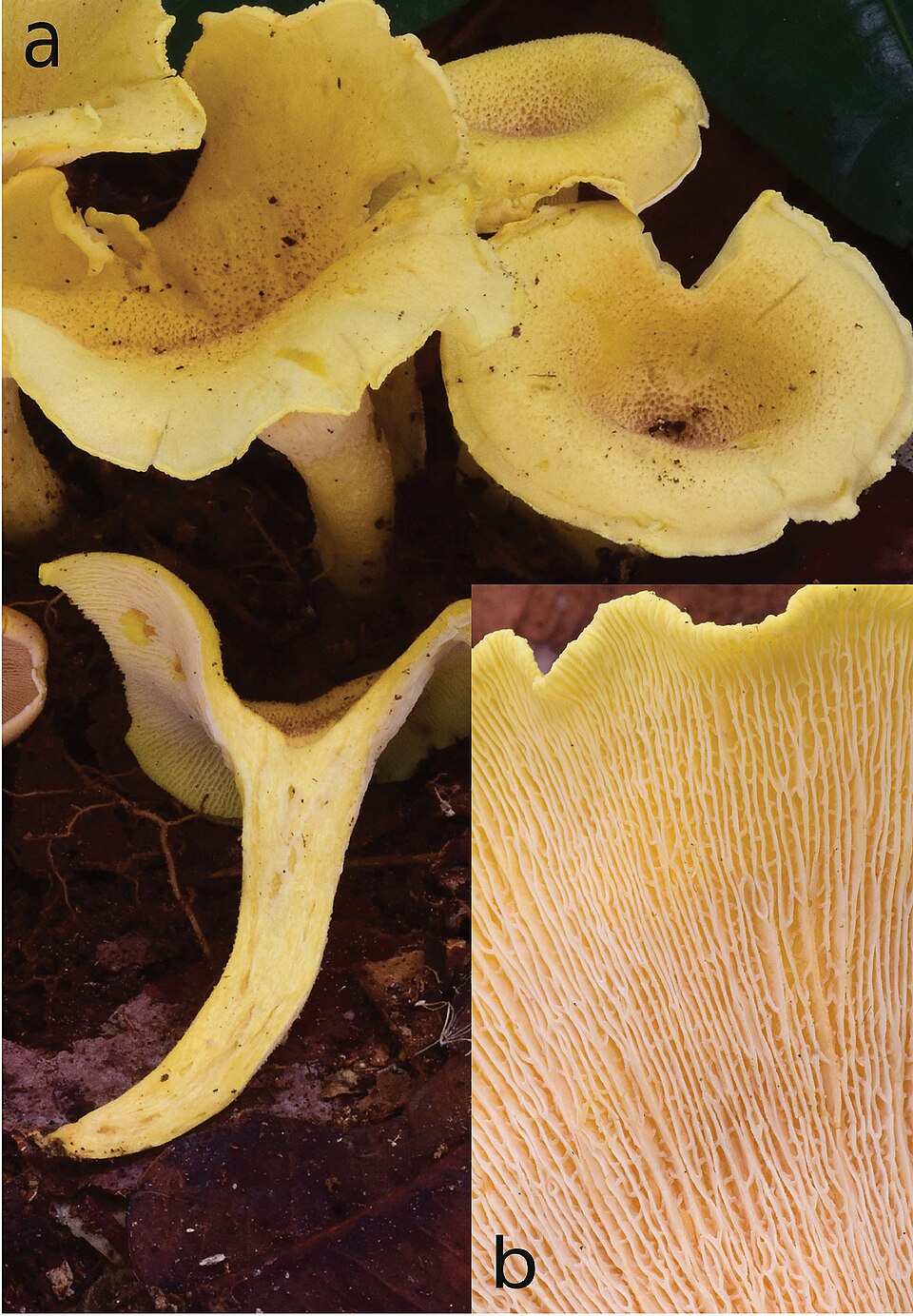
A mushroom. The cap is dull white and the flesh firm and dense.
This description is brief — help expand it
Edible Uses
A choice edible mushroom, it can be prepared by being sautéed or cutting into chunks and baking at 350 °F (177 °C) for 10 minutes.
Traditional Uses
The fruiting bodies are eaten. They can be marinated. They freeze well.
This uses section is brief — help expand it
Distribution
California. In Nepal it grows in moist places in mixed forests.
Where It Grows
Asia, Canada, China, Himalayas, Nepal, North America, USA,
Other Information
Mushrooms are sold in markets in Nepal.
Dangerous Lookalikes
This plant can be confused with the following toxic species. Always verify identification carefully before consuming any wild plant.
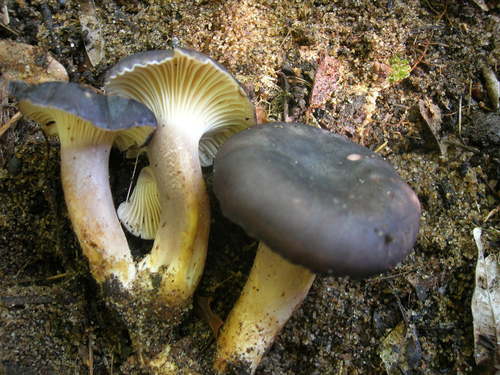
Jack-O'-Lantern Mushroom
Omphalotus olearius
Antonio Abbatiello
White chanterelle
Cantharellus subalbidus
(c) Richard Tehan, some rights reserved (CC BY-NC-SA), uploaded by Richard Tehan
Jack-O'-Lantern Mushroom: True knife-like gills, grows in clusters on wood/stumps, glows in the dark, orange throughout.
White chanterelle: Blunt forked ridges (not true gills), grows singly from soil, apricot/fruity smell, solid flesh.
Also Known As
Ura shyamo, Baijiyoujun
References (7)
- Adhikari, M. K., 2014, Addition and correction to the knowledge on edibility of wild mushrooms in Nepal: a discussion. Bul. Dept. Pl. Res. N. 36, Nepal p 4
- Boa, E. R., 2004, Wild edible fungi and their importance to people. FAO Non Wood Forest Products Booklet 17
- Facciola, S., 1998, Cornucopia 2: a Source Book of Edible Plants. Kampong Publications, p 251
- http://www.mykoweb.com/CAF/edible.html
- Joshi, K. and Joshi, A. R., 2008, Ethnobotanical Studies on Some Lower Plants of the Central Development Region, Nepal. Ethnobotanical Leaflets 12:832-40
Show all 7 references Hide references
- Kaye, G.C., 1986, Wild and Exotic Mushroom Cultivation in North America
- Schneider, E., 2001, Vegetables from Amaranth to Zucchini: The essential reference. HarperCollins. p 169