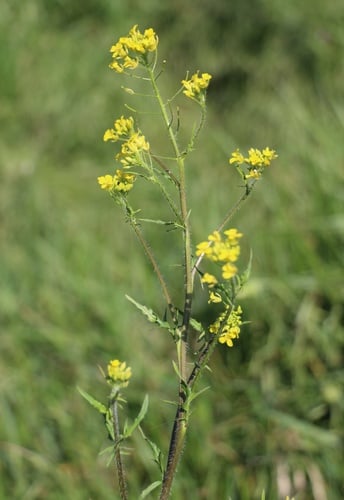
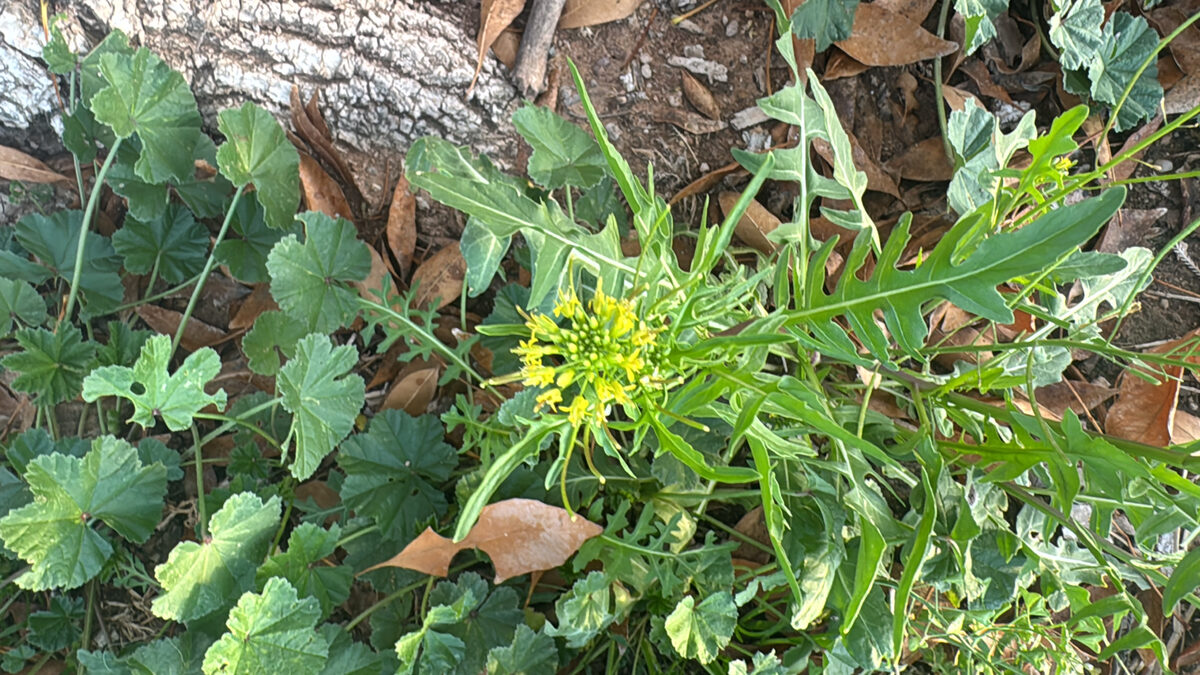
Camelina sativa
(L.) Crantz
Big-seed false flax, German sesame
iNaturalist· pd
Amédée Masclef, no known copyright restrictions (public domain)
iNaturalist· cc-by-nc
(c) Svetlana Nesterova, some rights reserved (CC BY-NC)
iNaturalist· cc-by-nc
(c) Svetlana Nesterova, some rights reserved (CC BY-NC), uploaded by Svetlana Nesterova
Summary
Source: WikipediaCamelina sativa is a flowering plant in the family Brassicaceae usually known as camelina, gold-of-pleasure, or false flax, but also occasionally as wild flax, linseed dodder, German sesame, or Siberian oilseed. It is native to Europe and areas of Central Asia, but cultivated as an oilseed crop mainly in Europe and in North America. It is not related to true flax, which is in the family Linaceae.
Description
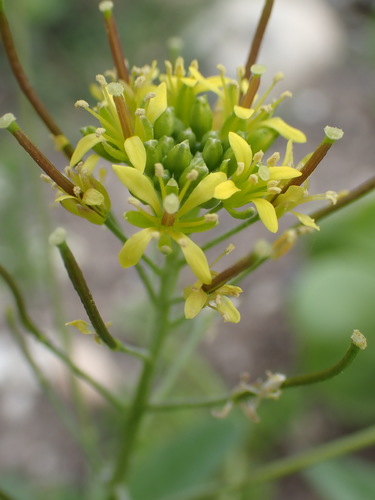
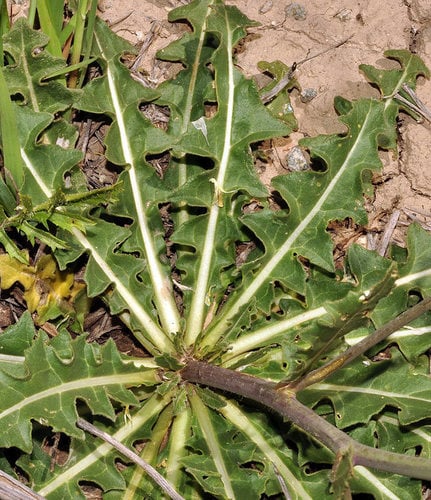
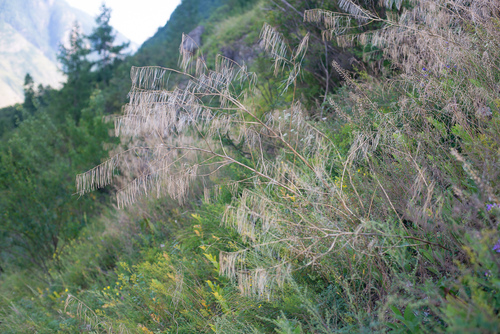
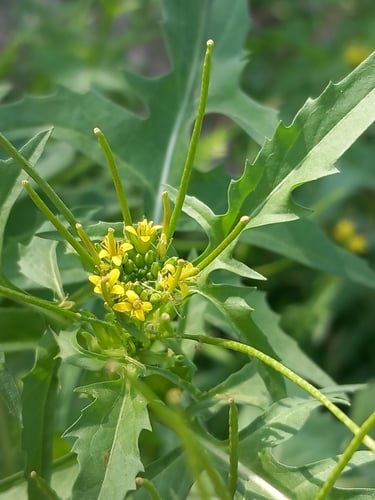
A cabbage family herb. It is an erect annual herb. It grows 80 cm high. It branches from the base. The lower leaves are oblong or sword shaped and 15-50 cm long by 5-10 mm wide. They are wedge shaped at the base. The upper leaves are narrow and without stalks. The flowers are yellow. They are in groups of 30-70 flowers. They are on a stalk 30 cm long. The fruit is a pod 7-9 mm long and 4-5 mm wide.
Edible Uses
Edible Parts: Oil Oil Edible Uses: Oil Oil An edible oil is obtained from the seed.
Traditional Uses
An edible oil is extracted from the seeds.
This uses section is brief — help expand it
Medicinal Uses
None known
Distribution
It is a temperate plant. Tasmania Herbarium.
Where It Grows
Africa, Albania, Argentina, Armenia, Asia, Australia, Austria, Azerbaijan, Balkans, Belarus, Belgium, Brazil, Britain, Bulgaria, Caucasus, Central Asia, China, Crete, Czech, Denmark, Estonia, Europe*, Finland, France, Georgia, Germany, Greece, Hungary, India, Italy, Japan, Kazakhstan, Korea, Latvia, Lithuania, Mediterranean, Moldova, Mongolia, Netherlands, New Zealand, North Africa, Norway, Pakistan, Poland, Romania, Russia, Scandinavia, Slovakia, Slovenia, South America, Sweden, Switzerland, Tajikistan, Tasmania, Turkey, Türkiye, Turkmenistan, Ukraine, Uruguay, SW Asia, N Africa, North America,
Propagation
Seed - sow mid spring in situ.
Other Uses
Broom Fibre Oil Oil An oil from the seed is used as a luminant and as an emollient for softening the skin. A fibre is obtained from the stems. The stems are used for making brooms. Special Uses
Other Information
It is cultivated.
Notes
There are 10 Camelina species.
Nutrition
| Part | Moisture | kJ | kcal | Protein | Vit A | Vit C | Iron | Zinc |
|---|---|---|---|---|---|---|---|---|
| Leaves | 85.6 | 160 | 38 | 4.1 | — | — | — | — |
| Seeds - oil | — | — | — | — | — | — | — | — |
Synonyms
Also Known As
Camelina, False flax, Gold-of-pleasure, Nabo frances, Navadni riček, Siberian oil-seed, Soruk
References (18)
- Bircher, A. G. & Bircher, W. H., 2000, Encyclopedia of Fruit Trees and Edible Flowering Plants in Egypt and the Subtropics. AUC Press. p 76
- Biscotti, N. et al, 2018, The traditional food use of wild vegetables in Apulia (Italy) in the light of Italian ethnobotanical literature. Italian Botanist 5:1-24
- Flora of China @ efloras.org Volume 8
- Flora of Pakistan. www.eFloras.org
- Food Composition Tables for the Near East. http://www/fao.org/docrep No. 321
Show all 18 references Hide references
- Gabrielian, E. & Zohary, D.: Wild relatives of food crops native to Armenia and Nakhichevan. — Fl. Medit. 14: 5-80. 2004. — ISSN 1120-4052.
- Hedrick, U.P., 1919, (Ed.), Sturtevant's edible plants of the world. p 145
- Heywood, V. H. & Zohary, D.,1995, A Catalogue of the Wild Relatives of Cultivated Plants Native to Europe. Flora Mediterranea 5 - 1995, p 389
- Lazarides, M. & Hince, B., 1993, Handbook of Economic Plants of Australia, CSIRO. p 45
- Malezas Comestibles del Cono Sur, INTA, 2009, Buernos Aires
- Paczkowska, G. & Chapman, A.R., 2000, The Western Australian Flora. A Descriptive Catalogue. Western Australian Herbarium. p 185
- Stirp. austr. fasc. 1:17. 1762; ed. 2, 1:18. 1769
- Tasmanian Herbarium Vascular Plants list p 16
- Urgamal, M., Oyuntsetseg, B., Nyambayar, D. & Dulamsuren, Ch. 2014. Conspectus of the vascular plants of Mongolia. (Editors: Sanchir, Ch. & Jamsran, Ts.). Ulaanbaatar, Mongolia. “Admon“ Press. 334pp. (p. 79-90).
- Wiersema, J. H. & Leon, B., 2013, World Economic Plants. A Standard Reference CRC Press. 2nd Ed. p 134
- World Checklist of Useful Plant Species 2020. Royal Botanic Gardens, Kew
- Zeven, A. C. & de West, J. M. J., 1982, Dictionary of cultivated plants and their regions of diversity. Wageningen. p 89
- Zhou Taiyan, Lu Lianli, Yang Guang; Ihsan A. Al-Shehbaz, BRASSICACEAE (CRUCIFERAE), Flora of China.