Hypnea valentiae
(Turner) Montagne
iNaturalist· cc-by-nc
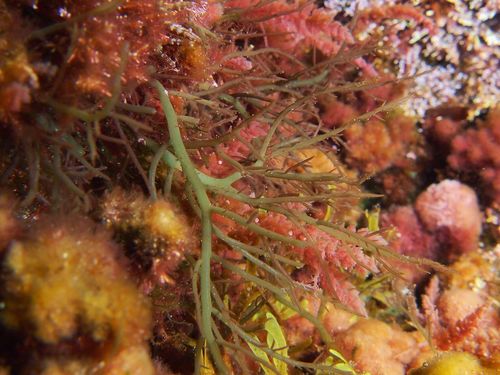
(c) brhong, some rights reserved (CC BY-NC)
iNaturalist· cc-by-nc
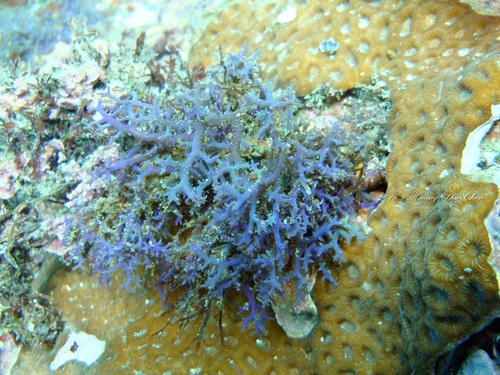
(c) Susan J. Hewitt, some rights reserved (CC BY-NC)
iNaturalist· cc-by-nc
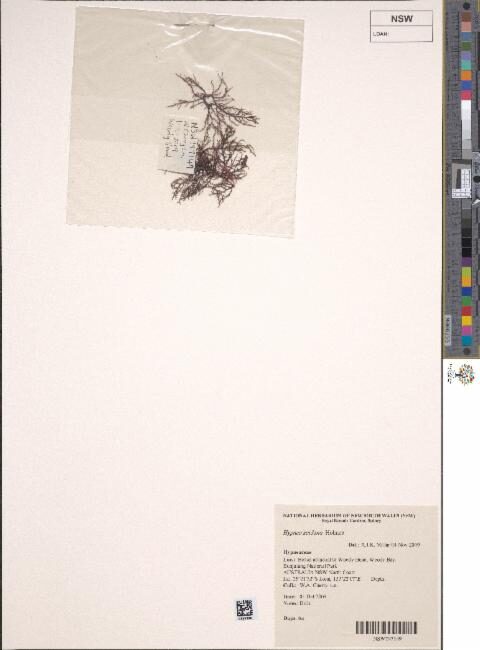
(c) Susan J. Hewitt, some rights reserved (CC BY-NC)
Description
A red seaweed found in tropical waters.
This description is brief — help expand it
Edible Uses
The algae/seaweed is eaten.
Distribution
It grows in tropical places.
Where It Grows
Africa, Asia, Bermuda, Brazil, Canary Islands, Cape Verde, Caribbean, Central America, Colombia, Costa Rica, Cuba, East Africa, Egypt, Eritrea, Ethiopia, Europe, France, Ghana, Greece, Guinea, Guinée, Hispaniola, Indochina, Iran, Italy, Kenya, Madagascar, Mauritius, Mediterranean, Mexico, Middle East, North Africa, North America, Papua New Guinea, PNG, Peru, Sao Tome and Principe, SE Asia, Senegal, South America, Sudan, USA, Vietnam, West Africa, West Indies,
Nutrition
| Part | Moisture | kJ | kcal | Protein | Vit A | Vit C | Iron | Zinc |
|---|---|---|---|---|---|---|---|---|
| Seaweed | — | — | 16.5 | — | — | — | — | — |
Synonyms
References (4)
- Cherry, P., et al, 2019, Risks and benefits of consuming edible seaweeds. Nutrition ReviewsVR Vol. 77(5):307–329
- http://www.seavegetables.com
- Millar, A. J., et al, 1999, Annotated and Illustrated Survey of the Marine Macroalgae from Motupore Island and Vicinity (Port Moresby area, Papua New Guinea). 111. Rhodophyta. Australian Systematic Botany 12, 549-591
- Zemke-White, W. L. & Ohno, M., 1999, World seaweed utilisation: An end-of-century summary. Journal of Applied Phycology 11: 369-376