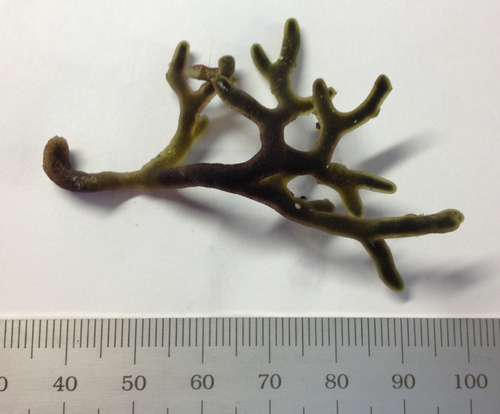
Codium edule
P. C. Silva
iNaturalist· cc-by-nc
(c) pnw.wildlife2001, some rights reserved (CC BY-NC)
iNaturalist· cc-by-nc
(c) pnw.wildlife2001, some rights reserved (CC BY-NC)
iNaturalist· cc-by-nc
(c) vivianckman, some rights reserved (CC BY-NC)
Summary
Source: WikipediaCodium edule is a green alga common on shallow reef flats from the intertidal to the subtidal in tropical waters of the Indo-Pacific. The species is common in Hawaiʻi where it is usually called wāwaeʻiole (meaning "ratʻs foot") and considered an edible alga or limu. Prominent ethnobotanist Isabella Abbott described its usage in her writing.
Description
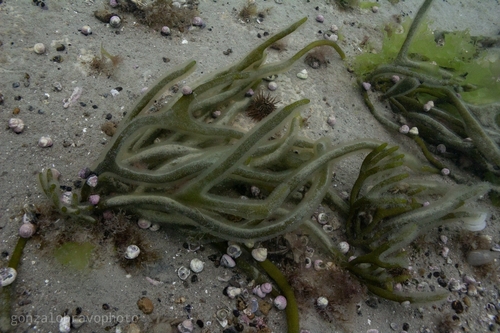
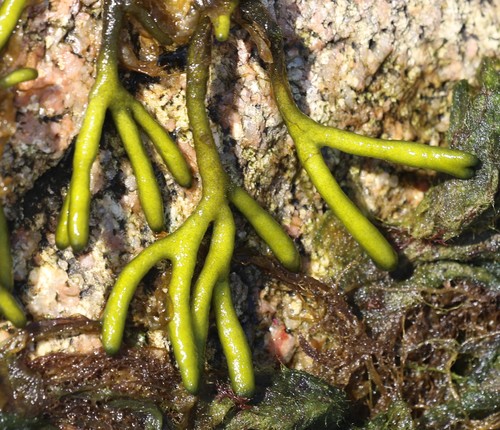
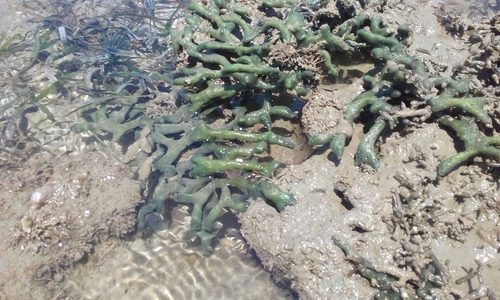
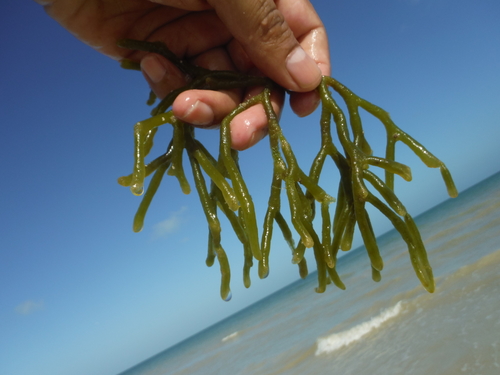
A seaweed forming large dark green mats with a felt-like surface. Found in tropical tidal zones at depths of 2-3 m.
This description is brief — help expand it
Edible Uses
The seaweed is chopped or pounded, mixed with salt, and eaten with fish or in stews.
Traditional Uses
It is chopped or pounded and mixed with salt. It is eaten with fish or in stews.
This uses section is brief — help expand it
Distribution
It grows in tropical places. It grows in the tidal zone 2-3 m deep.
Where It Grows
Asia, Hawaii, Indonesia, Maldives, Micronesia, Pacific, Papua New Guinea, PNG, Philippines, SE Asia, Taiwan,
Also Known As
Limu wawae'iole
References (6)
- Coppejans, E., Leliaert, F., Dargent, O. & De Clerck, O., 2001, Marine green algae (Chlorophyta) from the north coast of Papua New Guinea. Cryptogamie, Algologie 22(4): 375-443.
- http://www.hawaii.edu/reefalgae/publications/ediblelimu/
- http://www.seavegetables.com
- Novaczek, I., 2001, A Guide to the Common Edible and Medicinal Plants of the Pacific Islands. SPC. p 8
- www.algaebase.org
Show all 6 references Hide references
- Zemke-White, W. L. & Ohno, M., 1999, World seaweed utilisation: An end-of-century summary. Journal of Applied Phycology 11: 369-376