Disa erubescens
Rendle
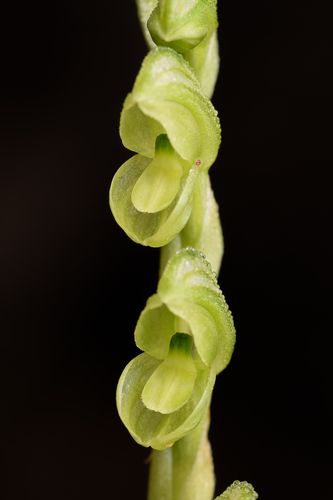
iNaturalist· cc-by-nc
(c) Phil Hirst, some rights reserved (CC BY-NC)
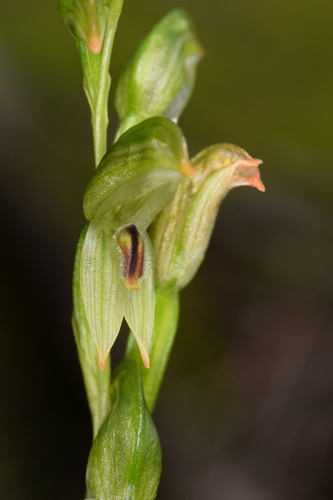
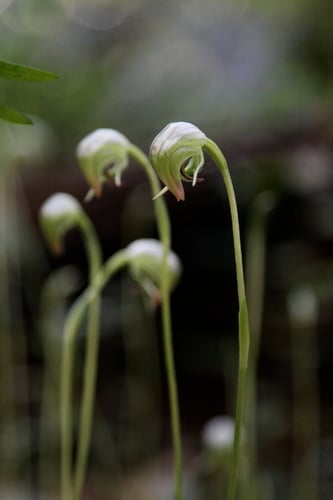
iNaturalist· cc-by-nc
(c) Benford Kayuni, some rights reserved (CC BY-NC)
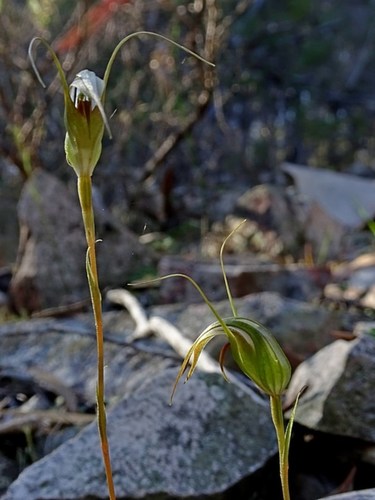
iNaturalist· cc-by-nc
(c) Benford Kayuni, some rights reserved (CC BY-NC)
Summary
Source: WikipediaDisa erubescens is a perennial plant and geophyte belonging to the genus Disa. The plant is native to Angola, Burundi, Democratic Republic of the Congo, Cameroon, Kenya, Malawi, Mozambique, Nigeria, Rwanda, Sudan, Tanzania, Uganda, Zambia and Zimbabwe. There are two subspecies: Disa erubescens subsp. carsonii (N.E.Br.) H.P.Linder Disa erubescens subsp. erubescens
Description
An orchid that grows in the ground. It grows 90 cm high. It has slender tubers 3 cm long by 1.5 cm wide. There are leaves on separate non flowering shoots and these are narrow and 30 cm long. The leaves on the flowering shoots aee sword shaped and 3-8 cm long. The flowering stalk can be 19 cm long. There are 3-10 flowers. They are arranged loosely. They are orange or red.
Edible Uses
The flower nectar, tubers, and roots are edible.
Distribution
It is a tropical plant. It grows in upland poorly drained pastures. It grows between 1,800-2,400 m above sea level.
Where It Grows
Africa, Burundi, Cameroon, Central Africa, Congo, East Africa, Kenya, Malawi, Mozambique, Nigeria, Rwanda, Sudan, Tanzania, Uganda, West Africa, Zambia, Zimbabwe,
Synonyms
Also Known As
Liseku
References (6)
- Burkill, H. M., 1985, The useful plants of west tropical Africa, Vol. 4. Kew.
- Challe, J., et al, 2009, Endangered edible orchids and vulnerable gatherers in the contxt of HIV/AIDS in the Southern Highlands of Tanzania. Journal of Ethnobiology and Ethnomedicine 5:41
- Fowler, D. G., 2007, Zambian Plants: Their Vernacular Names and Uses. Kew. p 86
- Hamisy, W. C., 2007, Development of Conservation Strategies for the Wild Edible Orchid in Tanzania. National Plant Genetic Resources Centre. Arusha, Tanzania. p 12
- Mapunda, L. N. D., Edible Orchids in Makete district, the Southern Highlands of Tanzania: Swedish Biodiversity Centre. CBM Master's Thesis.
Show all 6 references Hide references
- Nyomora, A. M. S., 2005, Distribution and Abundance of the Edible Orchids of the Southern Highlands of Tanzania. Tanz. J. Sci. Vol 31(1) p 47