Berkheya setifera
DC.
Buffalo tongue Berkeya
iNaturalist· cc-by-nc
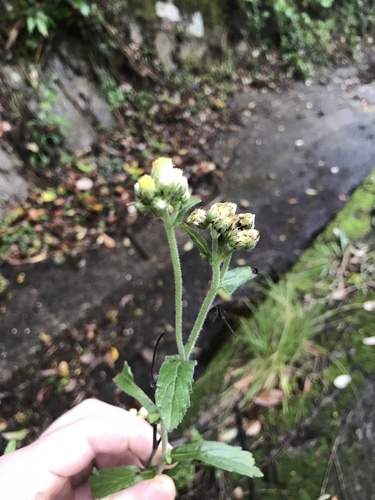
(c) Erwin Sieben, some rights reserved (CC BY-NC), uploaded by Erwin Sieben
iNaturalist· cc-by-sa
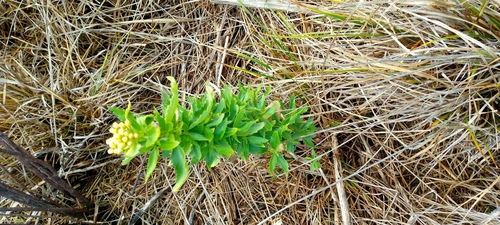
(c) Andrew Hankey, some rights reserved (CC BY-SA), uploaded by Andrew Hankey
iNaturalist· cc0
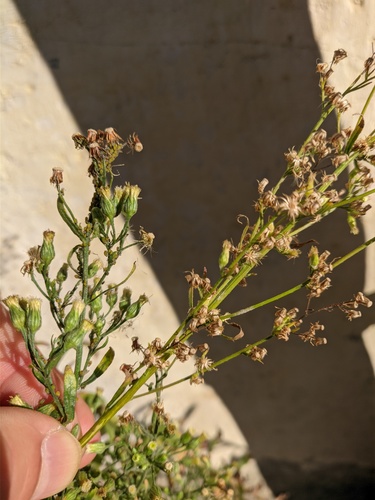
no rights reserved, uploaded by Peter Warren
Description
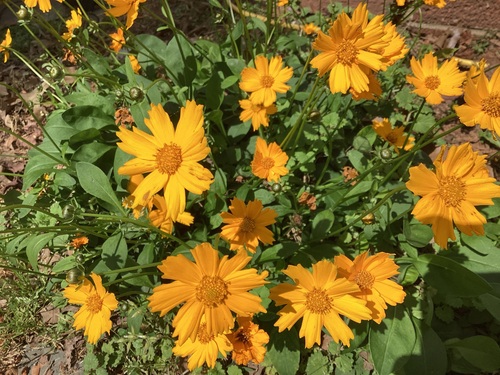
A herb. It can grow up to 1.2 m high. It keeps growing from year to year. It puts up annual stems. The stems have a covering of hairs. The leaves are mainly near the base with smaller leaves on the stems. They are broadly oval and 45 cm long. They have spiny bristles on them. The leaves narrow towards the base. The flower head is at the top of the plant. It is 3-6 cm across. They are yellow.
Edible Uses
The leaves are cooked and eaten.
Traditional Uses
The leaves are cooked and eaten.
This uses section is brief — help expand it
Distribution
It is a subtropical plant. It grows in wooded grassland. It can grow in arid places. In grows at higher altitudes in Swaziland.
Where It Grows
Africa, East Africa, Eswatini, Lesotho, Mozambique, South Africa, Southern Africa, Swaziland, Zimbabwe,
Synonyms
Also Known As
Lulwimi lwenkhomo, Mavambuka, Ulimi-lwenkomo
References (6)
- Long, C., 2005, Swaziland's Flora - siSwati names and Uses http://www.sntc.org.sz/flora/
- Plowes, N. J. & Taylor, F. W., 1997, The Processing of Indigenous Fruits and other Wildfoods of Southern Africa. in Smartt, L. & Haq. (Eds) Domestication, Production and Utilization of New Crops. ICUC p 186
- Royal Botanic Gardens, Kew (1999). Survey of Economic Plants for Arid and Semi-Arid Lands (SEPASAL) database. Published on the Internet; http://www.rbgkew.org.uk/ceb/sepasal/internet [Accessed 11th April 2011]
- Ruiters-Welcome, A. K., 2019, Food plants of southern Africa. Ph.D. thesis. Univ. of Johannesburg p 33
- Welcome, A. K. & Van Wyk, B.-E., 2019, An inventory and analysis of the food plants of southern Africa. South African Journal of Botany 122 (2019) 136–179
Show all 6 references Hide references
- World Checklist of Useful Plant Species 2020. Royal Botanic Gardens, Kew