Moricandia arvensis
(L.) DC.
Purple mistress
iNaturalist· cc-by-nc
(c) Sonja Bouwman-Gringhuis, some rights reserved (CC BY-NC), uploaded by Sonja Bouwman-Gringhuis
iNaturalist· cc-by-nc
(c) Thijs Valkenburg, some rights reserved (CC BY-NC)
Summary
Source: WikipediaMoricandia arvensis, the purple mistress, is a species of flowering plant in the family Brassicaceae. It has a broadly western Mediterranean distribution, from the Canary Islands to northern Africa including Mauritania and Chad, the Iberian Peninsula, Italy and as far as Greece, and has been introduced to France, Corsica, and Sardinia. It has an intermediate C3–C4 carbon fixation system, known as C2 photosynthesis.
Description
A short herb. It grows for a few years. The stems are branched. The leaves are near the base. They are fleshy and like a cabbage. They are oval with blunt teeth. The upper leaves are smaller and heart shaped. They clasp the stem. The flowers are purple to violet. They are about 2 cm across and in loose arrangements. The fruit is a pod 3-8 cm long. It is slightly square in cross section.
Edible Uses
The leaves are eaten cooked as a vegetable and used in stews, and the plant is also used as a spice or flavouring.
Traditional Uses
The leaves are eaten cooked as a vegetable. They are used in stews. It is also used as a spice of flavouring.
This uses section is brief — help expand it
Distribution
It is a Mediterranean plant. It grows in rocky places and on old walls. It grows on limestone soils.
Where It Grows
Africa, Algeria, Europe, Italy, Mediterranean, Morocco, North Africa, Sicily, Spain, Tunisia,
Notes
There are about 6 Moricandia species.
Synonyms
Also Known As
Collejon basto, Krumb ej-jmel
References (9)
- Blamey, M and Grey-Wilson, C., 2005, Wild flowers of the Mediterranean. A & C Black London. p 67
- Geraci, A., et al, 2018, The wild taxa utilized as vegetables in Sicily (Italy): a traditional component of the Mediterranean diet. Journal of Ethnobiology and Ethnomedicine (2018) 14:14
- Lentini, F. and Venza, F., 2007, Wild food plants of popular use in Sicily. J Ethnobiol Ethnomedicine. 3: 15
- Moerman, D. F., 2010, Native American Ethnobotany. Timber Press. p 349
- Nassif, F., & Tanji, A., 2013, Gathered food plants in Morocco: The long forgotten species in Ethnobotanical Research. Life Science Leaflets 3:17-54
Show all 9 references Hide references
- Pasta, S., et al, 2020, An Updated Checklist of the Sicilian Native Edible Plants: Preserving the Traditional Ecological Knowledge of Century-Old Agro-Pastoral Landscapes. Frontiers in Plant Science. Volume 11|Article 388
- Rivera, D. et al, 2006, Gathered Mediterranean Food Plants - Ethnobotanical Investigations and Historical Development, in Heinrich M, Müller WE, Galli C (eds): Local Mediterranean Food Plants and Nutraceuticals. Forum Nutr. Basel, Karger, 2006, vol 59, pp 18–74
- Tardio, J., et al, Ethnobotanical review of wild edible plants in Spain. Botanical J. Linnean Soc. 152 (2006), 27-71
- World Checklist of Useful Plant Species 2020. Royal Botanic Gardens, Kew
More from Brassicaceae
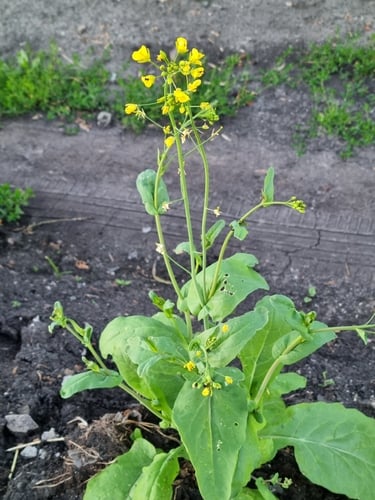
Brassica rapa var. japonica
Potherb mustard, Japanese mustard
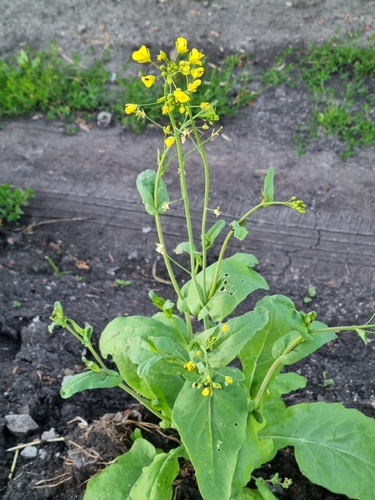
Brassica rapa var. pekinensis x Brassica rapa var. perviridis
Senposai, Oriental greens, Japanese greens
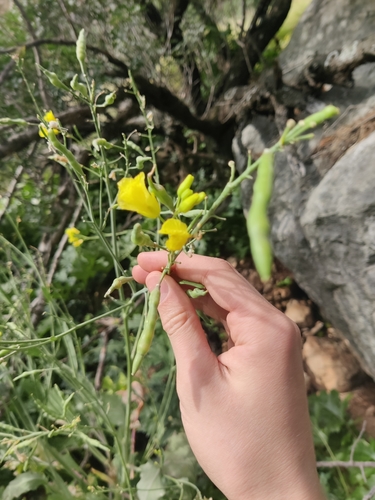
Brassica rupestris
Wild leafy kale
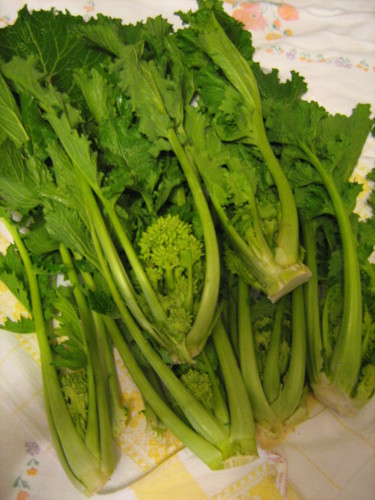
Brassica ruvo
Broccoli raab, Italian turnip broccoli, Rapini, Ruvo kale
Brassica tournefortii
Wild Turnip, Mediterranean Turnip, Asian mustard
Brassica x sp.
Sensopai, Colbaga, etc