Agrocybe cylindracea
(DC.:Fr.) Maire
Southern poplar mushroom
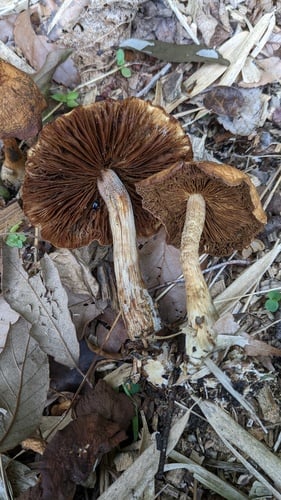
iNaturalist· cc-by-nc
(c) mpearlstein, some rights reserved (CC BY-NC)
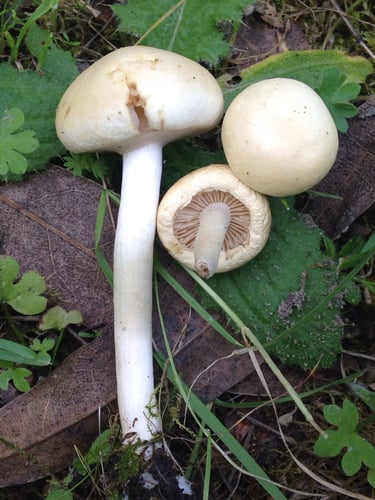
iNaturalist· cc-by-nc
(c) mpearlstein, some rights reserved (CC BY-NC)
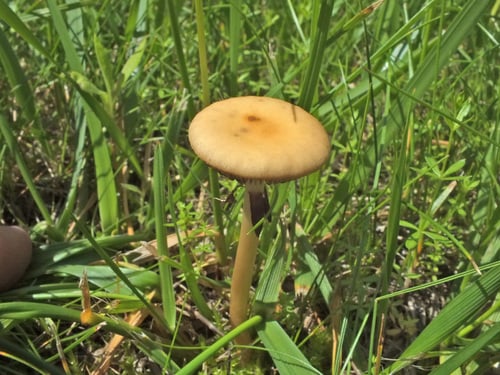
iNaturalist· cc-by-nc
(c) mpearlstein, some rights reserved (CC BY-NC)
Description
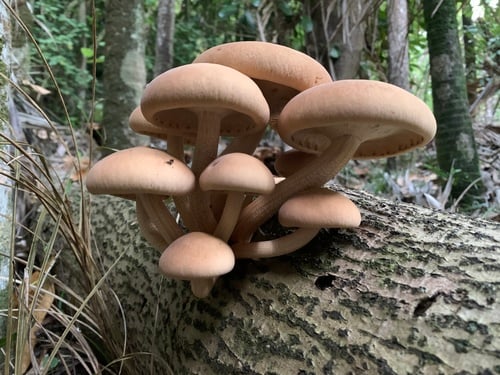
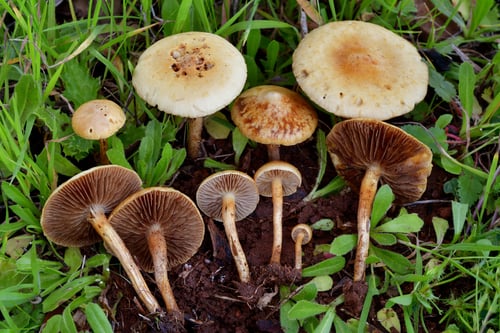
A mushroom. It grows in clusters on wood. The cap is 3-10 cm across. Probably now Cyclocybe aegerita (V.Brig.) Vizzini;
This description is brief — help expand it
Edible Uses
The mushroom cap is cooked, added to sauces, or preserved in vinegar.
Traditional Uses
The mushroom cap is cooked or added to sauces or preserved in vinegar.
This uses section is brief — help expand it
Medicinal Uses
The mushroom is edible but resembles some deadly species. It is a typical ingredient found in both Southern European and Chinese cuisine. In East Asia, it is used fresh and rehydrated in various dishes, including stir fry, soup, stew, and hot pot. It is cultivated in Korea, Japan, China, and Australia. In traditional Chinese medicine, it is often used as a diuretic. Along with Mycetinis alliaceus and Chondrostereum purpureum, it is suitable for counteracting olive-mill wastewater plant toxicity.
Distribution
It is a temperate plant.
Where It Grows
Asia, Australia, Chile, China, Europe, Hong Kong, Italy, Japan, Korea, Mediterranean, North America, Sicily, Turkey, Türkiye, USA,
Cultivation
It is cultivated by sawdust bottle culture.
Other Information
It is cultivated.
Nutrition
| Part | Moisture | kJ | kcal | Protein | Vit A | Vit C | Iron | Zinc |
|---|---|---|---|---|---|---|---|---|
| Mushroom | 92.8 | 54 | 13 | 2.4 | — | — | 0.5 | 0.6 |
Synonyms
Also Known As
Zhuzhuang tiantougu
References (6)
- Akata, I., et al, 2012, Chemical Composition and Antioxidant Activities of 16 Wild Edible Mushroom Species Grown in Anatolia. International Journal of Pharmacology 8(2): 134-138
- forests-366202-SI
- Hall, I. R., et al, 2003, Edible and Poisonous Mushrooms of the World. Timber Press. p 317
- Lentini, F. and Venza, F., 2007, Wild food plants of popular use in Sicily. J Ethnobiol Ethnomedicine. 3: 15
- Pieroni, A., et al, 2005, Food for two seasons: Culinary uses of non-cultivated local vegetables and mushrooms in a south Italian village. International Journal of Food Sciences and Nutrition, 56(4): 245-272
Show all 6 references Hide references
- www.plantnames.unimelb.edu.au