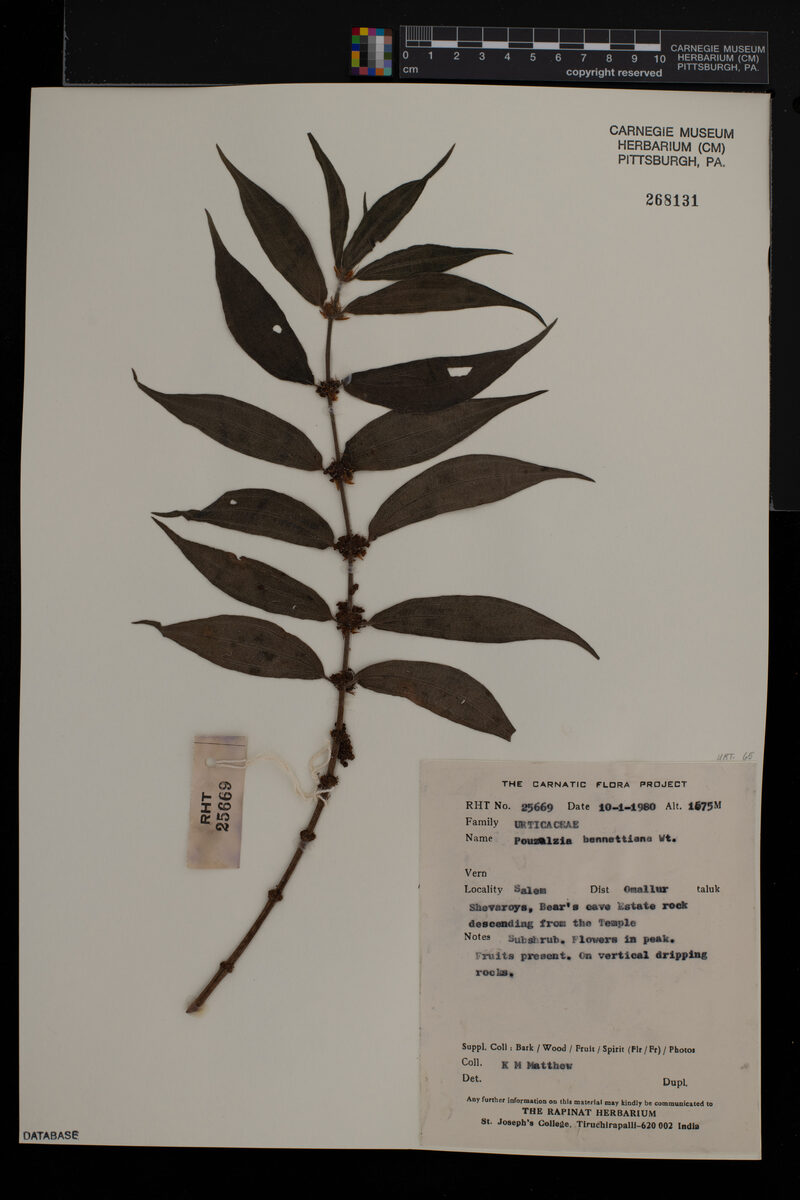
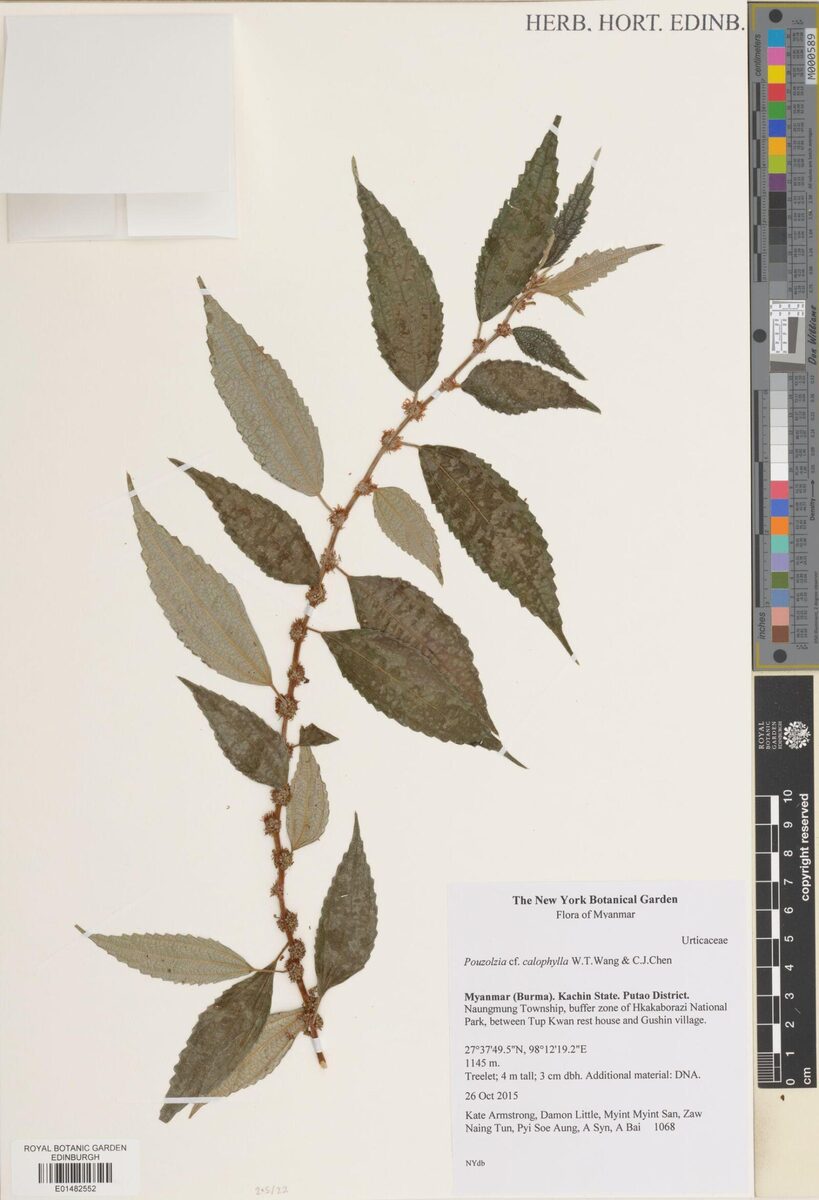
Elatostema lineolatum
Wight
iNaturalist· cc-by-nc
(c) shintsai, some rights reserved (CC BY-NC)
iNaturalist· cc-by-nc
(c) 金翼白眉, some rights reserved (CC BY-NC)
iNaturalist· cc-by-nc
(c) 金翼白眉, some rights reserved (CC BY-NC)
Description
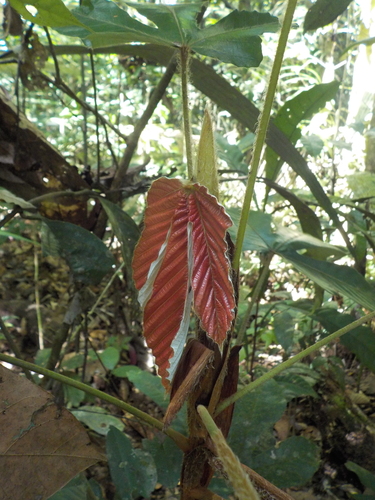
A herb or small shrub. It can grow to 2 m tall. The leaves are alternate and it does not have stinging hairs. The leaves are obliquely oblong and 3-15 cm long by 2-4 cm wide.
Edible Uses
The young leaves are cooked as a vegetable.
Traditional Uses
The young leaves are cooked as a vegetable.
This uses section is brief — help expand it
Medicinal Uses
The leaves, flowers and tender fruits are used to treat body pain, nervous weakness, gastric complaints and giddiness.
Distribution
It is a tropical and subtropical plant. It grows near the edges of forests between 200-1,800 m above sea level. In Northeastern India it grows between 1,700-2,000 m above sea level. In Yunnan.
Where It Grows
Asia, Bhutan, China, Himalayas, India, Indochina, Laos, Myanmar, Nepal, Northeastern India, SE Asia, Sikkim, Taiwan, Thailand,
Cultivation
Plants can be either dioecious or monoecious. If dioecious forms are grown then both male and female forms need to be grown if fruit and seed are required.
Synonyms
Also Known As
Chhotey gaglato, Dai-vu, Dambe-hru, Damroo, Edeio, Gariyangel, Jyan, Qia bu ren, Solunche, Xie ri keng jiang
References (8)
- Cheng, Z., et al, 2022, Ethnobotanical study on wild edible plants used by Dulong people in northwestern Yunnan, China. Journal of Ethnobiology and Ethnomedicine (2022) 18:3
- Flora of China @ efloras.org Volume 5
- Konsam, S., et al, 2016, Assessment of wild leafy vegetables traditionally consumed by the ethnic communities of Manipur, northeast India. Journal of Ethnobiology and Ethnomedicine, 12:9
- Mukhia, P.K., et al, 2013, Wild plants as Non Wood Forest Products used by the rural community of Dagana, a southern foothill district of Bhutan, SAARC Journal, 27 pages
- Pfoze, N. L., et al, 2012, Survey and assessment of floral diversity on wild edible plants from Senapati district of Manipur, Northeast India. Journal or Biodiversity and Environmental Sciences. 1(6):50-52
Show all 8 references Hide references
- Thapa, Laxmi, 2009, The Research Project on Edible Wild Plants of Bhutan and Their Associated traditional Knowledge. http:hdl.handle.net/10091/2919
- Tsering, J., et al, 2017, Ethnobotanical appraisal on wild edible plants used by the Monpa community of Arunchal Pradesh. Indian Journal of Traditional Knowledge. Vol 16(4), October 2017, pp 626-637
- Tsherig, K., 2012, Edible Wild Plants of Bhutan and their contribution to Food and Nutrition Security. Ministry of Ag. and Forests, Bhutan. www.fao.org