Sorbus tianschanica
Rupr.
Tien-Shan mountain ash
iNaturalist· cc-by-nc
(c) Ajay Bijoor, some rights reserved (CC BY-NC), uploaded by Ajay Bijoor
iNaturalist· cc-by-nc
(c) frannibee, some rights reserved (CC BY-NC)
iNaturalist· cc-by-nc
(c) andrey19780619, some rights reserved (CC BY-NC)
Description
A large shrub or small tree. It grows 3-5 m tall. It has a wide crown. The young shoots are greenish-brown and have some hairs. Older shoots are reddish and have thin bark that peels off. The leaves are compound with an odd number of leaflets. They are 10-16 cm long. There are 6 to 8 pairs of leaflets. The flowering groups are very large. They are loose and 10-15 cm wide with 25-30 flowers. The fruit are 12 mm across. They are yellow-red when young and become dark red at maturity. They are edible.
Edible Uses
The fruits are eaten and are considered best after frosts.
Traditional Uses
The fruit are eaten and are best after frosts.
This uses section is brief — help expand it
Distribution
It is a temperate plant. In Kazakhstan it grows near the upper edges of fir forests at 2,000-3,000 m above sea level.
Where It Grows
Afghanistan, Asia, Central Asia, China, Kazakhstan, Kyrgyzstan, Pakistan, Russia, Tajikistan, Uzbekistan,
Cultivation
Plants can be grown by seeds, layering or root sprouts.
Also Known As
Chetani
References (3)
- Dzhangaliev, A. D., et al, 2003, The Wild Fruit and Nut Plants of Kazakhstan, Horticultural Reviews, Vol. 29. pp 305-371
- Kang, J. et al, 2016, Wild food plants and fungi used in the mycophilous Tibetan community of Zhagana (Tewo Country, Gansu, China) Journal of Ethnobiology and Ethnomedicine. 12:21
- Khojimatov, O. K. et al, 2015, Some wild growing plants in traditional foods of Uzbekistan. Journal of Ethnic Foods. 2 (2015) 25-28
More from Rosaceae
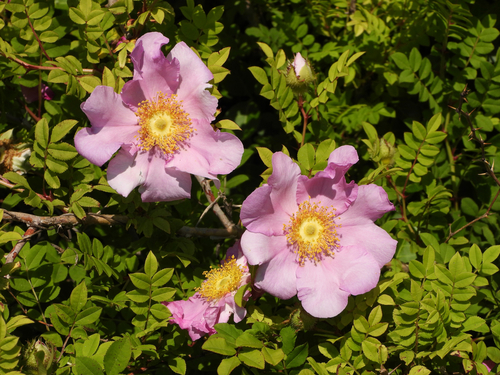
Rosa roxburghii
Sweet chestnut rose, Burr rose, Silk-reeling flower, Roxburgh's rose
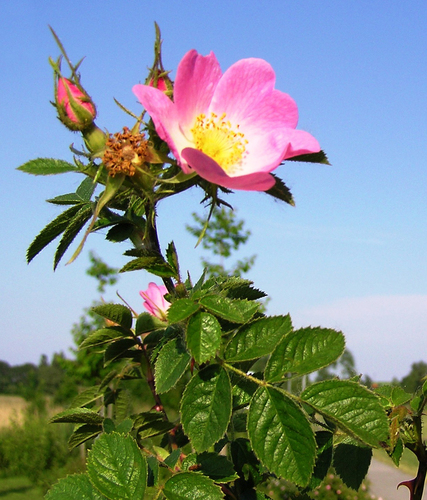
Rosa rubiginosa
Sweetbrier rose, Eglantine Rose, Briar rose
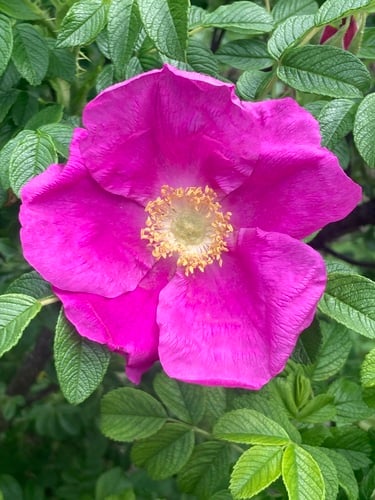
Rosa rugosa
Japanese Rose, Ramanas Rose, Wrinkled rose, Turkestan rose, Meigui, Mau, Humanasi, Beach rose, Hedgehog rose, Rugose rose, Tomato rose, Mei gui
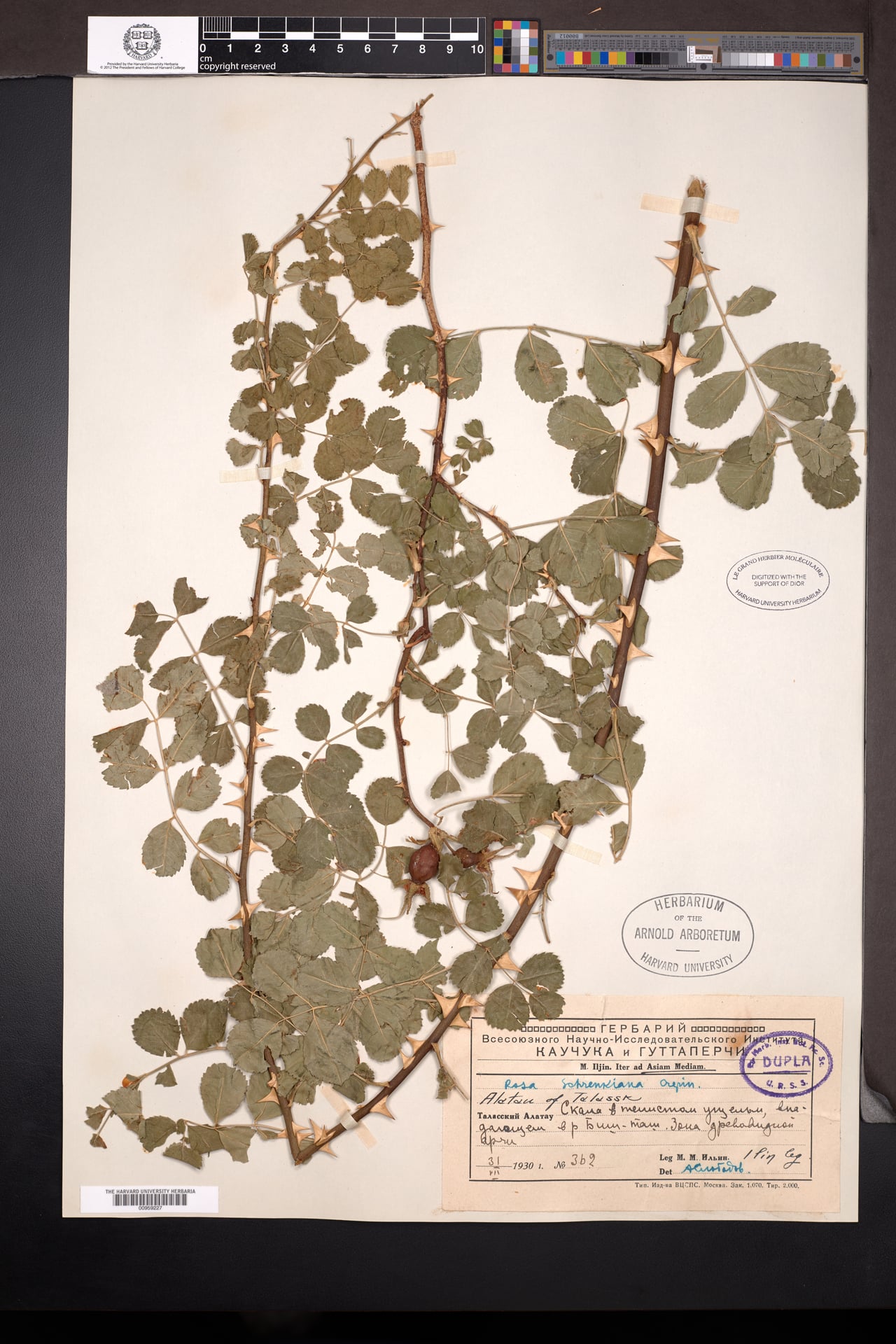
Rosa schrenkiana
Schrenkovskiy rose
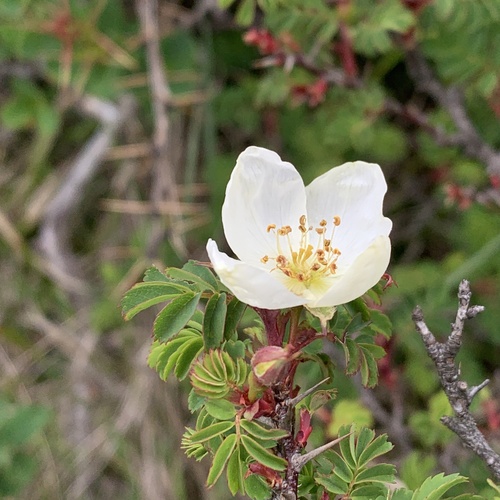
Rosa sericea
Himalayan rose, Maltese cross rose, Silky rose
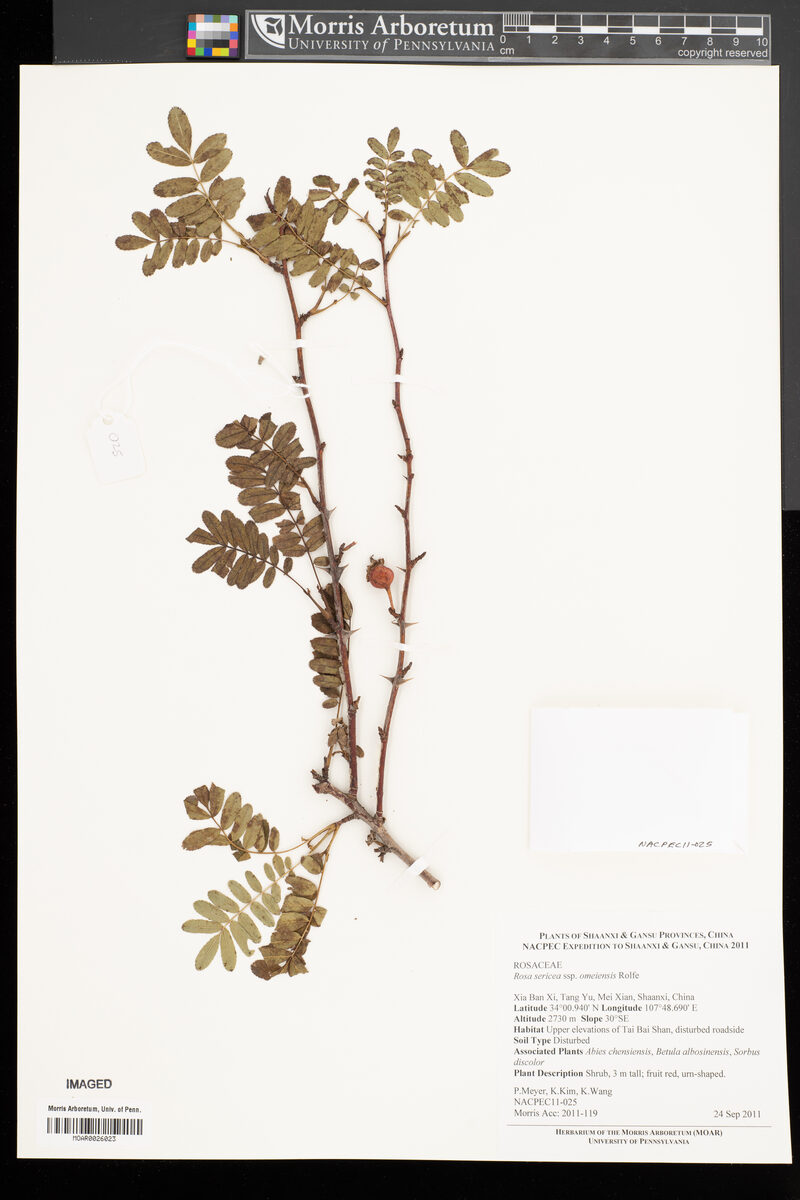
Rosa sericea omeiensis - (Rolfe.)A.V.Roberts.
Himalayan Rose