Cola laurifolia
Mast.
Laurel-leaved kola
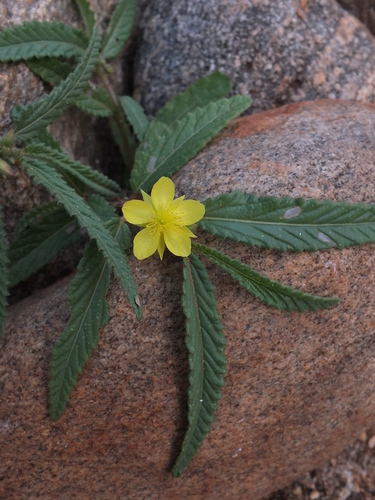
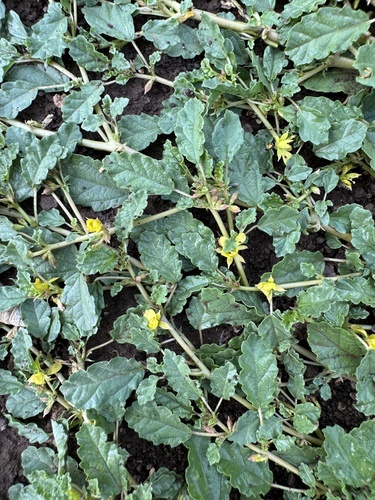
iNaturalist· cc-by-nc-sa
(c) Marco Schmidt, some rights reserved (CC BY-NC-SA)
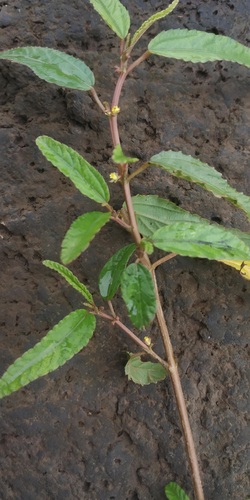
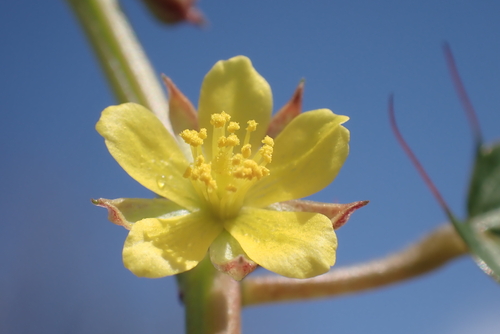
iNaturalist· cc-by-nc-sa
(c) Marco Schmidt, some rights reserved (CC BY-NC-SA)
Description
A medium sized tree. It grows 30 m tall. The brnaches are low and arch over. They can develop roots. The trunk can be 80 cm across. The young plant parts have rusty coloured hairs. The leaves are alternate and near the ends of twigs. The leaf stalk is 2-8 cm long. The leaves are 5-25 cm long by 3-13 cm wide. The flowers are in groups and densely hairy. They are unisexual and brown. The fruit have 4-5 follicles. These re 5 cm long and brown or red. They have 4-5 seeds. The seeds are 2 cm long and 1 cm wide. They are covered by a yellow layer.
Edible Uses
The fruit is eaten and is a commonly used fruit in West Africa.
Medicinal Uses
Seed preparations are used as a treatment against diarrhoea and dysentery.
Distribution
It is a tropical plant. It grows in forest and moist savanna along river banks.
Where It Grows
Africa, Benin, Burkina Faso, Côte d'Ivoire, Gambia, Ghana, Guinea, Guinée, Guinea-Bissau, Ivory Coast, Nigeria, Senegal, Sierra Leone, Togo, West Africa,
Other Uses
The twigs are used as chew sticks for cleaning the teeth and maintaining dental hygiene. A fibre obtained from the bark is made into cordage. The bark of young saplings can be made into a very fine cloth. The bark is chewed by women to colour the mouth. The yellow-grey wood has a fine texture. It is strong and elastic, bending without breaking, but sometimes splitting. It is used for making bows. Saplings are used for spear shafts. The wood is used for fuel.
Other Information
It is a commonly used fruit in West Africa.
Notes
Also put in the family Sterculiaceae.
Also Known As
Komonbelo
References (4)
- Ambe, G., 2001, Les fruits sauvages comestibles des savanes guinéennes de Côte-d’Ivoire : état de la connaissance par une population locale, les Malinké. Biotechnol. Agron. Soc. Environ. 5(1), 43-48
- Brink, M., 2007. Cola laurifolia Mast. [Internet] Record from Protabase. Louppe, D., Oteng-Amoako, A.A. & Brink, M. (Editors). PROTA (Plant Resources of Tropical Africa), Wageningen, Netherlands. < http://database.prota.org/search.htm>. Accessed 15 October 2009.
- Chapman, J. D. & Chapman, H. M., 2001, The Forest Flora of Taraba and Andamawa States, Nigeria. WWF & University of Canterbury. p 205
- World Checklist of Useful Plant Species 2020. Royal Botanic Gardens, Kew