Cryptolepis sanguinolenta
(Lindl.) Schltr.
wikimedia· cc-by-sa
Wikimedia Commons - Kweku Zurek
Summary
Source: WikipediaCryptolepis sanguinolenta is a species of flowering plant in the family Apocynaceae. An extract from the root is traditionally used in West Africa for malaria. The roots of Cryptolepis sanguinolenta contain a major alkaloid called cryptolepine. The roots are also used as a yellow dye.
Description
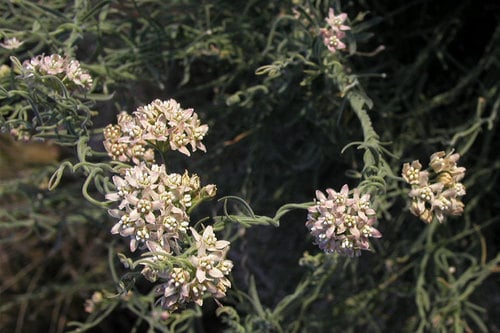
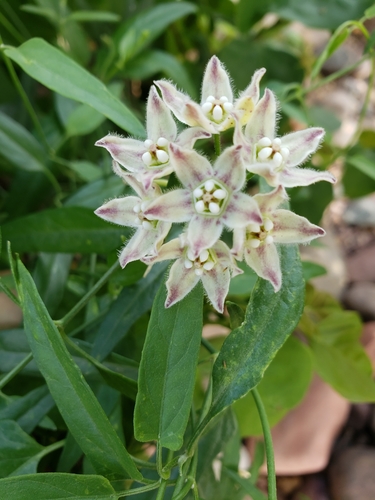
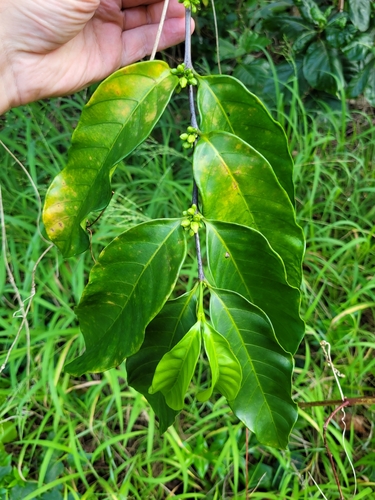
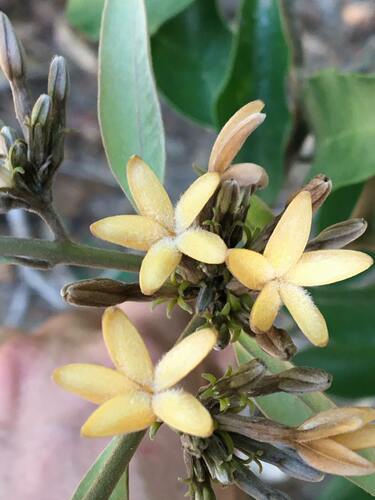
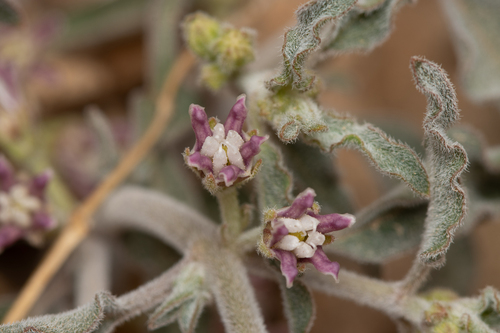
A scrambling shrub or woody climber. The branches can be 8 m long. They contain yellow-orange sap. The leaves are opposite, simple and entire. The leaf blades are oval and 3-10 cm long by 1-6 cm wide. The base is rounded and it tapers to the tip. The flowers are in groups in the axils of leaves. These are 8 cm long and the groups are loose. The flower are 1.5 cm long and greenish-yellow. The fruit are a pair of spreading follicles. These are narrow and cylinder shaped and 18 cm long by 5 mm wide. The seeds are 12 mm long. They have silky hairs.
Edible Uses
The leaves are eaten as a vegetable, particularly in Burkina Faso.
Traditional Uses
The leaves are eaten as a vegetable at least in Burkina Faso.
This uses section is brief — help expand it
Medicinal Uses
Roots of the plant are traded as a source of yellow dye for leather and textiles. In Benin, the latex is used as an antiseptic and in Ghana root extracts are used in treating respiratory infections and malaria.
Distribution
It is a tropical plant. It grows on mountain slopes in West Africa. It grows up to 800 m above sea level. It grows in woodland and along rivers.
Where It Grows
Africa, Angola, Burkina Faso, Cameroon, Central Africa, Central African Republic, CAR, Congo, East Africa, Ghana, Guinea, Guinée, Guinea-Bissau, Nigeria, Senegal, Sierra Leone, Tanzania, Uganda, West Africa,
Cultivation
Seeds need to be planted fresh. They can be put in a nursery and transplanted.
Propagation
Seed - when sown as soon as it is ripe, the seeds showed 90 - 100% germination. Seedlings can be raised in polythene bags and then planted out at the start of the rainy season. Plants flower 10 months after sowing. The seed has a very short viability.
Other Uses
The roots are a source of a yellow dye used for dyeing leather. The roots are crushed and ground in a wooden mortar, a little hot water is added and the mixture is stirred. It has a dull yellow colour and should be used immediately. The tanned goat skin surface is first treated with some groundnut oil and subsequently dipped in the dye bath, the extract being well rubbed into the surface. After a few minutes a piece of tamarind (Tamarindus indica) fruit paste is added. This paste, prepared from seeds and fruit pulp, is soaked in cold water and gradually warmed up until a pulpy mass develops. This new mixture is also rubbed in. The skin is exposed to the air for 2 - 3 minutes and after that again rubbed in with the mixture for about 5 minutes, wiped clean and hung up to dry. The effect of the tamarind fruit paste is to purify the colour as it removes the red tint that would result from the addition of alkali in the dye bath. The stem is used as a rope in house construction.
Other Information
It is getting attention as a medicinal plant.
Notes
An extract or the root is used in medicine. It has anticancer properties. Also put in the family Asclepiadaceae.
Synonyms
Also Known As
Bumbine, Bumbipe, Butnacimbore, Cuntesse, Funhalunco, Kafulu, Mansahane, Muganga kiba, Porecududo
References (5)
- Grubben, G. J. H. and Denton, O. A. (eds), 2004, Plant Resources of Tropical Africa 2. Vegetables. PROTA, Wageningen, Netherlands. p 560
- Lykke, A. M., Mertz, O, and Ganaba, S., 2002, Food Consumption in Rural Burkina Faso, Ecology of Food and Nutrition, 41:119-152
- Mertz, O., Lykke, A. M., and Reenberg, A., 2001, Importance and Seasonality of Vegetable Consumption and Marketing in Burkina Faso. Economic Botany, 55(2):276-289
- PROTOBASE
- World Checklist of Useful Plant Species 2020. Royal Botanic Gardens, Kew