Solanum brevicaule
Bitter
iNaturalist· cc-by-nc
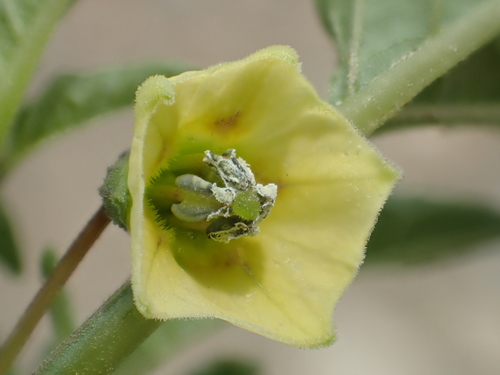
(c) romanlabrousse, some rights reserved (CC BY-NC)
iNaturalist· cc-by-nc
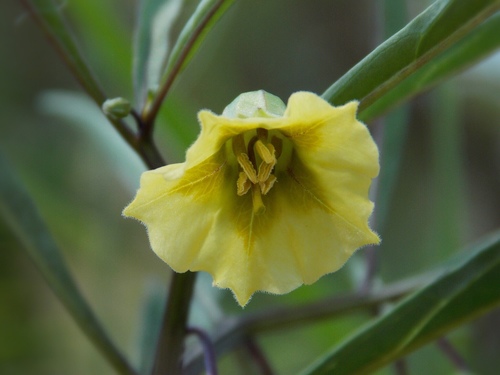
(c) romanlabrousse, some rights reserved (CC BY-NC)
iNaturalist· cc-by-nc
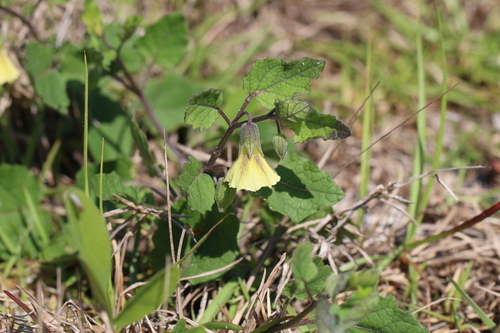
(c) romanlabrousse, some rights reserved (CC BY-NC)
Summary
Source: WikipediaSolanum brevicaule is a tuberous perennial plant of the family Solanaceae. The species is native to South America (Argentina, Bolivia, and Peru). It is related to the potato, but unlike the potato which is tetraploid, it has several levels of ploidy: diploid, tetraploid, and hexaploid. This species gives its name to the "Solanum brevicaule complex" which includes about twenty species of morphologically close wild potato species distributed between central Peru and northern Argentina, and are considered by some taxonomists to be the ancestors of the traditional varieties of potatoes grown in the Andrean regions.
Description
A herb related to potato. It keeps growing from year to year. It grows 20-60 cm tall.
This description is brief — help expand it
Edible Uses
The tubers and roots are eaten.
Distribution
It is a subtropical plant. In Argentina it grows between 1,500-4,200 m above sea level.
Where It Grows
Argentina, Bolivia, Peru, South America,
Notes
Plants can be diploid, tetraploid or hexaploid.
References (1)
- Grun, P., 1990, The Evolution of Cultivated Potatoes. Economic Botany, Vol. 44, No. 3, Supplement: New Perspectives on the Origin and Evolution of New World Domesticated Plants pp. 39-55