Nitraria sibirica
Pallas
Siberia nitaria
iNaturalist· cc-by-nc
(c) baltalt, some rights reserved (CC BY-NC)
iNaturalist· cc-by-nc
(c) Илья Сухов, some rights reserved (CC BY-NC)
Description
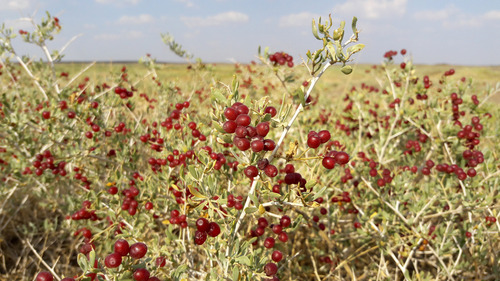
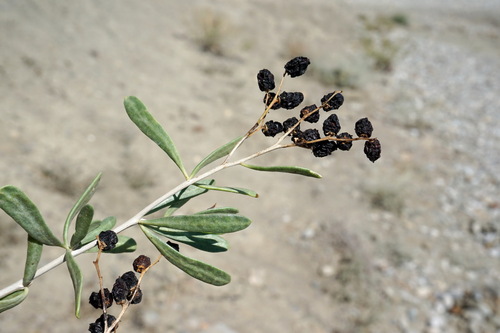
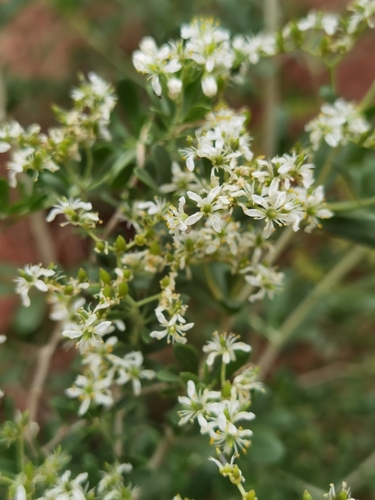
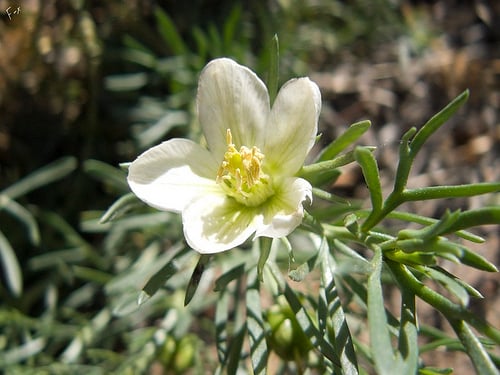
A low spiny bush. It is grey-white. The leaves are simple and in clusters of 2 or 3. They are fleshy and broadly sword shaped or spoon shaped. They are 2-3 cm long and 3-6 mm wide. The flowers are small and greenish-yellow. They are in groups at the ends of branches. The fruit are pea sized and red turning black when ripe. They are sour.
Edible Uses
The fruit and seeds are edible; the fruit is used to make drinks, and oil can be extracted from the seeds.
Traditional Uses
It is used to make a drink.
This uses section is brief — help expand it
Known Hazards
The fruit are sour.
Distribution
It is a temperate plant. It grows in sandy areas and salty area in oases and near lakes in northern China below 3,700 m above sea level.
Where It Grows
Asia, China, Mongolia, Russia, Siberia,
References (6)
- Centofanti, T. & Banuelos, G., 2019, Practical uses of Halophytic Plants as Sources of Food and Fodder. CAB International. p 334
- Flora of China. Vol. 11, p 42
- Hu, Shiu-ying, 2005, Food Plants of China. The Chinese University Press. p 490
- Kunshan, Shi, Non-wood forest products in Asia. FAO Corporate Document Repository
- Urgamal, M., Oyuntsetseg, B., Nyambayar, D. & Dulamsuren, Ch. 2014. Conspectus of the vascular plants of Mongolia. (Editors: Sanchir, Ch. & Jamsran, Ts.). Ulaanbaatar, Mongolia. “Admon“ Press. 334pp. (p. 79-90).
Show all 6 references Hide references
- Zhang, Y., et al, Yunatov’s Records of Wild Edible Plant Used by the Mongols in Mongolia During 1940- 1951: Ethnobotanical Arrangements and Discussions. Inner Mongolia Normal University. p 10