Dipteryx micrantha
Harms
Smallflower tonkabean
iNaturalist· cc-by-nc
(c) Riley Fortier, some rights reserved (CC BY-NC), uploaded by Riley Fortier
iNaturalist· cc-by-nc
(c) Jurga Motiejūnaitė, some rights reserved (CC BY-NC), uploaded by Jurga Motiejūnaitė
iNaturalist· cc-by-nc
(c) Ymber Flores B, some rights reserved (CC BY-NC)
Summary
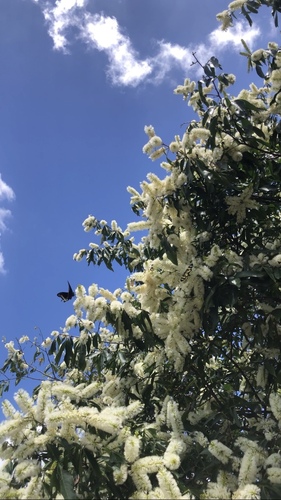
Source: WikipediaDipteryx micrantha is a tropical flowering plant, a giant tree in the Faboideae subfamily of the bean family Fabaceae. It is a dominant emergent tree in parts of the rainforests of Bolivia, Brazil, Colombia, Ecuador and Peru. In the international timber market, this species is traded under the name cumaru. It furnishes a dense, hard, beautiful reddish timber which has become a popular import in the 2010s for use in parquet. The ornamental bunches of lilac pink flowers high in the canopy eventually develop into a mass of large fruit pods, which are an important food for many native animals during the dry season. The fruit contains a single oily seed which is edible, although these seeds are not exploited as a commercial product.
Description
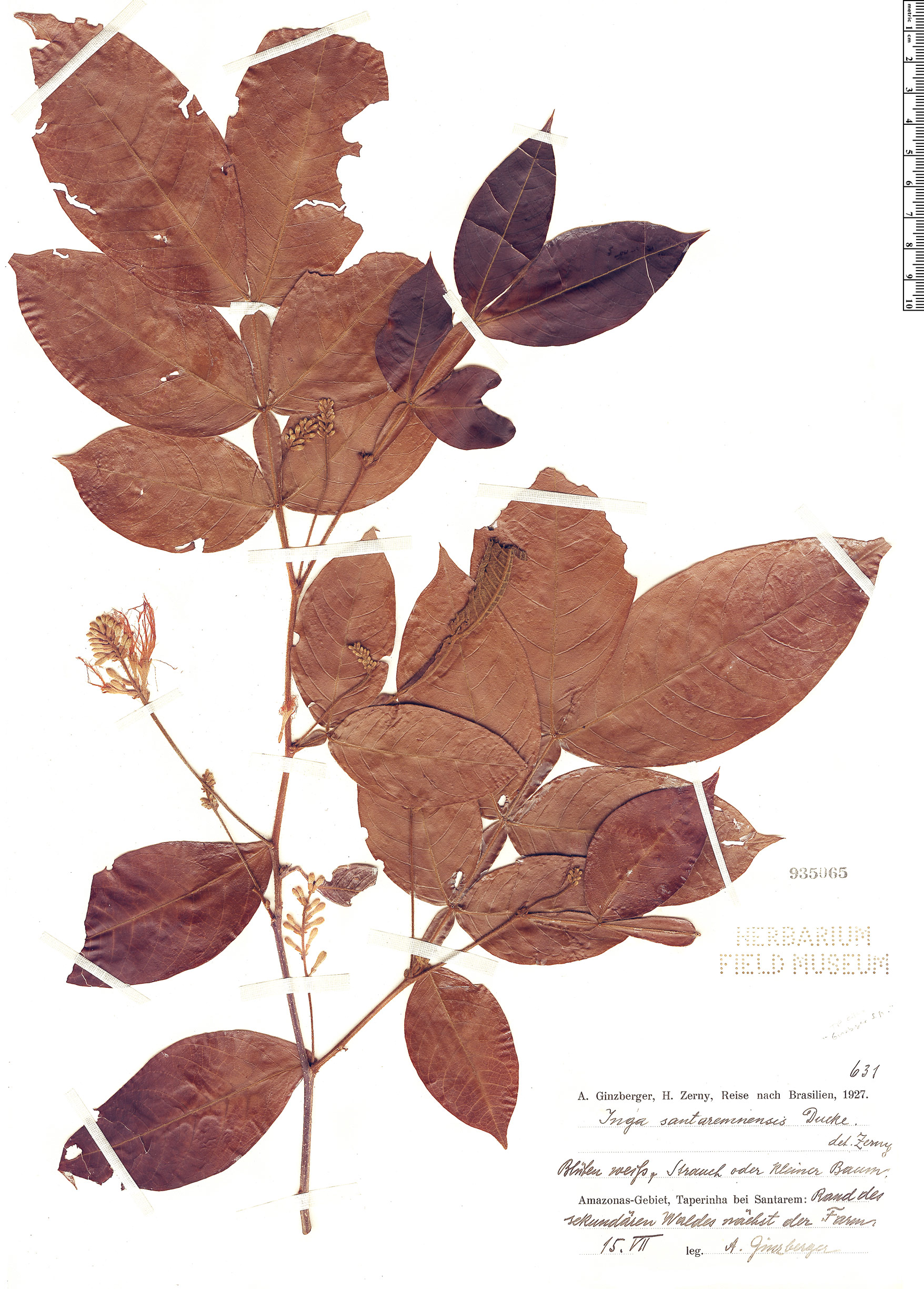
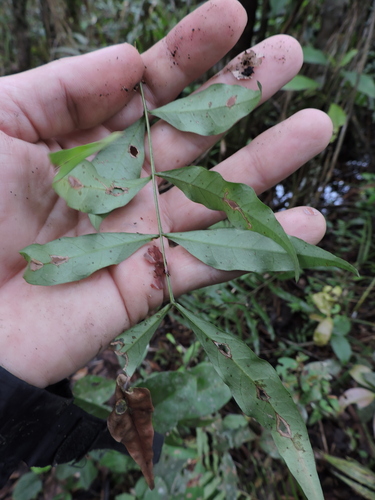
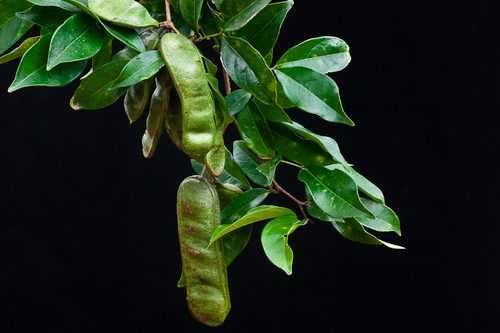
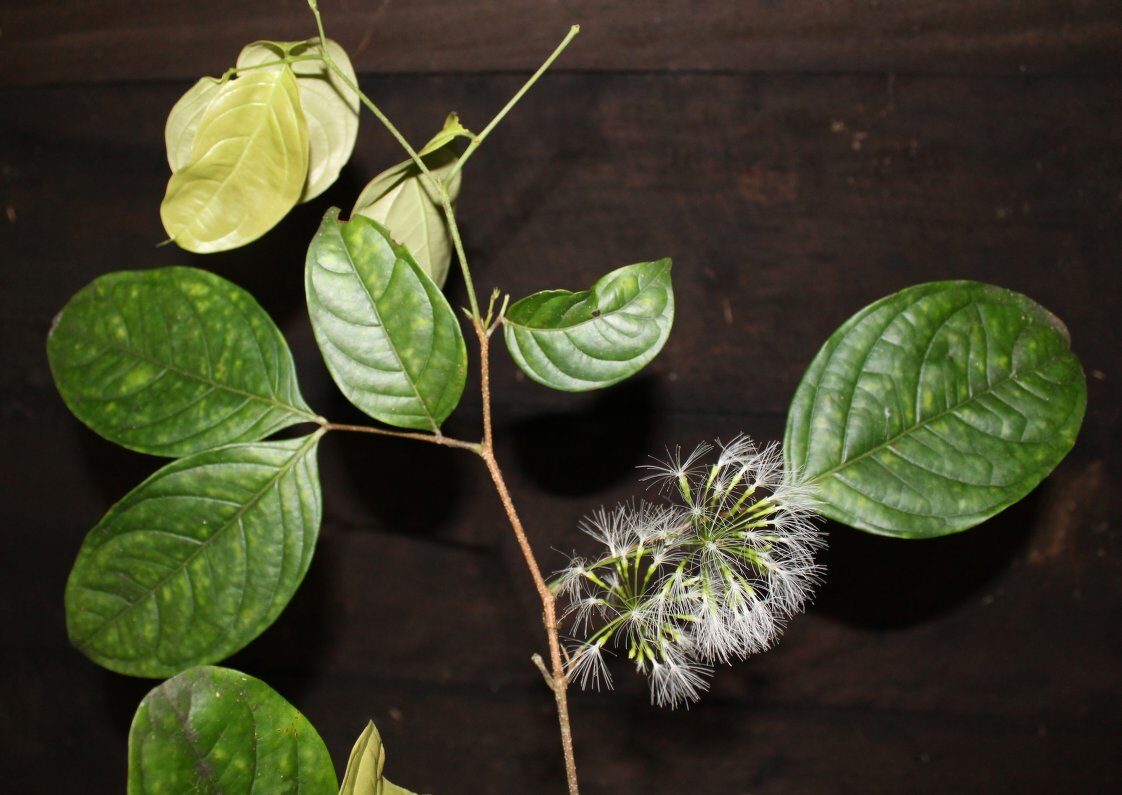
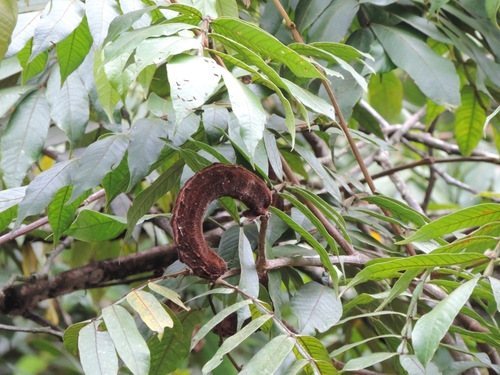
A tree. It grows 40 m tall. The trunk is 1.5 m across. The leaves have 9-11 leaflets. They are 5-10 cm long by 4 cm wide. The fruit are fleshy and 4.8-5.8 cm long by 2.9-4.2 cm wide.
Edible Uses
The seeds are boiled and eaten, and both the fruit and seeds are edible portions of this plant.
Traditional Uses
The seeds are boiled and eaten.
This uses section is brief — help expand it
Distribution
It is a tropical plants. It grows in the lowlands.
Where It Grows
Amazon, Bolivia, Brazil, Colombia, Ecuador, Peru, South America,
Propagation
Seed - best sown as soon as it is ripe in a semi-shaded position in individual containers. Germination rates are usually low, with the seed sprouting within 30 - 40 days. Like many species within the family Fabaceae, once they have been dried for storage the seeds of this species may benefit from scarification before sowing in order to speed up germination. This can usually be done by pouring a small amount of nearly boiling water on the seeds (being careful not to cook them!) and then soaking them for 12 - 24 hours in warm water. By this time they should have imbibed moisture and swollen - if they have not, then carefully make a nick in the seedcoat (being careful not to damage the embryo) and soak for a further 12 hours before sowing.
Other Uses
The large trunks are used as drums. The large seeds are used to make necklaces and also waist belts, where the seeds clicking together add a musical dimension to the sounds of drum beats and the dancer’s stomping feet. The hard wood is used locally for constructing boats, traditional houses etc. It is selectively harvested and sold in local markets
Synonyms
Also Known As
Charapilla, Cumaru Ferro, Kumarut, Shihuahuaco
References (7)
- Bendezu, Y. F., 2018, Arboles nativos de lad Region Ucayali. Instituto Nacional de Innovacion Agraria. p 127
- Grandtner, M. M. & Chevrette, J., 2013, Dictionary of Trees, Volume 2: South America: Nomenclature, Taxonomy and Ecology. Academic Press p 205
- ILDIS Legumes of the World http:www:ildis.org/Legume/Web
- Flores, Y., 2018, Arboles nativos de la Region Ucayili. Estacion Experimental Agragia Pucallpa. Pucallpa Peru, 375 p. p 127
- Kermath, B. M., et al, 2014, Food Plants in the Americas: A survey of the domesticated, cultivated and wild plants used for Human food in North, Central and South America and the Caribbean. On line draft. p 315
Show all 7 references Hide references
- Macbride. J. F., 1942, Flora of Peru. Leguminosae. Field Museum Natural History. Chicago. p 253(As Coumarouna micrantha)
- Roa, J. A. G. & Boada, D. S. G., 2018, Fundación para el Fortalecimiento de la Fruticultura y Plantas Alimenticias no Convencionales en Colombia.