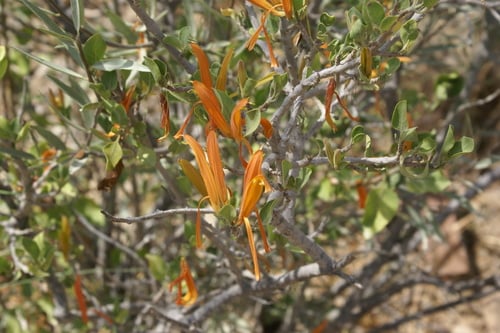
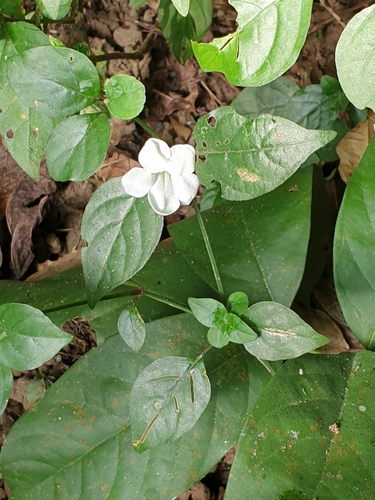
Brillantaisia owariensis
P. Beauv.
Giant Salvia
iNaturalist· cc-by-nc
(c) CORDENOS Thierry, some rights reserved (CC BY-NC), uploaded by CORDENOS Thierry
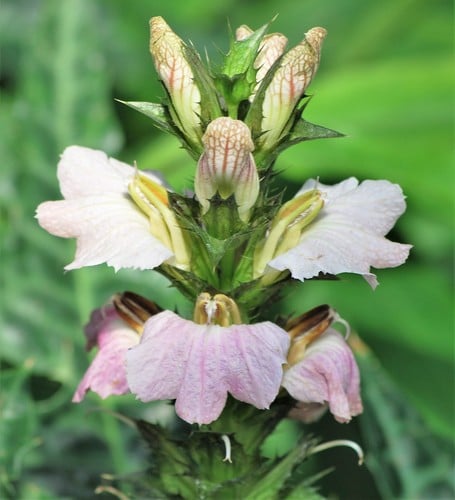
iNaturalist· cc-by
(c) Matteo Bellucci, some rights reserved (CC BY), uploaded by Matteo Bellucci
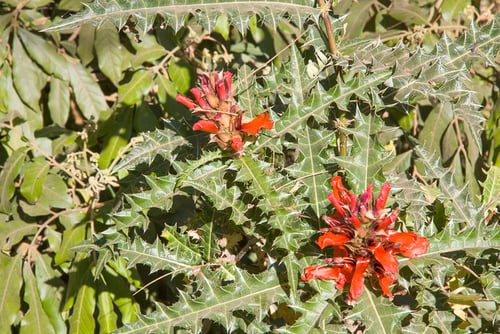
iNaturalist· cc-by
(c) Matteo Bellucci, some rights reserved (CC BY), uploaded by Matteo Bellucci
Description
A herb. It grows 60-90 cm tall. The leaves are heart shaped and shiny. The leaf stalks have wings. The fruit are long cylinder shaped seed pods.
This description is brief — help expand it
Edible Uses
The leaves are eaten, and the plant is also used as a salt.
Medicinal Uses
The plant is regarded as a medicine in traditional use.
Distribution
A tropical plant. They need warm, moist, humid conditions. In Nigeria it grows up to 1,970 m above sea level. It grows on the edges of forests and shady creek banks.
Where It Grows
Africa, Angola, Australia, Central Africa, Congo DR, Nigeria, Sao Tome and Principe, Sierra Leone, Togo, Uganda, West Africa,
Cultivation
It can be grown from seed, cuttings or division.
Notes
There are about 12 Brillantaisia species. They grow in the moist African tropics. It is also regarded as a medicine.
Nutrition
| Part | Moisture | kJ | kcal | Protein | Vit A | Vit C | Iron | Zinc |
|---|---|---|---|---|---|---|---|---|
| Leaves | 71.1 | 447 | 107 | 7.9 | — | — | 2 | 1.3 |
Synonyms
Also Known As
Agbolu-uku, Lemba lemba
References (9)
- Busson, 1965, (As Brillantaisia nitens)
- Cundall, P., (ed.), 2004, Gardening Australia: flora: the gardener's bible. ABC Books. p 259 (Genus)
- Gohre, A., et al, 2016, Plants from disturbed savannah vegetation and their usage by Bakongo tribes in Uíge, Northern Angola. Journal of Ethnobiology and Ethnomedicine (2016) 12:42
- Jardin, C., 1970, List of Foods Used In Africa, FAO Nutrition Information Document Series No 2.p 62 (As Brillantaisia alata)
- Kuhnlein, H. V., et al, 2009, Indigenous Peoples' food systems. FAO Rome p 262 (As Brillantaisia nitens)
Show all 9 references Hide references
- Latham, P., 2004, Useful Plants of Bas-Congo province. Latham & DFID p 61
- Latham, P. & Mbuta, A. K., 2014, Useful Plants of Bas-Congo Province, Democratic Republic of Congo. Volume 1. Salvation Army. p 90
- Martin, F.W. & Ruberte, R.M., 1979, Edible Leaves of the Tropics. Antillian College Press, Mayaguez, Puerto Rico. p 171 (As Brillantaisia alata)
- Peters, C. R., O'Brien, E. M., and Drummond, R.B., 1992, Edible Wild plants of Sub-saharan Africa. Kew. p 43 (As Brillantaisia nitens)