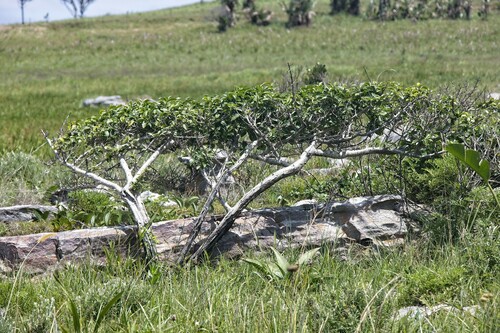
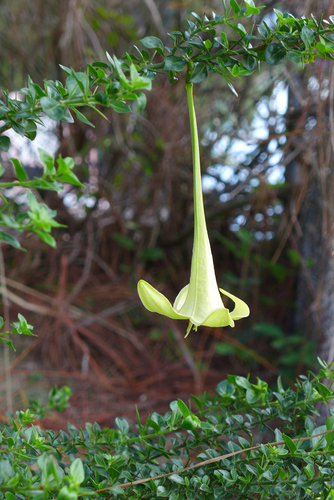
Randia aculeata
L.
Inkberry randia, White indigoberry
iNaturalist· cc-by
(c) Eridan Xharahi, some rights reserved (CC BY)
iNaturalist· cc-by-nc
(c) Erik Erbes, some rights reserved (CC BY-NC)
iNaturalist· cc-by-nc
(c) Erik Erbes, some rights reserved (CC BY-NC)
Summary
Source: WikipediaRandia aculeata, commonly known as white indigoberry or white indigo berry, is a species in the Rubiaceae. It is a shrub or small tree that grows from 2 to 6 m tall. R. aculeata is native to Florida, Bermuda, the Bahamas, elsewhere among the Caribbean islands, and also from Mexico, Puerto Rico south through Central and South America to Colombia.
Description
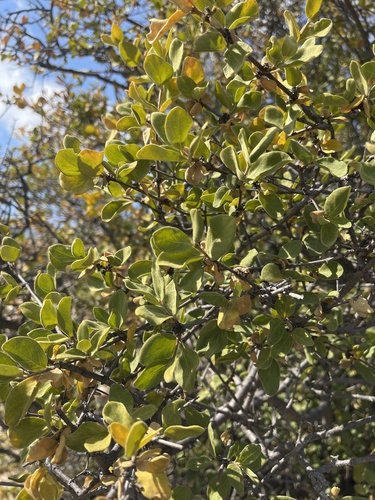
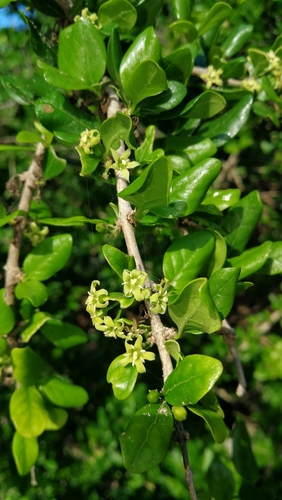
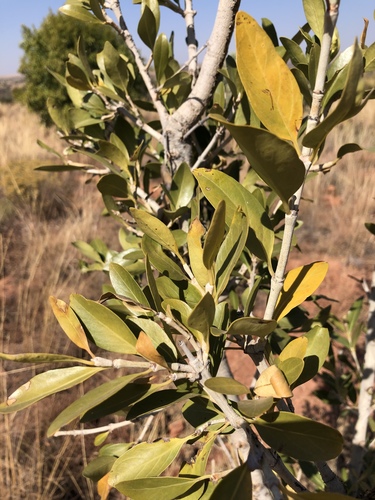
A shrub or small tree. It grows 2-6 m tall. The leaves are leathery and spiny. They are clustered near the tips of the branches. The leaves are simple, round and 5 cm long. The flowers are white and tube shaped. The fruit are white. They are almost black inside.
Edible Uses
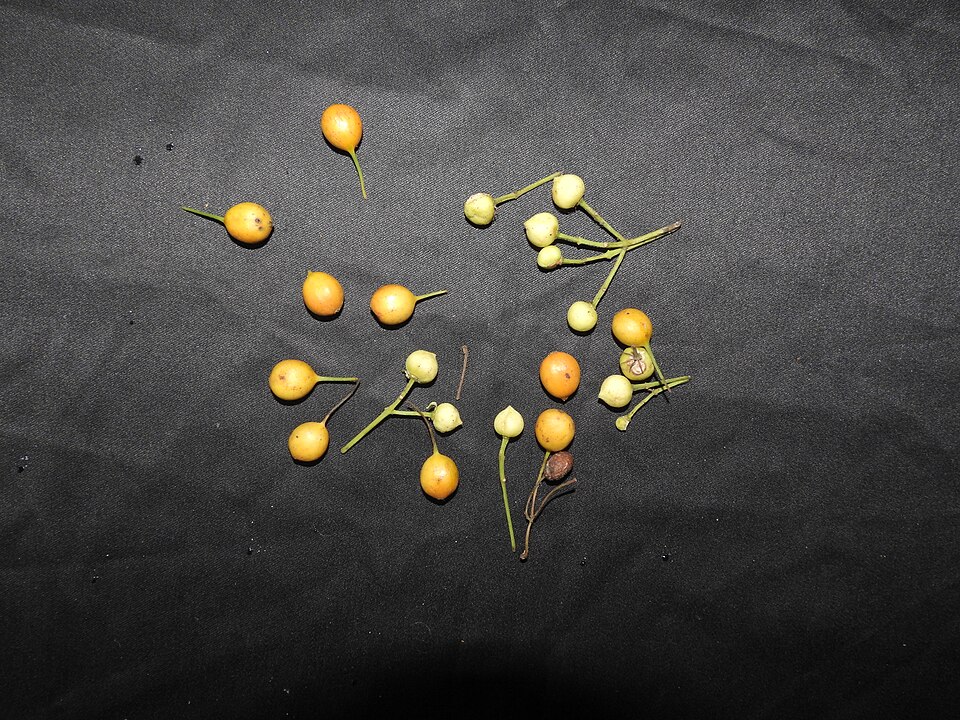
Fruit - raw. Of poor flavour. The globose fruit is a berry 6 - 13mm in diameter that contains 5 - 10 rounded seeds in a blue or black pulp.
Traditional Uses
The fruit are eaten raw. They turn the tongue blue.
This uses section is brief — help expand it
Medicinal Uses
The fruits are used in the treatment of dysentery. A latex oftained from the plant is reported to effectively stop bleeding. An unspecified part of the plant is used to control fever.
Distribution
It is a tropical and subtropical plant. It grows in dry and moist forests especially on limestone. It grows between 700-2,200 m above sea level.
Where It Grows
Anguilla, Antigua and Barbuda, Antilles, Asia, Bahamas, Barbados, Belize, Bermuda, Caribbean, Central America, Colombia, Costa Rica, Cuba, Curacao, Dominican Republic, El Salvador, Guatemala, Haiti, Honduras, India, Indonesia, Jamaica, Mexico, Nicaragua, North America, Panama, Peru, Puerto Rico, SE Asia, South America, St. Kitts and Nevis, Suriname, Trinidad and Tobago, USA*, Venezuela, West Indies,
Cultivation
Plants can be grown from seeds.
Propagation
Seed - best sown as soon as it is ripe. It tests, seed sown in containers had a 25% germination rate within 46 - 168 days of sowing. It can take 12 months or more before the seedlings are ready to plant out.
Other Uses
A blue dye is obtained from the berries. It can be used as an ink. The light brown wood is hard and heavy. Fishing rods are made from the rigid stems. The wood is a useful fuel. The species invades abandoned land, but not quickly, and because of slow growth, is not common in early secondary forest following cultivation. However, the plant does hang on tenaciously after disturbance and is prominent in secondary forests arising after logging or partial clearing for pasture. It could have a role to play as a pioneer species when restoring native woodland or establishing a woodland garden, especially in drier soils and areas subject to strong winds.
Other Information
The fruit is not popular.
Synonyms
Also Known As
Box briar, Cruceto, Krans natal, Mona kata, Prickle bush, Tintero, Tintillo, Wakura, Wakuri
References (8)
- Grandtner, M. M., 2008, World Dictionary of Trees. Wood and Forest Science Department. Laval University, Quebec, Qc Canada. (Internet database http://www.wdt.qc.ca) and (As Randia aculeata var. aculeata)
- Grandtner, M. M. & Chevrette, J., 2013, Dictionary of Trees, Volume 2: South America: Nomenclature, Taxonomy and Ecology. Academic Press p 561
- Kermath, B. M., et al, 2014, Food Plants in the Americas: A survey of the domesticated, cultivated and wild plants used for Human food in North, Central and South America and the Caribbean. On line draft. p 737
- Kumar, R. & Saikia, P., 2020, Wild edible plants of Jharkhand and their utilitarian perspectives. Indian Journal of Traditional Knowledge Vol 19 (2), April 2020, pp 237-250
- Lopez-Diago, D. & Garcia, N., 2021, Wild edible fruits of Colombia. Biota ColomBiana 22 (2) p 50
Show all 8 references Hide references
- Plants of Haiti Smithsonian Institute http://botany.si.edu/antilles/West Indies
- Roa, J. A. G. & Boada, D. S. G., 2018, Fundación para el Fortalecimiento de la Fruticultura y Plantas Alimenticias no Convencionales en Colombia.
- Sukarya, D. G., (Ed.) 2013, 3,500 Plant Species of the Botanic Gardens of Indonesia. LIPI p 696